
Studies in Science of Science ›› 2026, Vol. 44 ›› Issue (10): 2081-2098.
• Theories and Methods • Previous Articles Next Articles
WEN Ting, JIANG Nan, JIANG Yin-xin( )
)
Received:2025-07-07
Revised:2025-11-07
Online:2026-10-15
Published:2026-10-10
温婷, 姜南, 姜银鑫()
通讯作者:
姜银鑫(1977-),男,高级工程师,博士研究生,E-mail:作者简介:温婷(1996-),女,博士研究生。基金资助:CLC Number:
WEN Ting, JIANG Nan, JIANG Yin-xin. The techno-nationalist attributes of U.S. artificial intelligence policy and responses[J]. Studies in Science of Science, 2026, 44(10): 2081-2098.
温婷, 姜南, 姜银鑫. 美国人工智能政策的技术民族主义属性与应对[J]. 科学学研究, 2026, 44(10): 2081-2098.
Add to citation manager EndNote|Ris|BibTeX
URL: https://kxxyj.magtechjournal.com/kxxyj/EN/
https://kxxyj.magtechjournal.com/kxxyj/EN/Y2026/V44/I10/2081
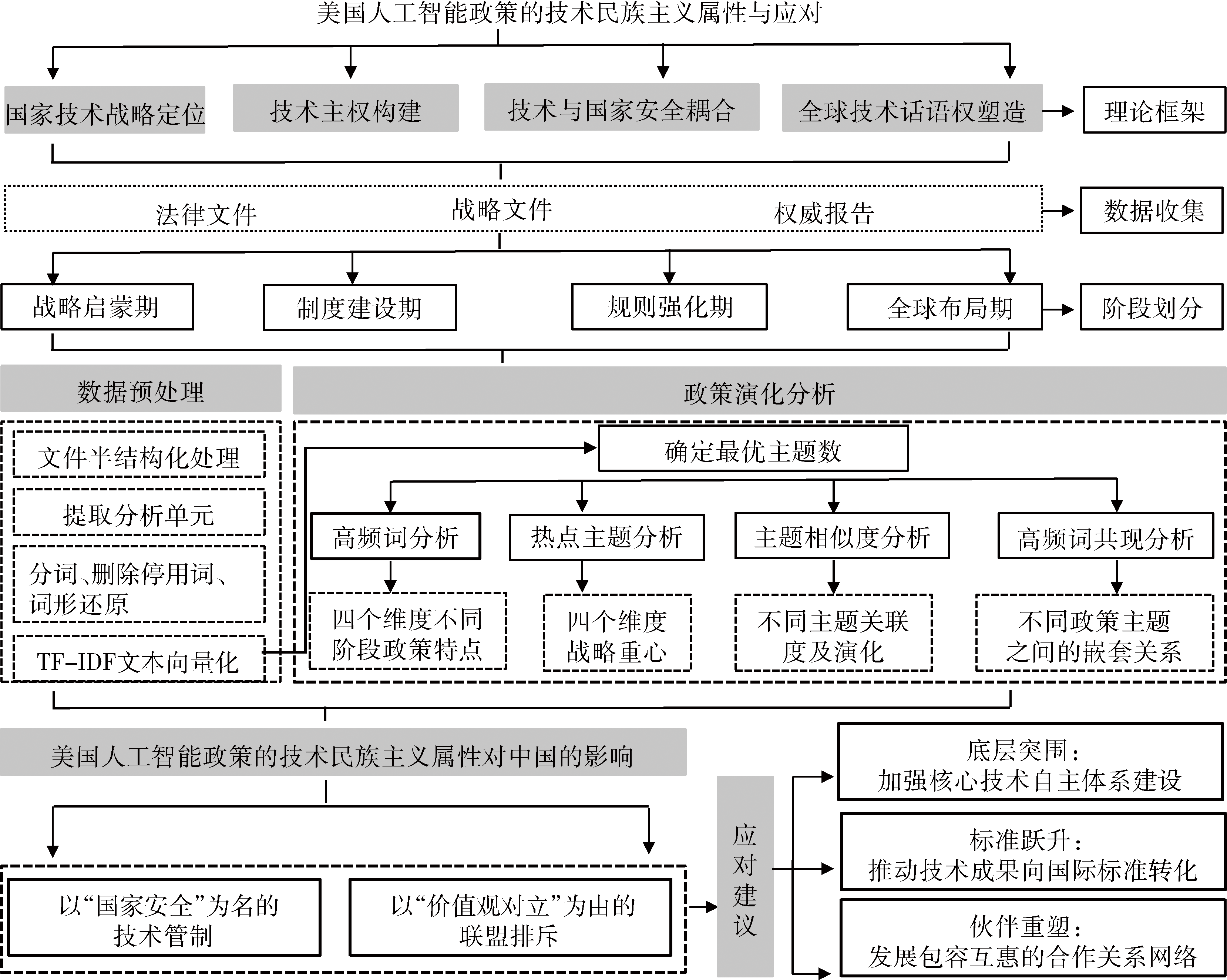
Figure 1 Research framework
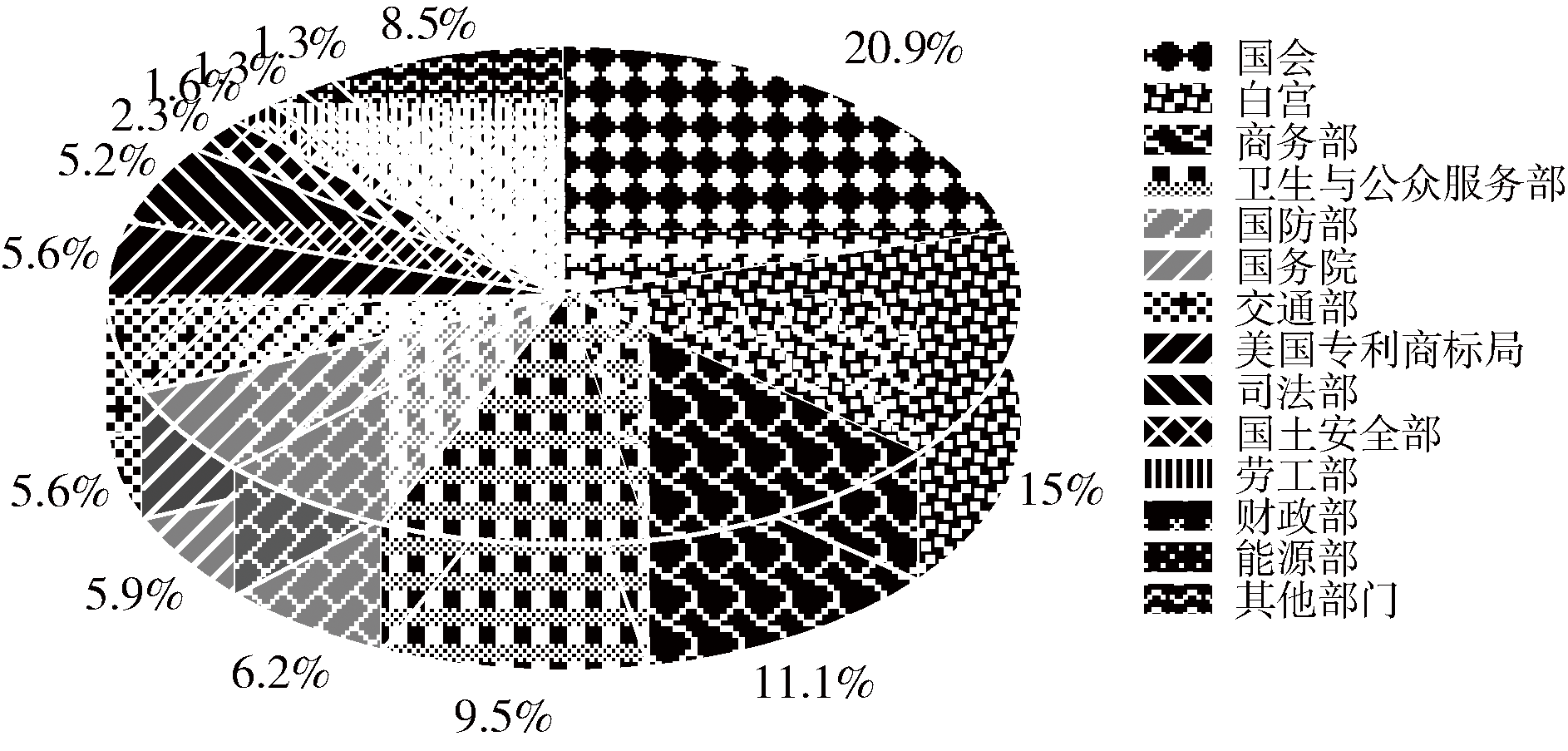
Figure 2 Proportion of AI policy documents issued by U.S. departments, 2015-2025
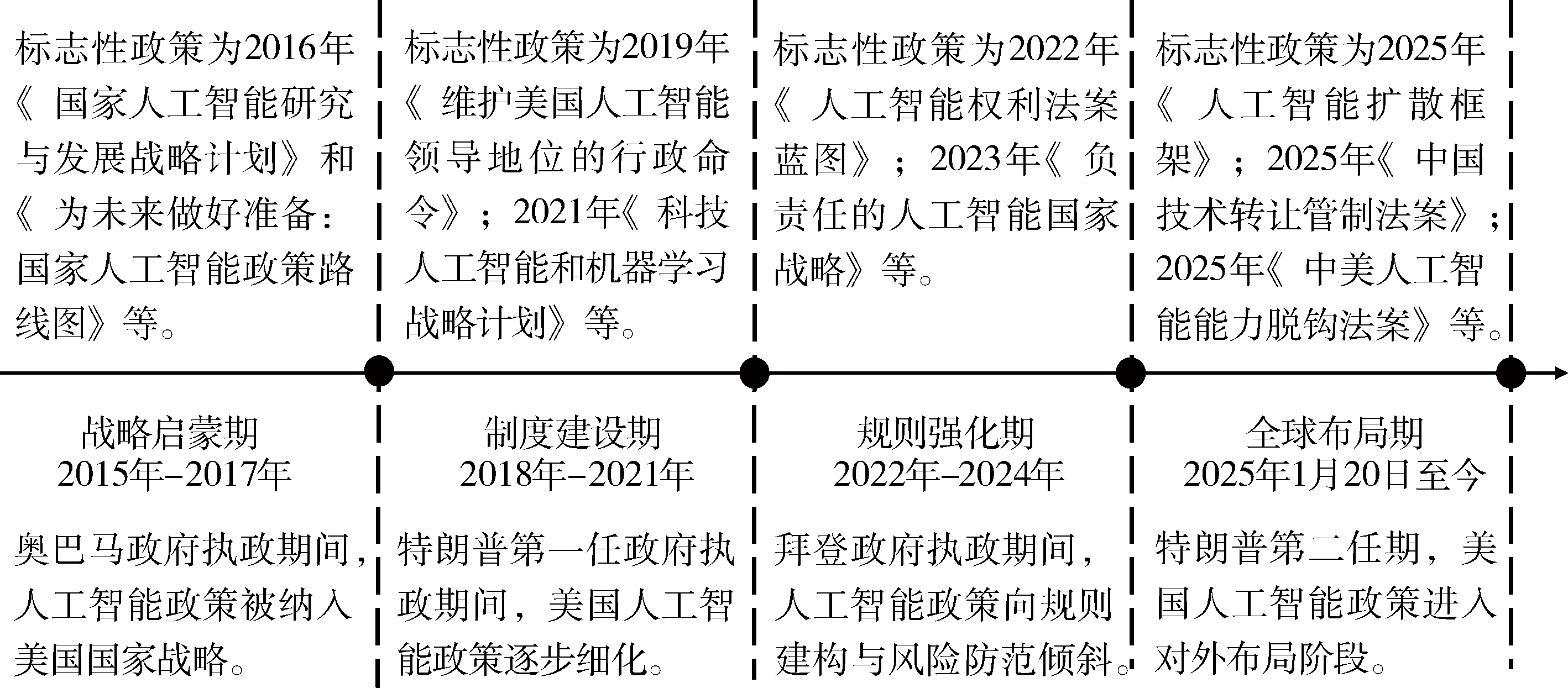
Figure 3 Stages of policy research
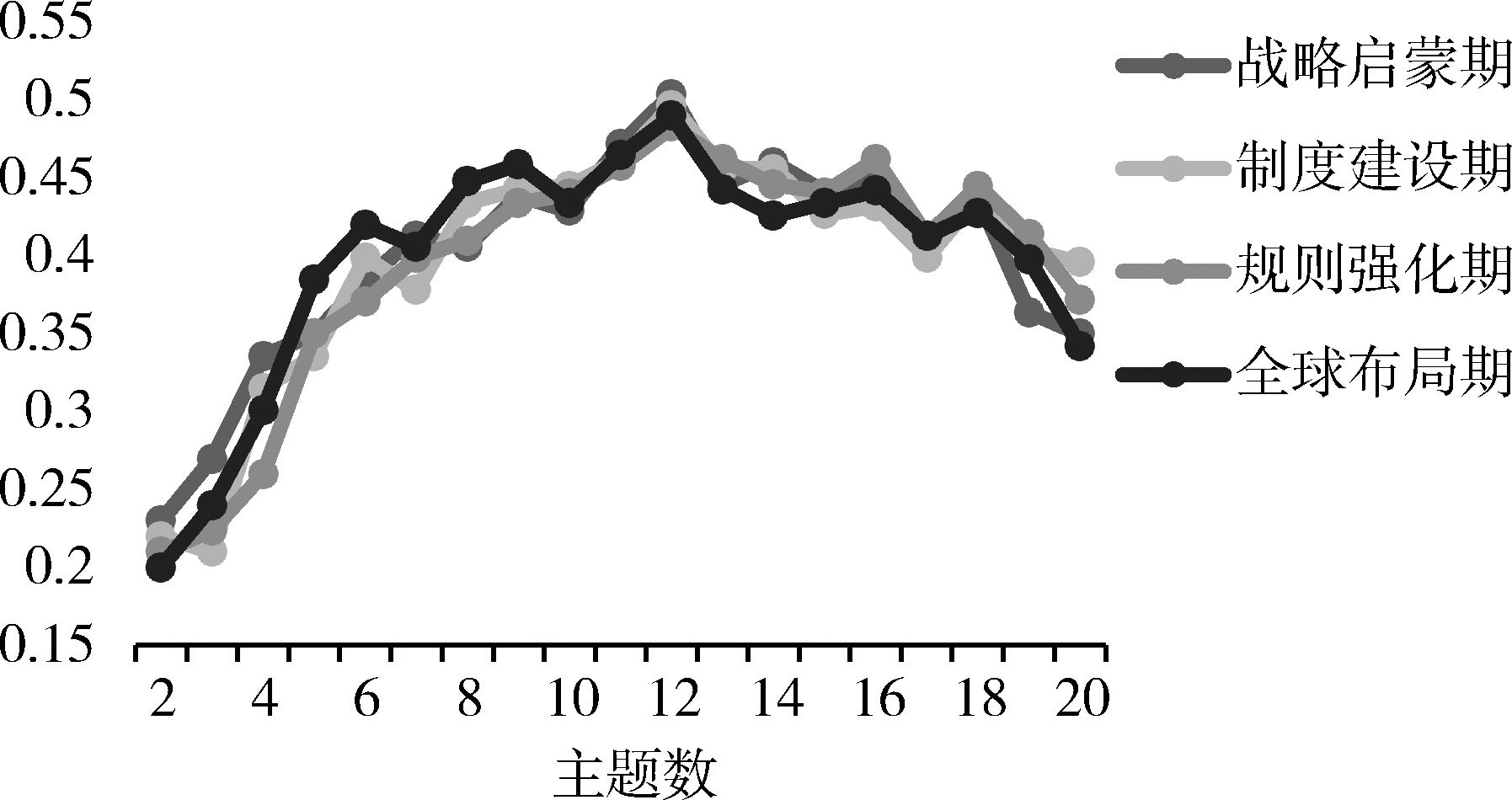
Figure 4 Consistency Test
| 序号 | 主题 | 关键词 |
|---|---|---|
| 维度一:国家技术战略定位 | ||
| 1 | 长期研发投资 | Fundamental|Research|Funding|Innovation|Discovery|Sustained|Breakthrough|Grant|Exploration|Academic 基础性的|研究|资金\资助|创新|发现|持续的|突破||拨款\研究资助|探索|学术的 |
| 2 | 基础设施与资源 | Infrastructure|Resource|Access|Open|Platform|Shared|Computing|Data|Availability|Interoperability 基础设施|资源|访问\获取|开放的|平台|共享的|计算|数据|可用性|互操作性 |
| 3 | 全球领导地位 | Leadership|Global|International|Standard|Influence|Dominance|Diplomacy|Alliance|Competitiveness|Initiative 领导力|全球的|国际的|标准|影响力|主导地位|外交|联盟|竞争力|倡议\行动计划 |
| 维度二:技术主权构建 | ||
| 1 | 关键技术领域 | AI|Quantum|Semiconductor|Biotechnology|Manufacture|Robotic|Cybersecurity|Material|Energy|Computing 人工智能|量子技术|半导体|生物技术|制造业/制造技术|机器人技术|网络安全|材料科学|能源技术|计算技术 |
| 2 | 人才与劳动力培养 | Workforce|Training|Education|Skill|Talent|Development|Recruitment|Retention|Apprenticeship|Upskilling 劳动力|培训|教育|技能|人才|发展|招聘|保留|学徒制度|技能提升 |
| 3 | 本土创新生态系统 | Ecosystem|Cluster|Collaboration|Startup|Grant|Talent|Supply|Chain|Regional|Hub 生态系统|创新集群|合作|初创企业|研究资助|人才|供应|链条|区域性|枢纽 |
| 维度三:技术与国家安全耦合 | ||
| 1 | 军事与国家安全 | Mission|Threat|Sanction|Sensitive|Safeguard|Citizen|Predict|Respond|System|Cyber 任务|威胁|制裁|灵敏的|保护|公民|预测|响应|系统|网络 |
| 2 | 威慑性叙事 | Security|Unfair|Risk|Compliance|Competitor|Restriction|Military|Manipulator|Deterrence|Resilience 安全|不平等的|风险|合规|竞争对手|限制|军事|操纵|威慑|韧性 |
| 3 | 对抗性防御技术 | Adversarial|Defense|Technology|Secure|Resilient|Operation|Hacking|Bias|Mitigate|Validation 对抗性的|防御|技术|安全的|具备韧性|运作|黑客攻击|偏差|缓解|验证 |
| 维度四:全球技术话语权塑造 | ||
| 1 | 国际标准制定 | Standard|Leadership|Consensus|Legal|Development|Influence|Participation|Organization|Framework|Certification 标准|领导力|共识|法律的|制定|影响力|参与|组织机构|框架|认证 |
| 2 | 可信AI与伦理 | Valid|Reliable|Safe|Secure|Accountable|Transparent|Explainable|Fair|Privacy|Ethical 有效的|可靠的|安全的|保障性的\受保护的|可问责的|透明的|可解释的|公平的|隐私|符合伦理的 |
| 3 | 技术联盟构建 | Alliance|Partnership|Collaboration|Network|Industry|Academia|Stakeholder|Global|Leadership|Innovation 联盟|伙伴关系|协作|网络|产业界|学术界|利益相关者|全球的|领导力|创新 |
Table 1 U.S. AI policy topic terms
| 序号 | 主题 | 关键词 |
|---|---|---|
| 维度一:国家技术战略定位 | ||
| 1 | 长期研发投资 | Fundamental|Research|Funding|Innovation|Discovery|Sustained|Breakthrough|Grant|Exploration|Academic 基础性的|研究|资金\资助|创新|发现|持续的|突破||拨款\研究资助|探索|学术的 |
| 2 | 基础设施与资源 | Infrastructure|Resource|Access|Open|Platform|Shared|Computing|Data|Availability|Interoperability 基础设施|资源|访问\获取|开放的|平台|共享的|计算|数据|可用性|互操作性 |
| 3 | 全球领导地位 | Leadership|Global|International|Standard|Influence|Dominance|Diplomacy|Alliance|Competitiveness|Initiative 领导力|全球的|国际的|标准|影响力|主导地位|外交|联盟|竞争力|倡议\行动计划 |
| 维度二:技术主权构建 | ||
| 1 | 关键技术领域 | AI|Quantum|Semiconductor|Biotechnology|Manufacture|Robotic|Cybersecurity|Material|Energy|Computing 人工智能|量子技术|半导体|生物技术|制造业/制造技术|机器人技术|网络安全|材料科学|能源技术|计算技术 |
| 2 | 人才与劳动力培养 | Workforce|Training|Education|Skill|Talent|Development|Recruitment|Retention|Apprenticeship|Upskilling 劳动力|培训|教育|技能|人才|发展|招聘|保留|学徒制度|技能提升 |
| 3 | 本土创新生态系统 | Ecosystem|Cluster|Collaboration|Startup|Grant|Talent|Supply|Chain|Regional|Hub 生态系统|创新集群|合作|初创企业|研究资助|人才|供应|链条|区域性|枢纽 |
| 维度三:技术与国家安全耦合 | ||
| 1 | 军事与国家安全 | Mission|Threat|Sanction|Sensitive|Safeguard|Citizen|Predict|Respond|System|Cyber 任务|威胁|制裁|灵敏的|保护|公民|预测|响应|系统|网络 |
| 2 | 威慑性叙事 | Security|Unfair|Risk|Compliance|Competitor|Restriction|Military|Manipulator|Deterrence|Resilience 安全|不平等的|风险|合规|竞争对手|限制|军事|操纵|威慑|韧性 |
| 3 | 对抗性防御技术 | Adversarial|Defense|Technology|Secure|Resilient|Operation|Hacking|Bias|Mitigate|Validation 对抗性的|防御|技术|安全的|具备韧性|运作|黑客攻击|偏差|缓解|验证 |
| 维度四:全球技术话语权塑造 | ||
| 1 | 国际标准制定 | Standard|Leadership|Consensus|Legal|Development|Influence|Participation|Organization|Framework|Certification 标准|领导力|共识|法律的|制定|影响力|参与|组织机构|框架|认证 |
| 2 | 可信AI与伦理 | Valid|Reliable|Safe|Secure|Accountable|Transparent|Explainable|Fair|Privacy|Ethical 有效的|可靠的|安全的|保障性的\受保护的|可问责的|透明的|可解释的|公平的|隐私|符合伦理的 |
| 3 | 技术联盟构建 | Alliance|Partnership|Collaboration|Network|Industry|Academia|Stakeholder|Global|Leadership|Innovation 联盟|伙伴关系|协作|网络|产业界|学术界|利益相关者|全球的|领导力|创新 |
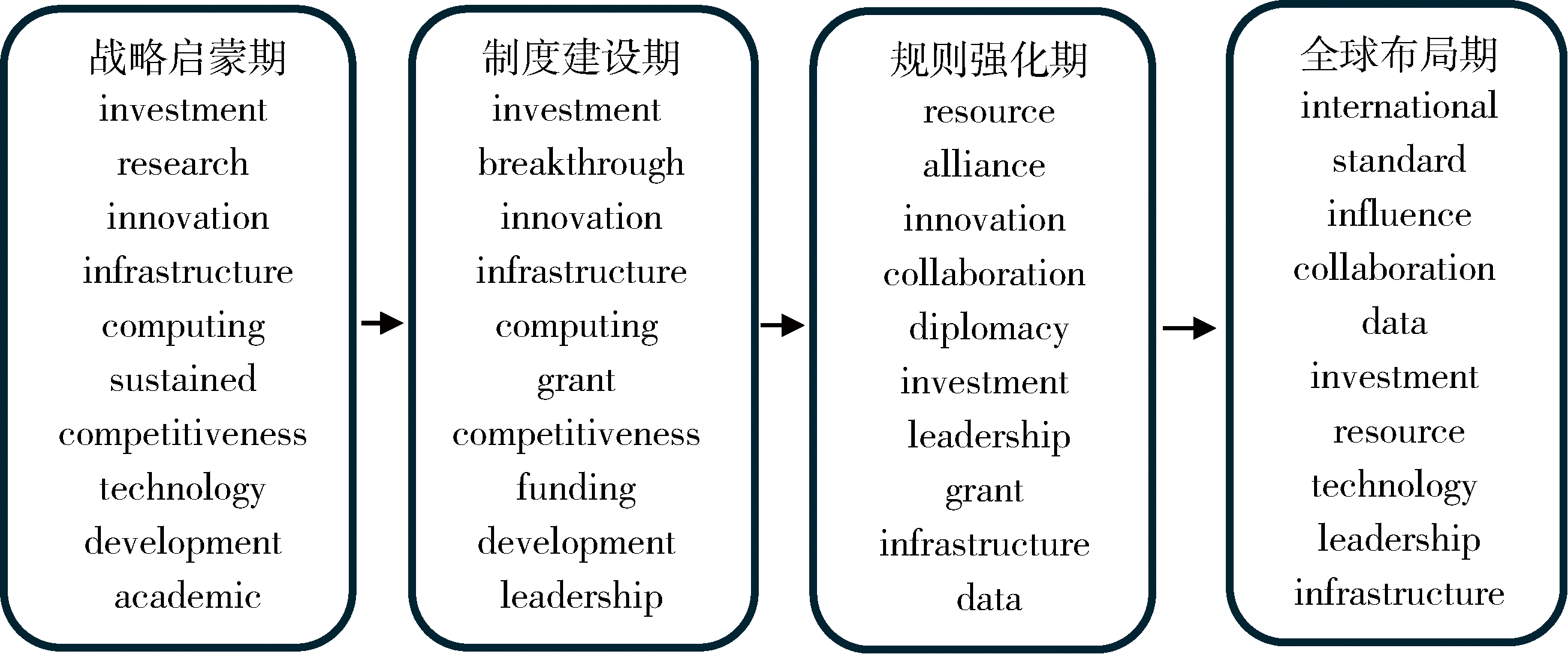
Figure 5 Evolution trend of national technology strategy keywords
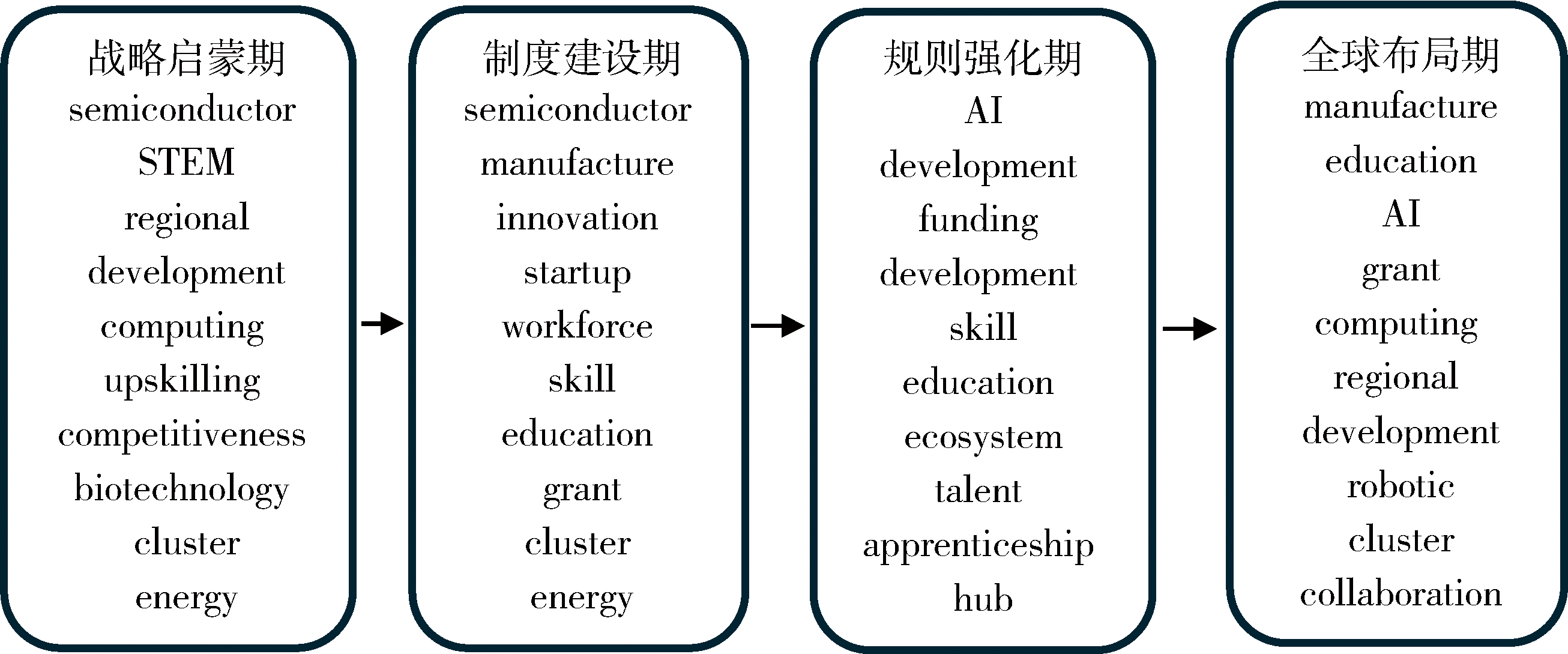
Figure 6 Evolution trend of technological sovereignty keywords
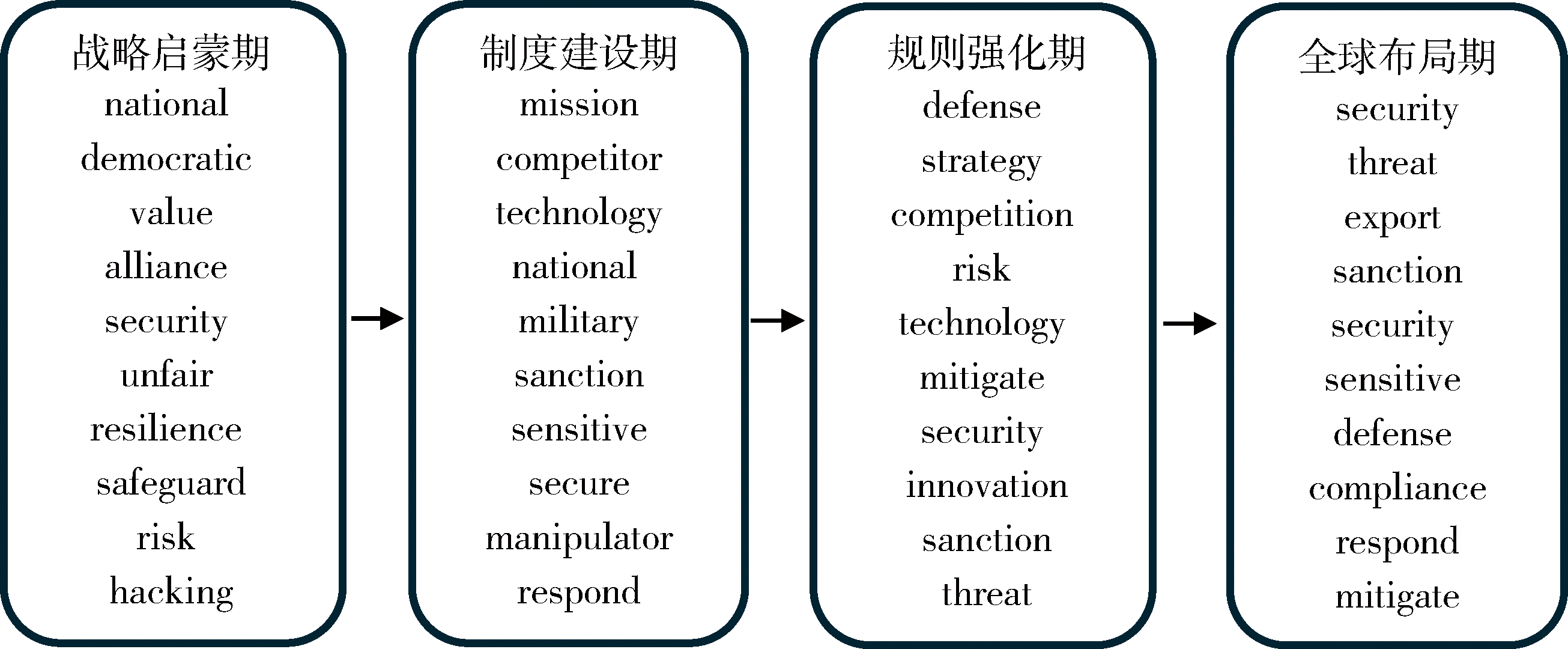
Figure 7 Evolution trend of keywords in technology and national security interplay
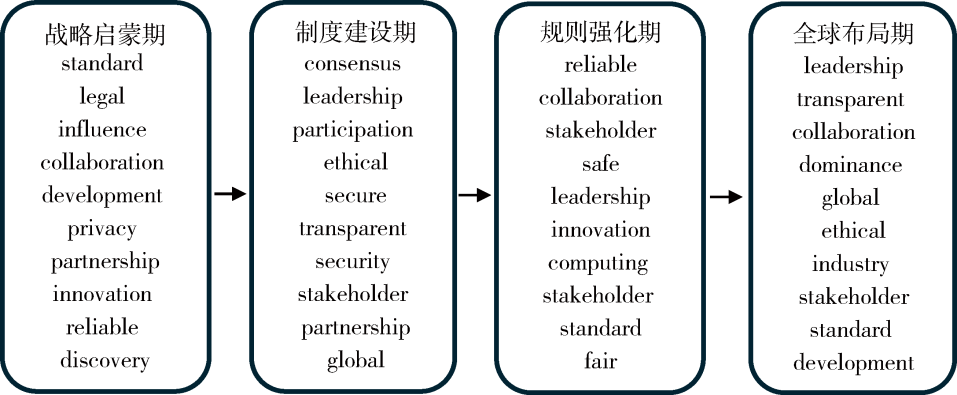
Figure 8 Evolution trend of keywords in global technological discourse power shaping
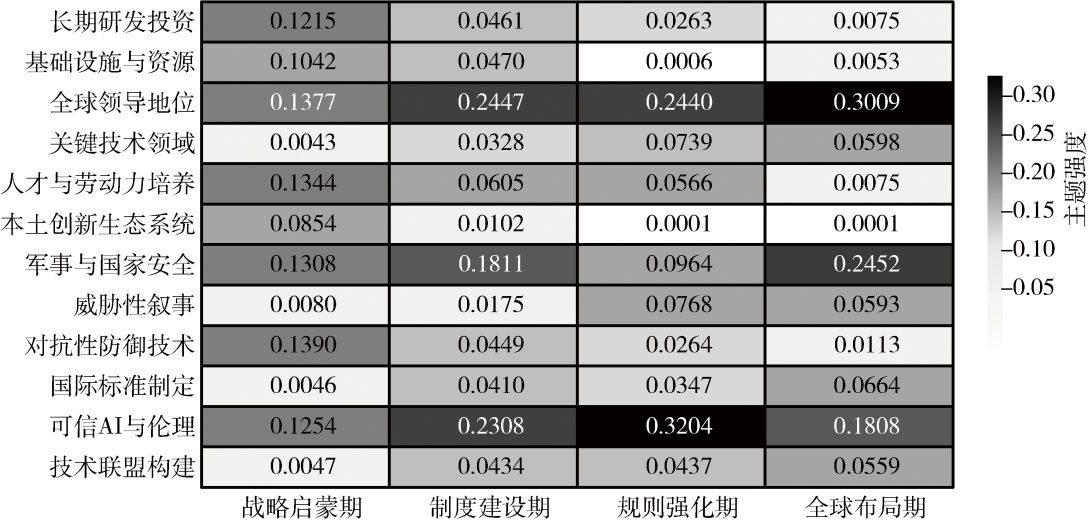
Figure 9 Heatmap of topic keywords
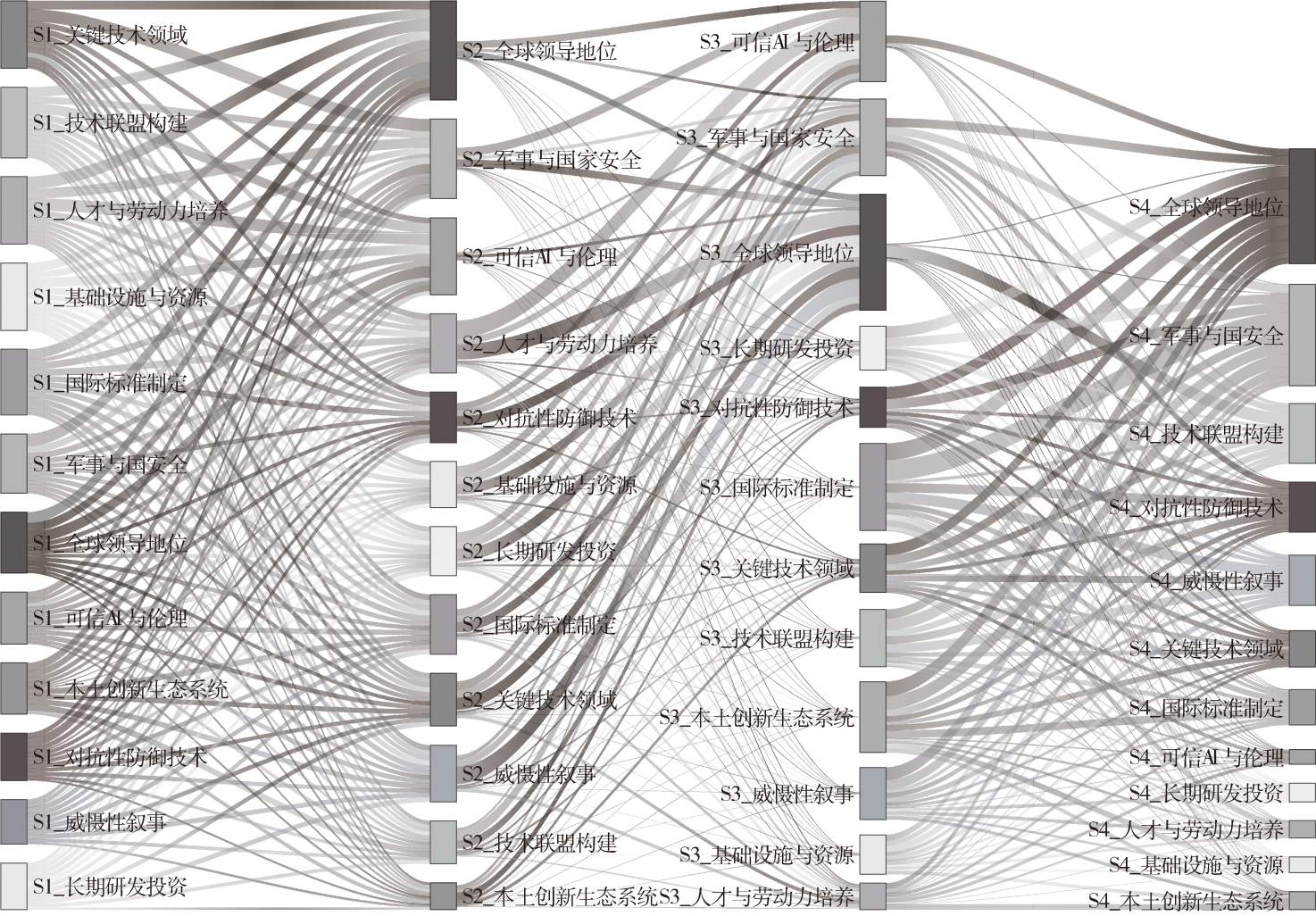
Figure 10 Sankey Diagram of Topic Evolution
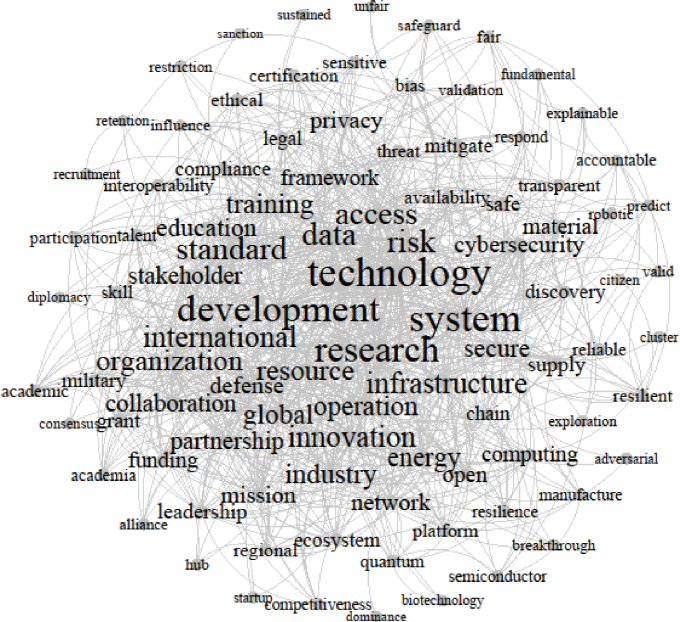
Figure 11 Co-occurrence network of U.S. AI policy topic keywords
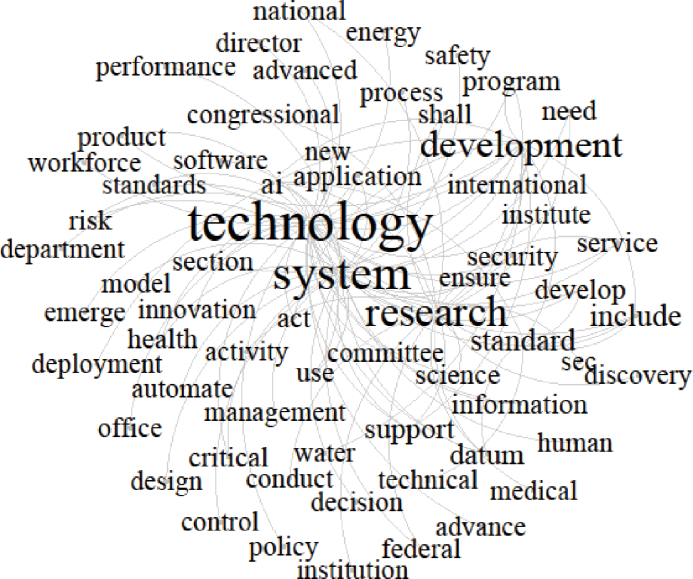
Figure 12 Core keywords co-occurrence network analysis
| [1] | 戚凯, 杨悦怡. 人工智能时代的美国对华算力竞争[J]. 国际论坛, 2024, 26(3): 43-61,156-157. |
| Qi K, Yang Y Y. A US computing power competition against China in the age of artificial intelligence[J]. International Forum, 2024, 26(3): 43-61,156-157. | |
| [2] | 曾坚朋, 张双志, 张龙鹏. 中美人工智能政策体系的比较研究--基于政策主体、工具与目标的分析框架[J]. 电子政务, 2019 (6): 13-22. |
| Zeng J P, Zhang S Z, Zhang L P. A comparative study of the AI policy systems of China and the US-An analysis framework based on policy actors, instruments, and goals[J]. E-government, 2019(6): 13-22. | |
| [3] | 阙天舒, 闫姗姗, 王璐瑶. 对美国人工智能领域政策工具的考察:安全偏向、结构特征及应用评估[J]. 当代亚太, 2022(1): 101-131,159-160. |
| Que T S, Yan S S, Wang L Y. An examination of applied policy in the field of artificial intelligence in the United States: Security trends, structural characteristics and applied evaluation[J]. Journal of contemporary Asia-Pacific Studies, 2022 (1): 101-131,159-160. | |
| [4] | 朱新超, 姜景, 陈悦. 基于政策建模一致性(PMC)指数模型的中美人工智能政策比较研究[J]. 科技管理研究, 2024, 44(8): 20-30. |
| Zhu X C, Jiang J, Chen Y. A comparative study of artificial intelligence policies of China and the United States based on the PMC index model[J]. Science and Technology Management Research, 2024, 44(8): 20-30. | |
| [5] | 赵刚, 谢祥. 拜登政府科技政策及其对华科技竞争[J]. 当代美国评论, 2021, 5(3): 58-75,122-123. |
| Zhao G, Xie X. Biden's science & technology policy and its competition with China[J]. Global Review, 2021, 5(3): 58-75,122-123. | |
| [6] | 张哲. 从“脱钩”到“去风险”:美国对华经贸科技政策的变迁[J]. 当代美国评论, 2024, 8(3): 43-65,130-131. |
| Zhang Z. From "decoupling" to "de-risking": The evolution of U.S. trade and technology policy toward China[J]. Contemporary American Review, 2024, 8(3): 43-65,130-131. | |
| [7] | 朱锋, 凌邦皓. 从特朗普1.0到特朗普2.0:美国对华战略竞争政策透视[J]. 国际展望, 2025, 17(2): 1-24,180. |
| Zhu F, Ling B H. From Trump 1.0 to Trump 2.0: A perspective on U.S. strategic competition policy toward China[J]. Global Review, 2025, 17(2):1-24,180. | |
| [8] | 翟迈云, 李庆四. 特朗普政府的对华科技防范政策探析[J]. 国际关系研究, 2020(4): 129-150,159. |
| Zhai M Y, Li Q S. Analysis of the Trump administration's technology containment policies against China[J]. Journal of International Relations, 2020 (4): 129-150,159. | |
| [9] | 沙德春, 荆晶. 中美人工智能产业国家顶层政策比较研究[J]. 科学管理研究, 2021, 39(3): 154-162. |
| Sha D C, Jing J. Comparative study on national top-level policies of artificial intelligence industry between China and the United States[J]. Scientific Management Research, 2021, 39(3): 154-162. | |
| [10] | 张辉, 胡奕璇, 曾雄. 美国人工智能政策的多维度分析及其启示[J]. 科学学研究, 2025, 43(6): 1160-1169. |
| Zhang H, Hu Y X, Zeng X. A multidimensional analysis of American artificial intelligence policy and the inspiration for China[J]. Studies in Science of Science, 2025, 43(6): 1160-1169. | |
| [11] | 杨超, 乔瀚, 李如烟. 美国人工智能监管政策的复杂性及临近性研究--基于州域层面政策文本的主题模型[J]. 科学学研究, 2026, 44(1):61-74. |
| Yang C, Qiao H, Li R Y. The Complexity of U.S. artificial intelligence regulatory policy and Sino-U.S. regula-tion policy similarity: Based on topic model analysis of state-level policy texts of the U.S[J]. Studies in Science of Science, 2026, 44(1):61-74. | |
| [12] | 程志波. 当代西方技术民族主义的本质意涵与表现类型[J]. 科学学研究, 2024, 42(3): 484-491. |
| Cheng Z B. The essential meaning and types of expression of contemporary western techno-nationalism[J]. Studies in Science of Science, 2024, 42(3): 484-491. | |
| [13] | 潘亚玲, 肖迅韬. 美国技术民族主义的结构转型与美对华技术遏制[J]. 外交评论(外交学院学报), 2024, 41(6): 24-47,166. |
| Pan Y L, Xiao X T. The structural transformation of America's techno-nationalism and its technological containment of China[J]. Foreign Affairs Review, 2024, 41(6): 24-47,166. | |
| [14] | 安维复. 技术民族主义学理性考察--重建全球共享的国家创新体系[J]. 人民论坛, 2020(36): 44-47. |
| An W F. A Theoretical exploration of techno-nationalism: Rebuilding a globally shared national innovation system[J]. People's Tribune, 2020(36): 44-47. | |
| [15] | 沈辛成. 技术民族主义:源流、局限与前景[J]. 探索与争鸣, 2022 (2): 27-37,177. |
| Shen X C. Techno-nationalism: Origin, limits and the future[J]. Exploration and Free Views, 2022(2): 27-37,177. | |
| [16] | 王伟. 美国技术民族主义的意识形态基础及其话术构建[J]. 当代世界, 2025(8): 46-51. |
| Wang W. The ideological foundation of American techno-nationalism and its discursive construction[J]. Contemporary World, 2025 (8): 46-51. | |
| [17] | 文洋, 窦玉根. 百年大变局下技术民族主义的表现、影响及因应[J]. 理论视野, 2022 (4): 51-57. |
| Wen Y, Dou Y G. The manifestations, impacts, and responses to techno-nationalism in an era of profound changes unseen in a century[J]. Theoretical Horizon, 2022(4): 51-57. | |
| [18] | 孙海泳. 进攻性技术民族主义与美国对华科技战[J]. 国际展望, 2020, 12(5): 46-64,158-159. |
| Sun H Y. Offensive techno-nationalism and China-U.S. tech war[J]. Global Review, 2020, 12(5): 46-64,158-159. | |
| [19] | 刘国柱. 特朗普政府技术民族主义论析[J]. 美国研究, 2020, 34(4): 45-67,6. |
| Liu G Z. An analysis of American technological nationalism of the Trump administration[J]. The Chinese Journal of American Studies, 2020, 34(4): 45-67,6. | |
| [20] | 李峥. 全球新一轮技术民族主义及其影响[J]. 现代国际关系, 2021(3): 31-39,64. |
| Li Z. A new round of global technological nationalism and its impacts[J]. Contemporary International Relations, 2021(3): 31-39,64. | |
| [21] | 余南平, 戢仕铭. 技术民族主义对全球价值链的影响分析--以全球半导体产业为例[J]. 国际展望, 2021, 13(1): 67-87,155-156. |
| Yu N P, Ji S M. Techno-nationalism and its impact on global value chains-A case study of the global chip industry[J]. Global Review, 2021, 13(1): 67-87,155-156. | |
| [22] | 王琴, 欧阳果华. 理解技术民族主义:集体记忆、身份认可与国际竞争--基于联想5G投票事件的观察[J]. 西北民族大学学报(哲学社会科学版), 2020 (3): 59-67. |
| Wang Q, Ouyang G H. Understanding technical nationalism: Collective memory, national identity and international competition-Based on observation of the Lenovo 5G voting incident[J]. Journal of Northwest Minzu University (Philosophy and Social Sciences), 2020(3): 59-67. | |
| [23] | 徐菲, 石斌. 技术民族主义及其对美国对华科技政策的塑造[J]. 当代美国评论, 2024, 8(2): 60-81,127-128. |
| Xu F, Shi B. Techno-nationalism and its influence on U.S. technology policy towards China[J]. Contemporary American Review, 2024, 8(2): 60-81,127-128. | |
| [24] | 王玉柱. 发展阶段、技术民族主义与全球化格局调整--兼论大国政治驱动的新区域主义[J]. 世界经济与政治, 2020(11): 136-155,160. |
| Wang Y Z. Development stages,technological nationalism and globalization structure change: On new regionalism driven by major power politics[J]. World Economics and Politics, 2020(11): 136-155,160. | |
| [25] | 梅亮. 国家科技战略:芯片产业美对华行动逻辑与启示[J]. 科学学研究, 2025, 43(1): 3-13. |
| Mei L. The state's science and technology strategy- lessons from the U.S. strategy toward chip industry of China[J]. Studies in Science of Science, 2025, 43(1): 3-13. | |
| [26] | 刘国柱, 尹楠楠. 美国国家安全认知的新视阈:人工智能与国家安全[J]. 国际安全研究, 2020, 38(2): 135-155,160. |
| Liu G Z, Yin N N. A new perspective on the US national security perception: Artificial intelligence and national security[J]. Journal of International Security Studies, 2020, 38(2): 135-155,160. | |
| [27] | 蔡翠红, 李煜华. 科技右翼与美国科技安全战略转型[J]. 国际安全研究, 2025, 43(3): 3-34,154. |
| Cai C H, Li Y H. The tech right and the transformation of U.S. technology security strategy[J]. Journal of International Security Studies, 2025, 43(3): 3-34,154. | |
| [28] | Blei D M, Lafferty J D. Dynamic Topic Models[C]. Proceedings of the 23rd International Conference on Machine Learning, 2006: 113-120. |
| [29] | 关鹏, 王曰芬. 科技情报分析中LDA主题模型最优主题数确定方法研究[J]. 现代图书情报技术, 2016 (9): 42-50. |
| Guan P, Wang Y F. Research on methods for determining the optimal number of topics in LDA topic modeling for sci-tech information analysis[J]. Data Analysis and Knowledge Discovery, 2016 (9): 42-50. | |
| [30] | Mimno D, Wallach H, Talley E, et al. Optimizing Semantic Coherence in Topic Models[C]. Proceedings of the 2011 Conference on Empirical Methods in Natural Language Processing, 2011: 262-272. |
| [31] | 邱均平, 胡博, 徐中阳, 等. 基于DTM的国内外话语权研究主题挖掘及比较分析[J]. 情报理论与实践, 2023, 46(2): 24-34. |
| Qiu J P, Hu B, Xu Z Y, et al. Topic mining and comparative analysis of discourse power research in China and abroad based on DTM[J]. Information Studies: Theory & Application, 2023, 46(2): 24-34. | |
| [32] | 吴瑞鹏, 李勇男, 刘帅, 等. 基于DTM的美国人工智能战略热点主题及演化分析[J]. 情报杂志, 2023, 42(12): 134-143. |
| Wu R P, Li Y N, Liu S, et al. DTM-based analysis of hot topics and evolution of American artificial intelligence strategy[J]. Journal of Intelligence, 2023, 42(12): 134-143. | |
| [33] | 赵一鸣, 尹嘉颖. 语义增强型全文本共词网络的构建与分析[J]. 情报学报, 2023, 42(10): 1187-1198. |
| Zhao Y M, Yin J Y. Construction and analysis of semantic-enhanced full-text co-occurrence network[J]. Journal of the China Society for Scientific and Technical Information, 2023, 42(10): 1187-1198. | |
| [34] | 阮光册, 夏磊. 基于共现分析的文本主题词聚类研究[J]. 图书馆杂志, 2018, 37(11): 99-104,119. |
| Ruan G C, Xia L. Clustering of textual subject words based on co-word analysis[J]. Library Journal, 2018, 37(11): 99-104,119. | |
| [35] | 汪家颖, 钟欣芯, 王军杰. 国际投资协定国家安全例外条款泛化适用:新发趋势与中国因应[J]. 西华大学学报(哲学社会科学版), 2025, 44(5): 79-89. |
| Wang J Y, Zhong X X, Wang J J. Overgeneralized application of national security exception clauses in international investment agreements: Emerging trends and China's responses[J]. Journal of Xihua University(Philosophy & Social Sciences), 2025, 44(5): 79-89. | |
| [36] | 李鹏, 赵书韫, 戚凯. 拜登政府对华人工智能产业的打压与中国因应[J]. 情报杂志, 2023, 42(6): 62-67. |
| Li P, Zhao S Y, Qi K. Biden administration's crackdown on China's artificial intelligence industry and China's response[J]. Journal of Intelligence, 2023, 42(6): 62-67. |
| [1] | . The Essential Meaning and Types of Expression of Contemporary Western Techno- nationalism [J]. Studies in Science of Science, 2024, 42(3): 484-491. |
| Viewed | ||||||
|
Full text |
|
|||||
|
Abstract |
|
|||||
