
Studies in Science of Science ›› 2026, Vol. 44 ›› Issue (6): 1217-1228.
• Theories and Methods • Previous Articles Next Articles
ZHANG Hao-nan1, WANG Hao-yue1, XING Rui1( ), ZHU Fang-wei1,2, GAO Yan-hong1
Received:2025-06-23
Revised:2025-12-05
Online:2026-06-15
Published:2026-06-15
张昊男1, 王皓月1, 邢蕊1(), 朱方伟1,2, 高艳虹1
通讯作者:
邢蕊(1983-),女,副教授,博士, E-mail:作者简介:张昊男(2000-),男,博士研究生。基金资助:CLC Number:
ZHANG Hao-nan, WANG Hao-yue, XING Rui, ZHU Fang-wei, GAO Yan-hong. Research on the iterative mechanism between scientific research and technology R&D in original innovation[J]. Studies in Science of Science, 2026, 44(6): 1217-1228.
张昊男, 王皓月, 邢蕊, 朱方伟, 高艳虹. 原始创新中科学研究与技术研发迭代机制研究[J]. 科学学研究, 2026, 44(6): 1217-1228.
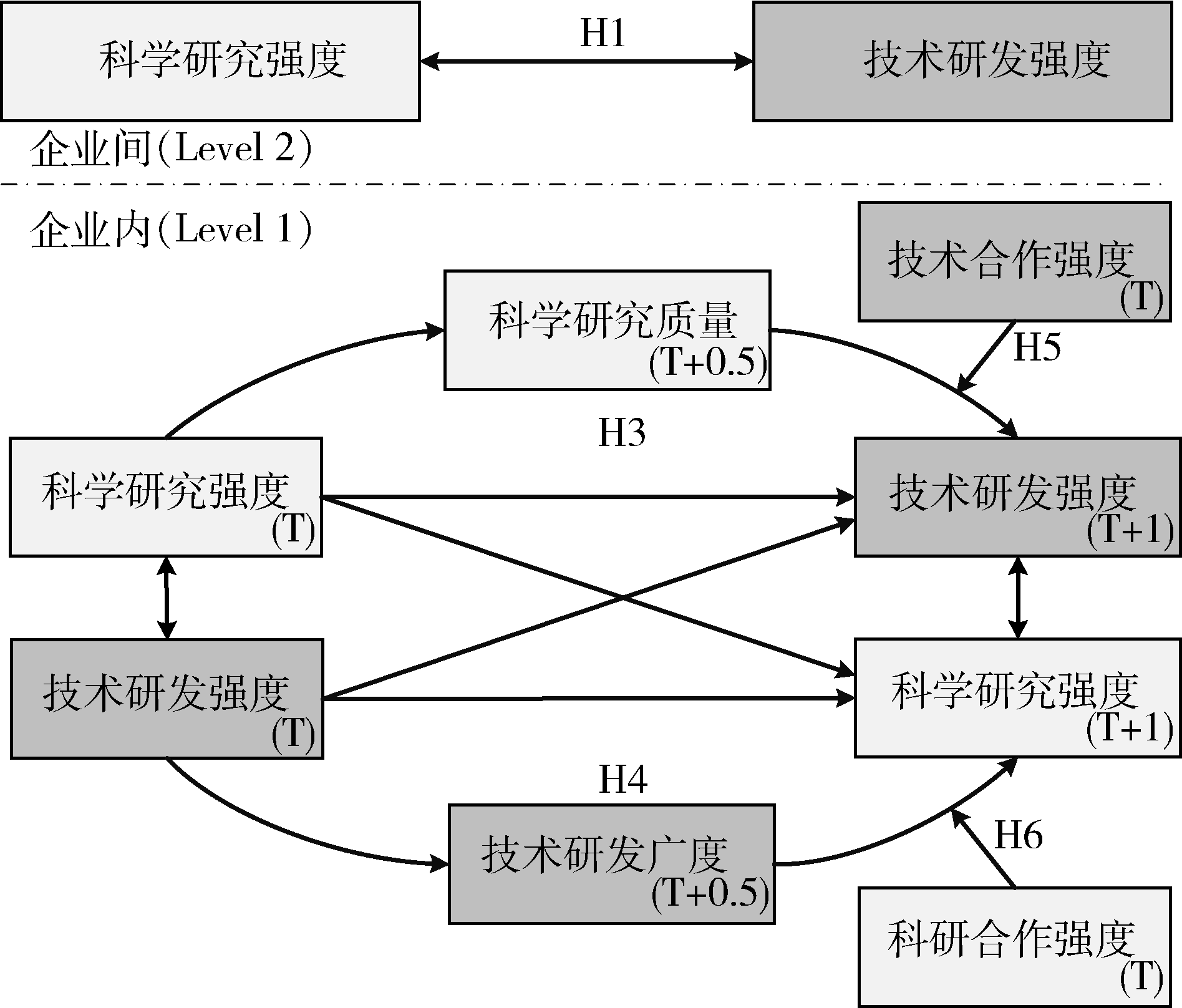
Figure 1 Research model
| 研究变量 | 1 | 2 | 3 | 4 | 5 | 6 | 7 |
|---|---|---|---|---|---|---|---|
| 1企业研发投入 | 0.934 | 0.552 | 0.571 | 0.384 | 0.351 | 0.336 | 0.401 |
| 2技术研发强度 | 0.753*** | 0.942 | 0.524 | 0.497 | 0.338 | 0.602 | 0.339 |
| 3科学研究强度 | 0.684*** | 0.324*** | 0.953 | 0.515 | 0.402 | 0.357 | 0.504 |
| 4技术合作强度 | 0.251*** | 0.537*** | 0.438*** | 0.926 | 0.611 | 0.527 | 0.418 |
| 5科研合作强度 | 0.206*** | 0.201*** | 0.457*** | 0.462*** | 0.923 | 0.498 | 0.704 |
| 6技术研发广度 | 0.455*** | 0.336*** | 0.388*** | 0.561*** | 0.242*** | 0.937 | 0.282 |
| 7科学研究质量 | 0.270*** | 0.304*** | 0.603*** | 0.206*** | 0.552*** | 0.113** | 0.928 |
Table 1 Calculation results of correlation coefficients between variables
| 研究变量 | 1 | 2 | 3 | 4 | 5 | 6 | 7 |
|---|---|---|---|---|---|---|---|
| 1企业研发投入 | 0.934 | 0.552 | 0.571 | 0.384 | 0.351 | 0.336 | 0.401 |
| 2技术研发强度 | 0.753*** | 0.942 | 0.524 | 0.497 | 0.338 | 0.602 | 0.339 |
| 3科学研究强度 | 0.684*** | 0.324*** | 0.953 | 0.515 | 0.402 | 0.357 | 0.504 |
| 4技术合作强度 | 0.251*** | 0.537*** | 0.438*** | 0.926 | 0.611 | 0.527 | 0.418 |
| 5科研合作强度 | 0.206*** | 0.201*** | 0.457*** | 0.462*** | 0.923 | 0.498 | 0.704 |
| 6技术研发广度 | 0.455*** | 0.336*** | 0.388*** | 0.561*** | 0.242*** | 0.937 | 0.282 |
| 7科学研究质量 | 0.270*** | 0.304*** | 0.603*** | 0.206*** | 0.552*** | 0.113** | 0.928 |
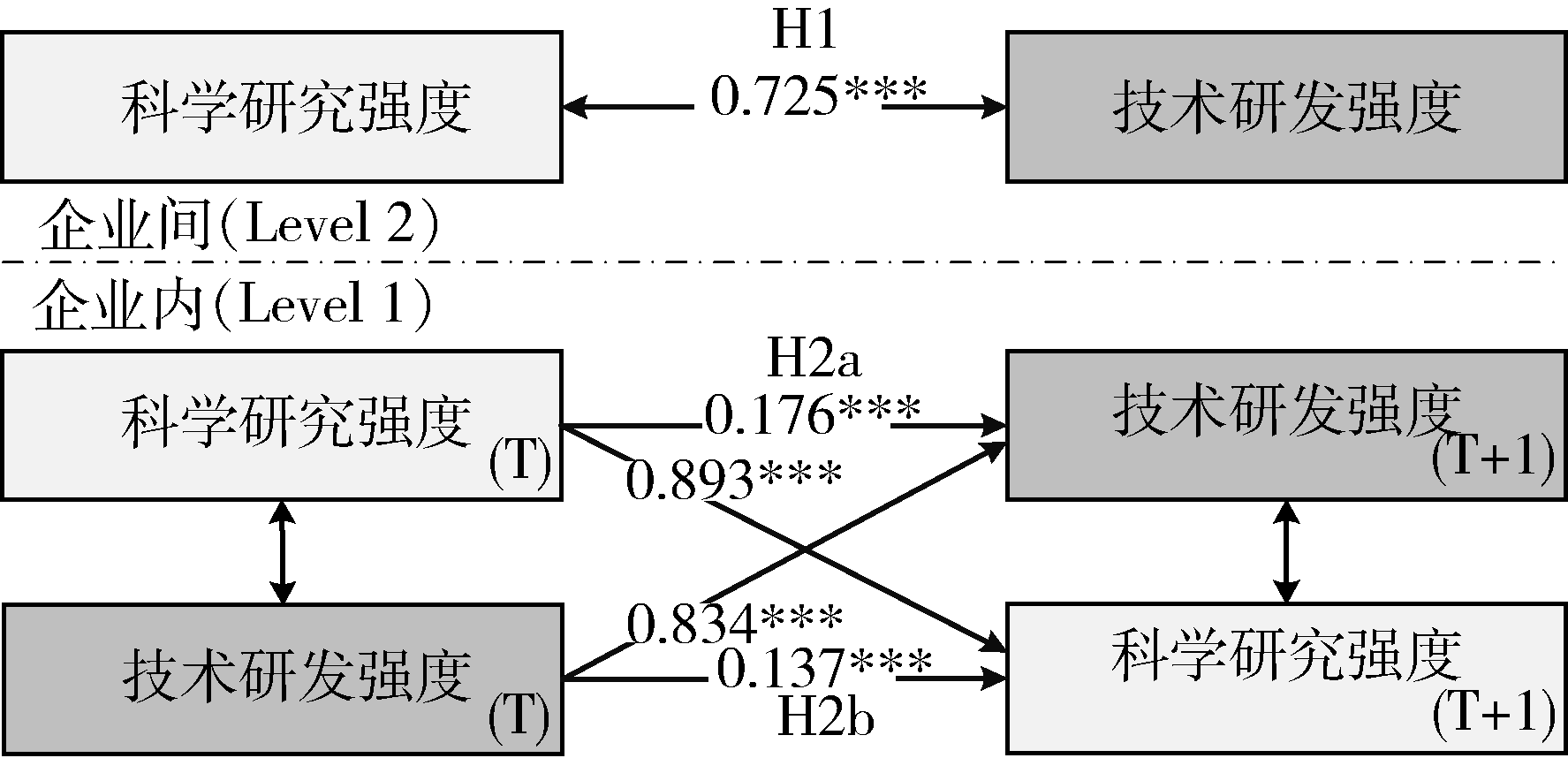
Figure 2 Main effect results of DSEM
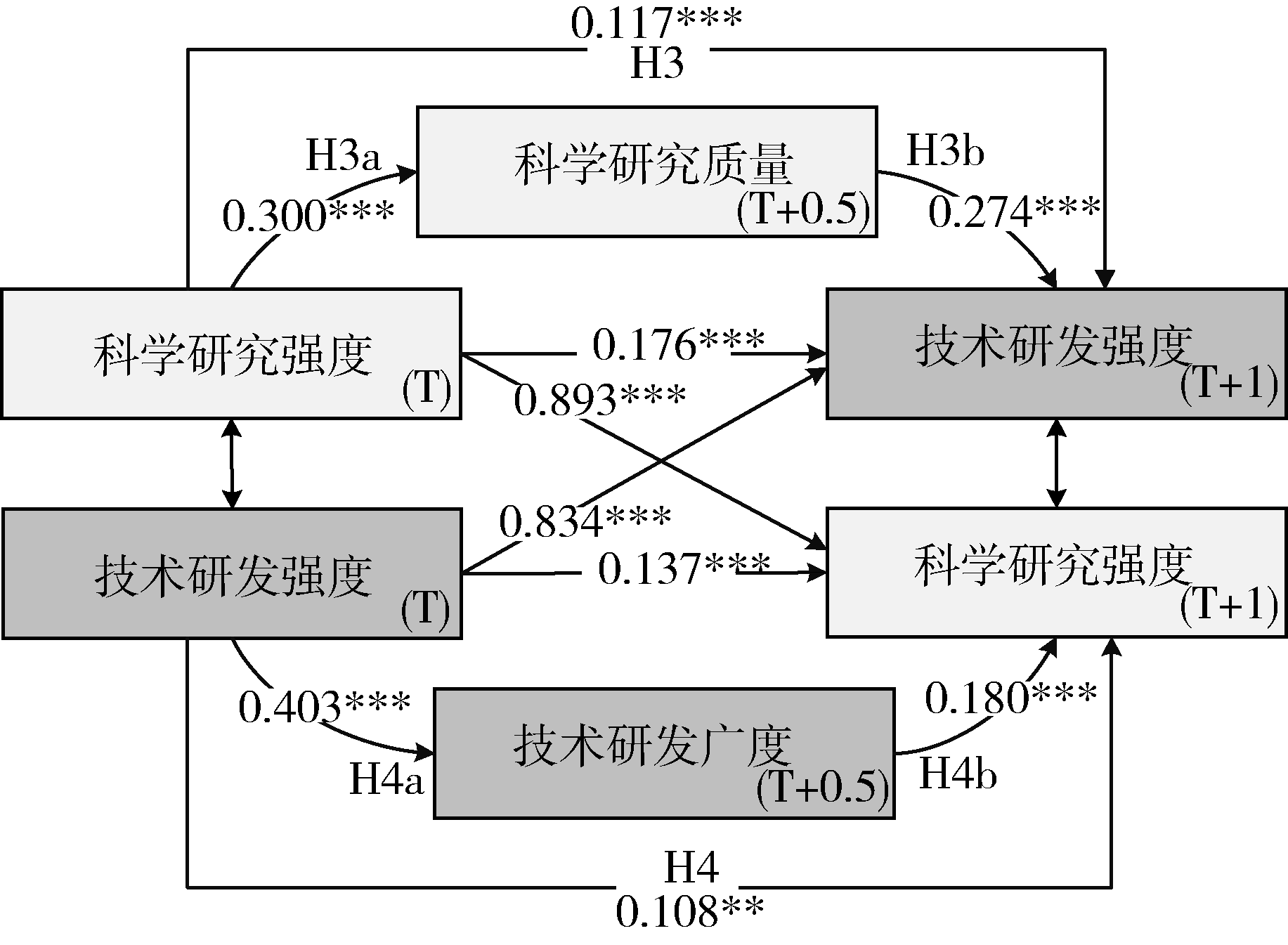
Figure 3 Mediating effect results of DSEM
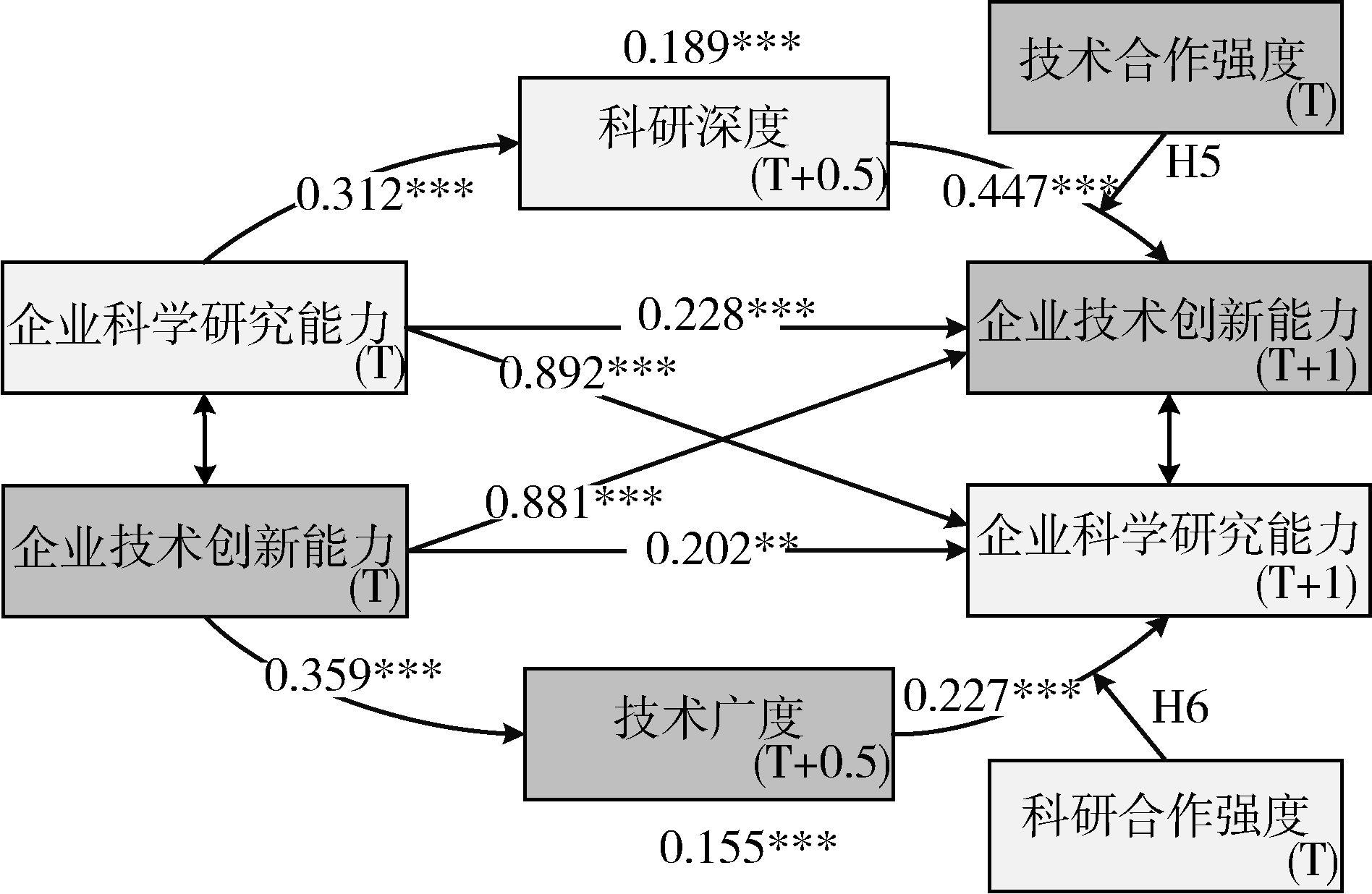
Figure 4 Moderating effect results of cooperation intensity in DSEM
| 关系 | 标准化系数结果 | ||
|---|---|---|---|
| 效应值 | 标准误差 | 95%置信区间 | |
| 直接效应(Level 1) | |||
| 科学研究强度(t0)→技术研发强度(t1) | 0.176 | 0.077 | [0.076,0.313] |
| 技术研发强度(t0)→科学研究强度(t1) | 0.137 | 0.085 | [0.048,0.217] |
| 自回归效应(Level 1) | |||
| 科学研究强度(t0)→科学研究强度(t1) | 0.893 | 0.040 | [0.802,0.954] |
| 技术研发强度(t0)→技术研发强度(t1) | 0.834 | 0.074 | [0.670,0.960] |
| 科学研究质量中介效应(Level 1) | |||
| 科学研究强度(t0)→科学研究质(t0.5) | 0.300 | 0.036 | [0.228,0.371] |
| 科学研究质量(t0.5)→技术研发强度(t1) | 0.274 | 0.182 | [0.070,0.647] |
| 科学研究强度→科学研究质量→技术研发强度(间接效应) | 0.117 | 0.067 | [0.029,0.190] |
| 技术研发广度中介效应(Level 1) | |||
| 技术研发强度(t0)→技术研发广度(t0.5) | 0.403 | 0.230 | [0.105,0.781] |
| 技术研发广度(t0.5)→企业科学研究强度(t1) | 0.180 | 0.104 | [0.090,0.247] |
| 技术研发强度→技术研发广度→科学研究强度(间接效应) | 0.108 | 0.085 | [0.016,0.163] |
| 技术合作强度调节效应(Level 1) | |||
| 科学研究强度(t0)→科学研究质量(t0.5) | 0.312 | 0.033 | [0.087,0.582] |
| 技术合作强度(t0) *科学研究质量(t0.5)→技术研发强度(t1) | 0.447 | 0.036 | [0.065,0.835] |
| 科学研究强度→科学研究质量→技术研发强度(间接效应) | 0.189 | 0.031 | [0.056,0.315] |
| 科学研究强度→科学研究质量→技术研发强度(间接效应差异) | 0.097 | 0.028 | [0.029,0.141] |
| 科研合作强度调节效应(Level 1) | |||
| 企业技术研发强度(t0) →技术研发广度(t0.5) | 0.359 | 0.048 | [0.116,0.575] |
| 科研合作强度(t0) *技术研发广度(t0.5)→科学研究强度(t1) | 0.227 | 0.064 | [0.104,0.445] |
| 技术研发强度→技术研发广度→科学研究强度(间接) | 0.155 | 0.024 | [0.057,0.223] |
| 技术研发强度→技术研发广度→科学研究强度(间接效应差异) | 0.078 | 0.024 | [0.030,0.115] |
| 企业间关联效应(Level 2) | |||
| 科学研究强度~技术研发强度 | 0.725 | 0.264 | [0.206,0.993] |
| 时间趋势效应(Level 1) | |||
| 时间→科学研究强度 | 0.008 | 0.016 | [-0.005,0.018] |
| 时间→技术研发强度 | 0.013 | 0.015 | [-0.006,0.042] |
Table 2 Summary of effect size results for DSEM
| 关系 | 标准化系数结果 | ||
|---|---|---|---|
| 效应值 | 标准误差 | 95%置信区间 | |
| 直接效应(Level 1) | |||
| 科学研究强度(t0)→技术研发强度(t1) | 0.176 | 0.077 | [0.076,0.313] |
| 技术研发强度(t0)→科学研究强度(t1) | 0.137 | 0.085 | [0.048,0.217] |
| 自回归效应(Level 1) | |||
| 科学研究强度(t0)→科学研究强度(t1) | 0.893 | 0.040 | [0.802,0.954] |
| 技术研发强度(t0)→技术研发强度(t1) | 0.834 | 0.074 | [0.670,0.960] |
| 科学研究质量中介效应(Level 1) | |||
| 科学研究强度(t0)→科学研究质(t0.5) | 0.300 | 0.036 | [0.228,0.371] |
| 科学研究质量(t0.5)→技术研发强度(t1) | 0.274 | 0.182 | [0.070,0.647] |
| 科学研究强度→科学研究质量→技术研发强度(间接效应) | 0.117 | 0.067 | [0.029,0.190] |
| 技术研发广度中介效应(Level 1) | |||
| 技术研发强度(t0)→技术研发广度(t0.5) | 0.403 | 0.230 | [0.105,0.781] |
| 技术研发广度(t0.5)→企业科学研究强度(t1) | 0.180 | 0.104 | [0.090,0.247] |
| 技术研发强度→技术研发广度→科学研究强度(间接效应) | 0.108 | 0.085 | [0.016,0.163] |
| 技术合作强度调节效应(Level 1) | |||
| 科学研究强度(t0)→科学研究质量(t0.5) | 0.312 | 0.033 | [0.087,0.582] |
| 技术合作强度(t0) *科学研究质量(t0.5)→技术研发强度(t1) | 0.447 | 0.036 | [0.065,0.835] |
| 科学研究强度→科学研究质量→技术研发强度(间接效应) | 0.189 | 0.031 | [0.056,0.315] |
| 科学研究强度→科学研究质量→技术研发强度(间接效应差异) | 0.097 | 0.028 | [0.029,0.141] |
| 科研合作强度调节效应(Level 1) | |||
| 企业技术研发强度(t0) →技术研发广度(t0.5) | 0.359 | 0.048 | [0.116,0.575] |
| 科研合作强度(t0) *技术研发广度(t0.5)→科学研究强度(t1) | 0.227 | 0.064 | [0.104,0.445] |
| 技术研发强度→技术研发广度→科学研究强度(间接) | 0.155 | 0.024 | [0.057,0.223] |
| 技术研发强度→技术研发广度→科学研究强度(间接效应差异) | 0.078 | 0.024 | [0.030,0.115] |
| 企业间关联效应(Level 2) | |||
| 科学研究强度~技术研发强度 | 0.725 | 0.264 | [0.206,0.993] |
| 时间趋势效应(Level 1) | |||
| 时间→科学研究强度 | 0.008 | 0.016 | [-0.005,0.018] |
| 时间→技术研发强度 | 0.013 | 0.015 | [-0.006,0.042] |
| [1] | 雷小苗. 新时代推进科技自立自强的路径研究[J]. 科学学研究, 2025, 43(2): 238-245. |
| Lei X M. Research on the path of promoting technological independence and self strengthening in the new era[J]. Studies in Science of Science, 2025, 43(2): 238-245. | |
| [2] | 朱子钦, 李振东, 赵晨, 等. 学术创业驱动科技创新与产业创新深度融合的贯通机制研究——以智能计算领域为例[J]. 管理世界, 2025, 41(10): 167-192. |
| Zhu Z Q, Li Z D, Zhao C, et al. Research on the linkage mechanism of academic entrepreneurship driving the deep integration of S&T innovation and industrial innovation: A case study in the field of intelligent computing[J]. Journal of Management World, 2025, 41(10): 167-192. | |
| [3] |
Mokyr J. Intellectual property rights, the industrial revolution, and the beginnings of modern economic growth[J]. American Economic Review, 2009, 99(2): 349-355.
DOI URL |
| [4] | 李柏洲, 高硕. 企业合作型原始创新知识流动演化研究[J]. 科学学研究, 2019, 37(8): 1506-1516. |
| Li B Z, Gao S. Research on evolution of knowledge flow of enterprise collaborative original innovation[J]. Studies in Science of Science, 2019, 37(8): 1506-1516. | |
| [5] | 郭元源, 秦武, 吴亮, 等. 产业“疾驰”何以可能?——基于中国新能源汽车产业技术赶超的分析[J]. 科学学研究, 2025, 43(8): 1702-1714. |
| Guo Y Y, Qin W, Wu L, et al. How is the “ rapid progress” possible?——An analysis based on the technological catch - up in China’s new energy vehicle industry[J]. Studies in Science of Science, 2025, 43(8): 1702-1714. | |
| [6] |
Mokyr J. Technological inertia in economic history[J]. The Journal of Economic History, 1992, 52(2): 325-338.
DOI URL |
| [7] |
Cardinal L B, Alessandri T M, Turner S F. Knowledge codifiability, resources, and science-based innovation[J]. Journal of Knowledge Management, 2001, 5(2):195-204.
DOI URL |
| [8] | 田庆锋, 易磊. 战略性新兴产业技术创新驱动新质生产力发展的组态研究[J]. 科研管理, 2025, 46(5): 23-34. |
| Tian Q F, Yi L. Research on the configurations for the development of new quality productive forces driven by technological innovation in strategic emerging industries[J]. Science Research Management, 2025, 46(5): 23-34. | |
| [9] | 朱卫杰, 鲁若愚, 韩武成, 等. 科学驱动的技术创新绩效影响因素及演化路径[J]. 科学学研究, 2025, 43(1): 137-150. |
| Zhu W J, Lu R Y, Han W C, et al. Impact factors and evolutionary pathways of scientific - driven technological innovation performance[J]. Studies in Science of Science, 2025, 43(1): 137-150. | |
| [10] | 吴增源, 杨航宇, 王泽林, 等. 创新联合体突破关键核心技术的知识增强机制——基于复杂产品系统情境[J]. 科学学研究, 2026, 44(3):514-528. |
| Wu Z Y, Yang H Y, Wang Z L, et al. The knowledge enhancement mechanism of innovation consortium for breaking through the key core technology in the context of complex products and systems[J]. Studies in Science of Science, 2026, 44(3):514-528. | |
| [11] |
Ba Z, Liang Z. A novel approach to measuring science-technology linkage: From the perspective of knowledge network coupling[J]. Journal of Informetrics, 2021, 15(3): 101167.
DOI URL |
| [12] | 陈钰芬, 邓怡. 基于科学/经验的创新何以驱动经济现代化?[J]. 科学学研究, 2025, 43(10): 2142-2154. |
| Chen Y F, Deng Y. How can STI/DUI innovation drive economic modernization?[J]. Studies in Science of Science, 2025, 43(10): 2142-2154. | |
| [13] |
Brooks H. The relationship between science and technology[J]. Research Policy, 1994, 23(5): 477-486.
DOI URL |
| [14] | 王美香, 陈智, 张耀伟, 等. 产业链与创新链融合闭环构建逻辑——基于万华化学的案例研究[J]. 科研管理, 2025, 46(1): 83-94. |
| Wang M X, Chen Z, Zhang Y W, et al. Construction logic of the integrated closed - loop of industrial chain and innovation chain: A case study of Wanhua Chemical[J]. Science Research Management, 2025, 46(1): 83-94. | |
| [15] |
Gonzalez R V D, de Melo T M. The effects of organization context on knowledge exploration and exploitation[J]. Journal of Business Research, 2018, 90: 215-225.
DOI URL |
| [16] |
Choi J U, Lee C Y. The differential effects of basic research on firm R&D productivity: The conditioning role of technological diversification[J]. Technovation, 2022, 118: 102559.
DOI URL |
| [17] | 李梦柯, 王芳. 产业创新的科学知识特征对中国技术追赶的影响[J]. 科研管理, 2024, 45(3): 10-19. |
| Li M K, Wang F. Impact of scientific knowledge characteristics of industrial innovation on China’s technological catch-up[J]. Science Research Management, 2024, 45(3): 10-19. | |
| [18] |
Chen X, Mao J, Ma Y, et al. The knowledge linkage between science and technology influences corporate technological innovation: Evidence from scientific publications and patents[J]. Technological Forecasting and Social Change, 2024, 198: 122985.
DOI URL |
| [19] | 孟巧爽, 李乐逸, 王艺萌. 企业基础研究的知识溢出效应研究[J]. 科学学研究, 2025, 43(1): 91-102. |
| Meng Q S, Li L Y, Wang Y M. A study on the knowledge spillover effect of enterprise basic research[J]. Studies in Science of Science, 2025, 43(1): 91-102. | |
| [20] |
Trunfio M, Campana S. Innovation in knowledge-based destination: Technology-driven vs. social-driven[J]. International Journal of Knowledge-Based Development, 2020, 11(2): 176-199.
DOI URL |
| [21] | 滕宇汯, 卢现祥. 制造业企业技术创新与创新驱动发展困境[J]. 科研管理, 2023, 44(11): 124-133. |
| Teng Y X, Lu X X. Technological innovation and innovation-driven development dilemma in manufacturing enterprises[J]. Science Research Management, 2023, 44(11): 124-133. | |
| [22] | 胡海波, 毛纯兵, 陈劲, 等. 从攻关启动到市场应用:关键核心技术替代式创新过程机制研究[J]. 南开管理评论, 2024, 27(8): 64-74. |
| Hu H B, Mao C B, Chen J, et al. From initiation of technological breakthrough to market application: Research on the mechanism of alternative innovation process for key core technologies[J]. Nankai Business Review, 2024, 27(8): 64-74. | |
| [23] | 吴菲菲, 李一苇, 苗红, 等. 中国重点技术领域基础研究成果转化效率评估[J]. 科学学研究, 2021, 39(12): 2160-2169. |
| Wu F F, Li Y W, Miao H, et al. Assessment of transformation efficiency of basic research results of essential fields in China[J]. Studies in Science of Science, 2021, 39(12): 2160-2169. | |
| [24] |
Mannucci P V, Yong K. The differential impact of knowledge depth and knowledge breadth on creativity over individual careers[J]. Academy of Management Journal, 2018, 61(5): 1741-1763.
DOI URL |
| [25] |
Esfandyarpour A, Arasti M R, Farazi M S, et al. From depth and breadth of knowledge to technological capability: A journey inside a firm's intellectual capital[J]. R&D Management, 2024, 54(4): 864-881.
DOI URL |
| [26] | 徐蕾, 李明贝. 技术多元化对创新绩效的双中介作用机理研究[J]. 科研管理, 2019, 40(5): 110-119. |
| Xu L, Li M B. A research on the dual mediation mechanism of the impact of technological diversification on innovation performance[J]. Science Research Management, 2019, 40(5): 110-119. | |
| [27] |
Papazoglou M E, Spanos Y E. Bridging distant technological domains: A longitudinal study of the determinants of breadth of innovation diffusion[J]. Research Policy, 2018, 47(9): 1713-1728.
DOI URL |
| [28] |
Chandra P, Dong A. The relation between knowledge accumulation and technical value in interdisciplinary technologies[J]. Technological Forecasting and Social Change, 2018, 128: 235-244.
DOI URL |
| [29] | 李欣, 王艳, 高宁, 等. 企业研发合作是否促进了技术融合?——高校/科研机构参与程度的调节作用[J]. 科学学研究, 2025, 43(9): 1911-1923. |
| Li X, Wang Y, Gao N, et al. Does R&D collaboration among enterprises promote technological convergence?——Moderating effect of engagement level with universities/scientific research institutions[J]. Studies in Science of Science, 2025, 43(9): 1911-1923. | |
| [30] |
Hagedoorn J, Duysters G. External sources of innovative capabilities: The preferences for strategic alliances or mergers and acquisitions[J]. Journal of Management Studies, 2002, 39(2): 167-188.
DOI URL |
| [31] |
Lin B W, Wu C H. How does knowledge depth moderate the performance of internal and external knowledge sourcing strategies?[J]. Technovation, 2010, 30(11-12): 582-589.
DOI URL |
| [32] | 邵记友, 杨忠, 张骁. 领军企业创新链中联盟组合的构建机制研究——以华为5G技术研发为例[J]. 管理学报, 2024, 21(4):484-493. |
| Shao J Y, Yang Z, Zhang X. Research on the construction mechanism of alliance portfolio in leading enterprises’ innovation chain: Taking R&D process of HUAWEI 5G technology as an example[J]. Chinese Journal of Management, 2024, 21(4):484-493. | |
| [33] | Loehlin J C. Latent Variable Models:An Introduction to Factor, Path, and Structural Equation Analysis[M]. Psychology Press, 2004. |
| [34] | do Amaral M G, da Hora A L F, Messias N R, et al. A divergent research agenda: Academic and professional publications on Science, Technology and Innovation Parks[J]. Triple Helix, 2020, 7(1): 3-39. |
| [35] |
Kang W, Zhao S, Song W, et al. Triple helix in the science and technology innovation centers of China from the perspective of mutual information: A comparative study between Beijing and Shanghai[J]. Scientometrics, 2019, 118: 921-940.
DOI |
| [36] | 张昊男, 朱方伟, 林原, 等. 跨领域技术竞合的动静态分析——基于二重BERT文本分析方法[J]. 情报学报, 2024, 43(11): 1322-1333. |
| Zhang H N, Zhu F W, Lin Y, et al. Dynamic and static analysis of cross-domain technological coopetition based on dual BERT text analysis approach[J]. Journal of the China Society for Scientific and Technical Information, 2024, 43(11): 1322-1333. | |
| [37] |
Bredehorst J, Krautter K, Meuris J, et al. The challenge of maintaining passion for work over time: A daily perspective on passion and emotional exhaustion[J]. Organization Science, 2024, 35(1): 364-386.
DOI URL |
| [38] |
方杰, 温忠麟, 王惠惠, 等. 密集追踪数据的有调节的中介效应分析[J]. 心理学报, 2025, 57(5): 915-934.
DOI |
|
Fang J, Wen Z L, Wang H H, et al. Moderated mediation analyses of intensive longitudinal data[J]. Acta Psychologica Sinica, 2025, 57(5): 915-934.
DOI |
| Viewed | ||||||
|
Full text |
|
|||||
|
Abstract |
|
|||||
