
Studies in Science of Science ›› 2026, Vol. 44 ›› Issue (2): 255-269.
• Hot Issues • Previous Articles Next Articles
YE Yang1, XU Jie2( ), HUANG Zhang-long3, QIAN Ze-yi4
Received:2025-01-27
Revised:2025-06-13
Online:2026-02-15
Published:2026-02-15
Contact:
XU Jie
叶杨1, 徐洁2(), 黄章龙3, 钱则一4
通讯作者:
徐洁
作者简介:叶杨(1998-),男,硕士。基金资助:CLC Number:
YE Yang, XU Jie, HUANG Zhang-long, QIAN Ze-yi. The spatiotemporal evolution of talent policies and their impact on new quality productive forces in Chinese prefecture-level cities: Based on quantitative analysis of 3308 policy texts from 2002 to 2021[J]. Studies in Science of Science, 2026, 44(2): 255-269.
叶杨, 徐洁, 黄章龙, 钱则一. 中国地市级人才政策时空演进与新质生产力——基于2002-2021年3308项政策文本的量化分析[J]. 科学学研究, 2026, 44(2): 255-269.
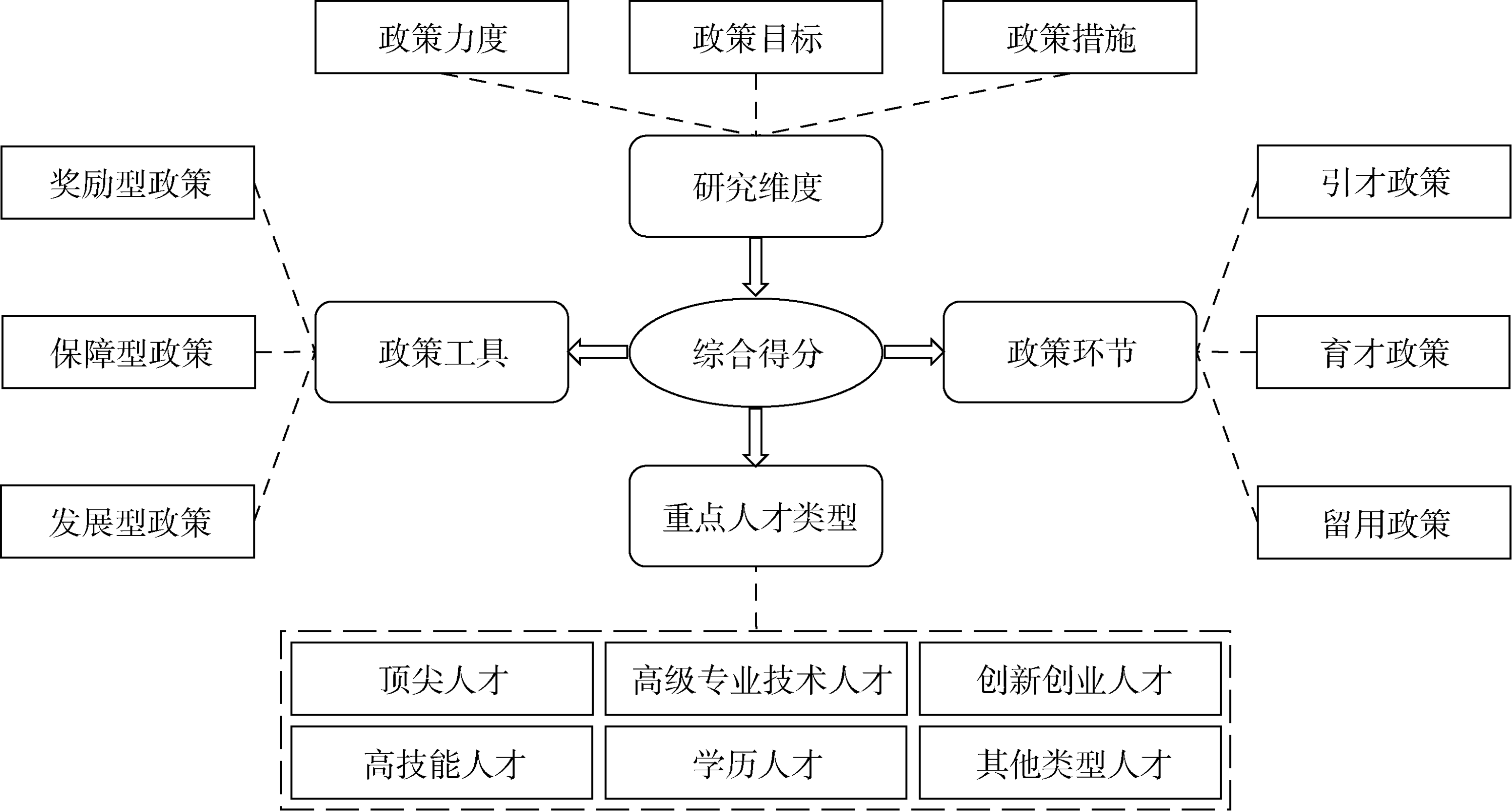
Figure 1 Analytical framework for urban talent policies
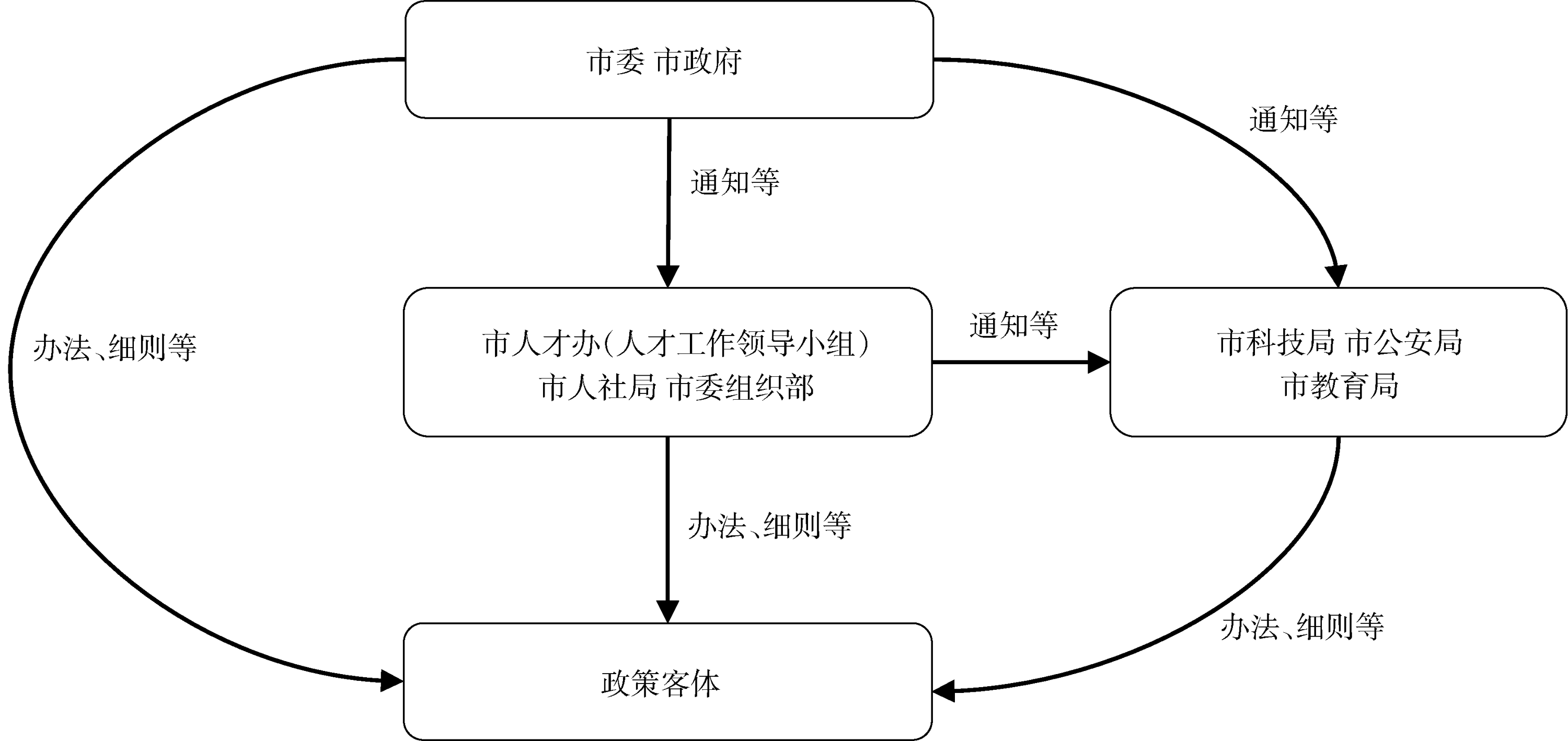
Figure 2 Overall framework of China's urban talent policies
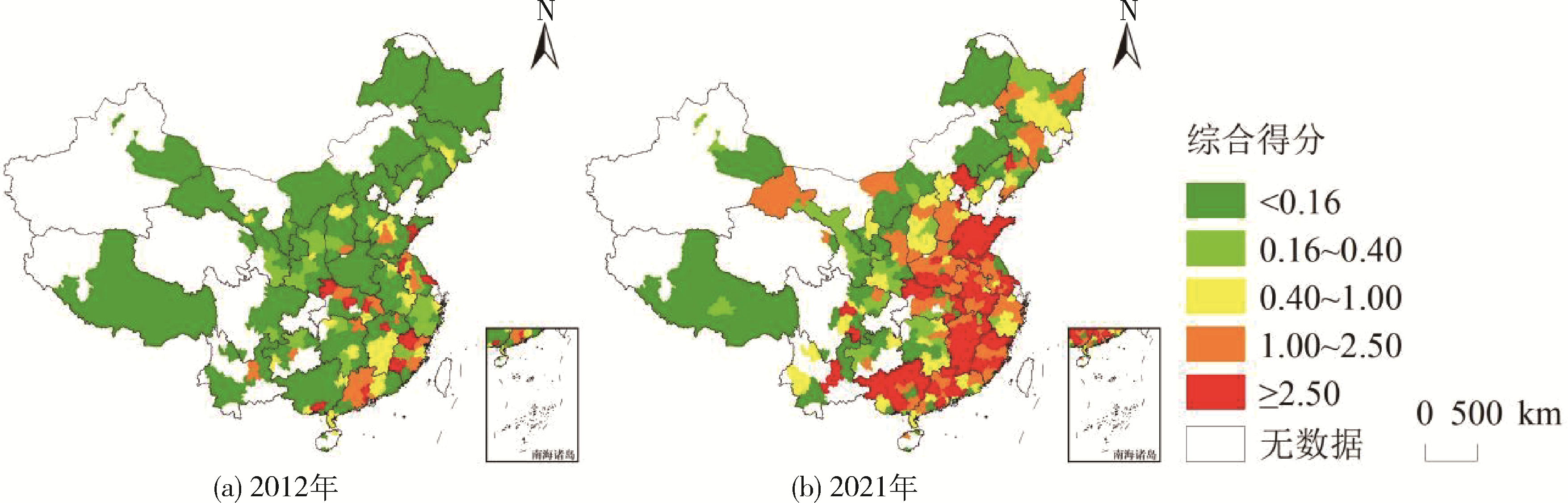
Figure 3 Spatial distribution of the comprehensive scores of talent policies of Chinese prefecture-level cities in 2012 and 2021
| 年份 | 重心坐标 | 移动方向 | 移动距离 (km) | 东西向距离 (km) | 南北向距离 (km) | 移动速度 (km/a) | 东西向速度 (km/a) | 南北向速度 (km/a) |
|---|---|---|---|---|---|---|---|---|
| 2012 | 29.87°N,115.86°E | |||||||
| 2015 | 30.61°N,115.39°E | 西偏北 | 93.52 | 53.30 | 76.85 | 31.17 | 17.77 | 25.62 |
| 2018 | 31.68°N,115.26°E | 西偏北 | 121.57 | 24.39 | 119.10 | 40.52 | 8.13 | 39.70 |
| 2021 | 32.03°N,115.26°E | 西偏北 | 39.67 | 4.36 | 39.43 | 13.22 | 1.45 | 13.14 |
Table 1 The direction and distance parameters of the shift in the comprehensive score center of gravity for talent policies from 2012 to 2021
| 年份 | 重心坐标 | 移动方向 | 移动距离 (km) | 东西向距离 (km) | 南北向距离 (km) | 移动速度 (km/a) | 东西向速度 (km/a) | 南北向速度 (km/a) |
|---|---|---|---|---|---|---|---|---|
| 2012 | 29.87°N,115.86°E | |||||||
| 2015 | 30.61°N,115.39°E | 西偏北 | 93.52 | 53.30 | 76.85 | 31.17 | 17.77 | 25.62 |
| 2018 | 31.68°N,115.26°E | 西偏北 | 121.57 | 24.39 | 119.10 | 40.52 | 8.13 | 39.70 |
| 2021 | 32.03°N,115.26°E | 西偏北 | 39.67 | 4.36 | 39.43 | 13.22 | 1.45 | 13.14 |
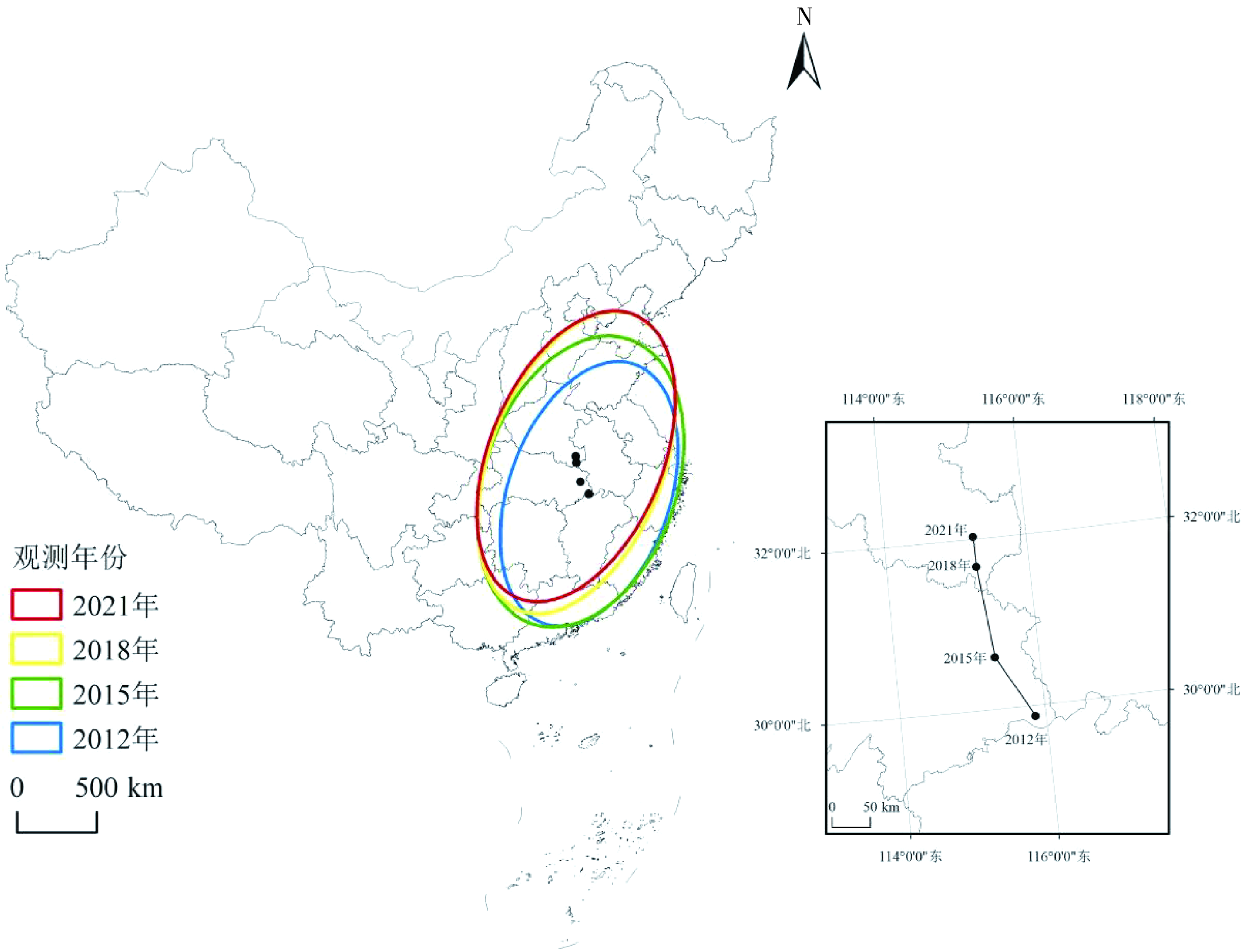
Figure 4 The standard deviation ellipse and centroid migration path of spatial distribution of comprehensive scores of talent policies of Chinese prefecture-level cities from 2012 to 2021
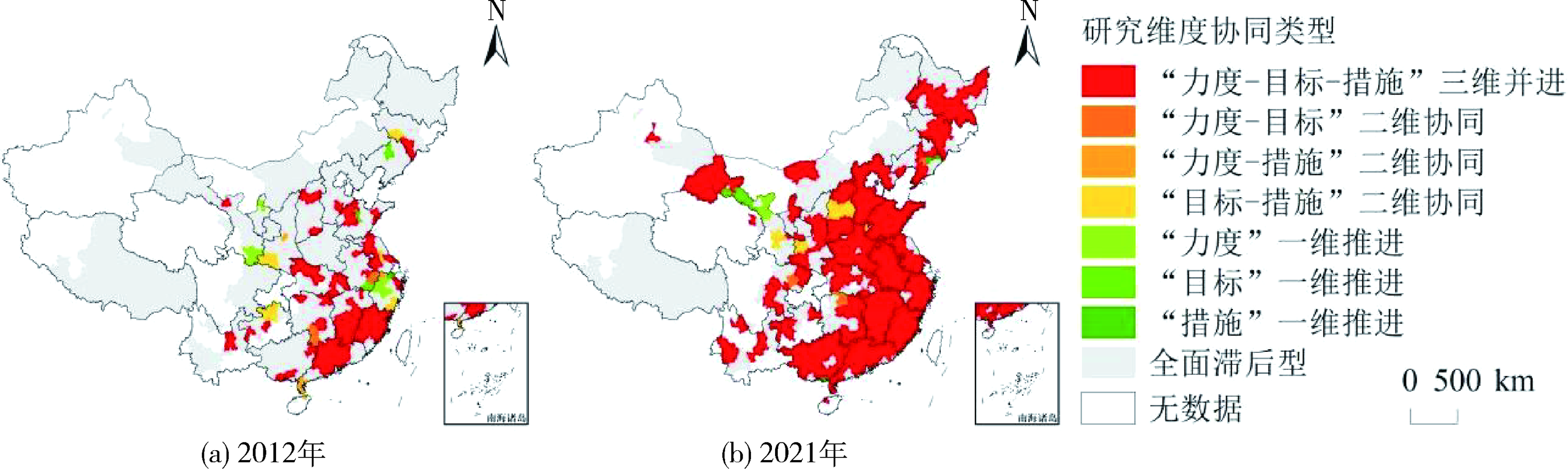
Figure 5 Types of synergy in talent policies of Chinese prefecture-level cities in 2012 and 2021
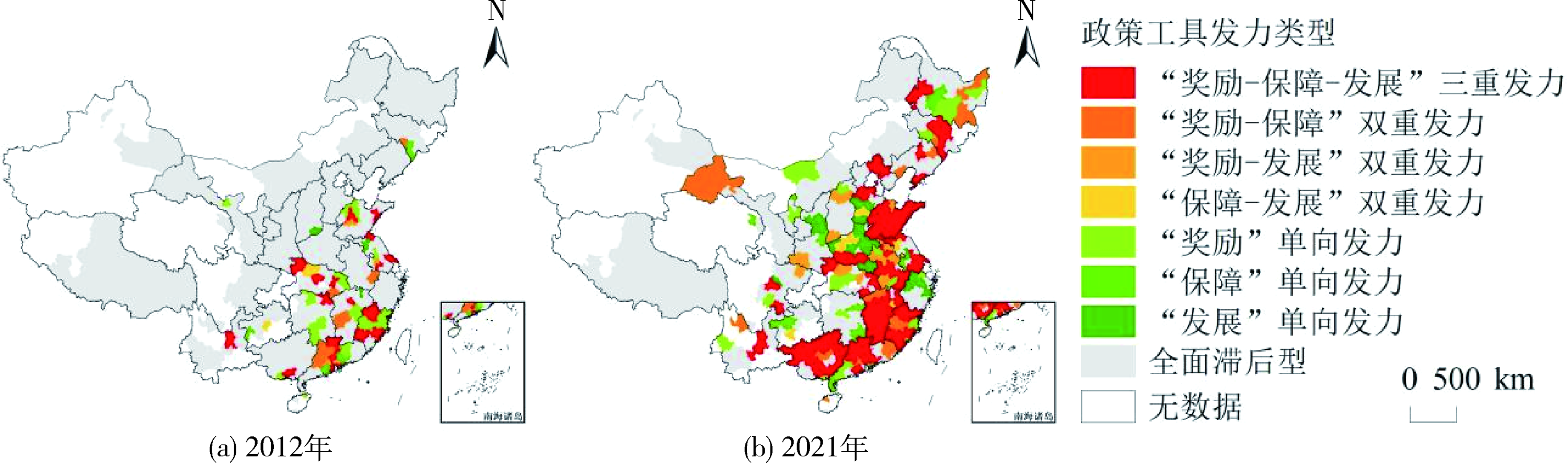
Figure 6 Policy instrument application intensity types in talent policies of Chinese prefecture-level cities in 2012 and 2021
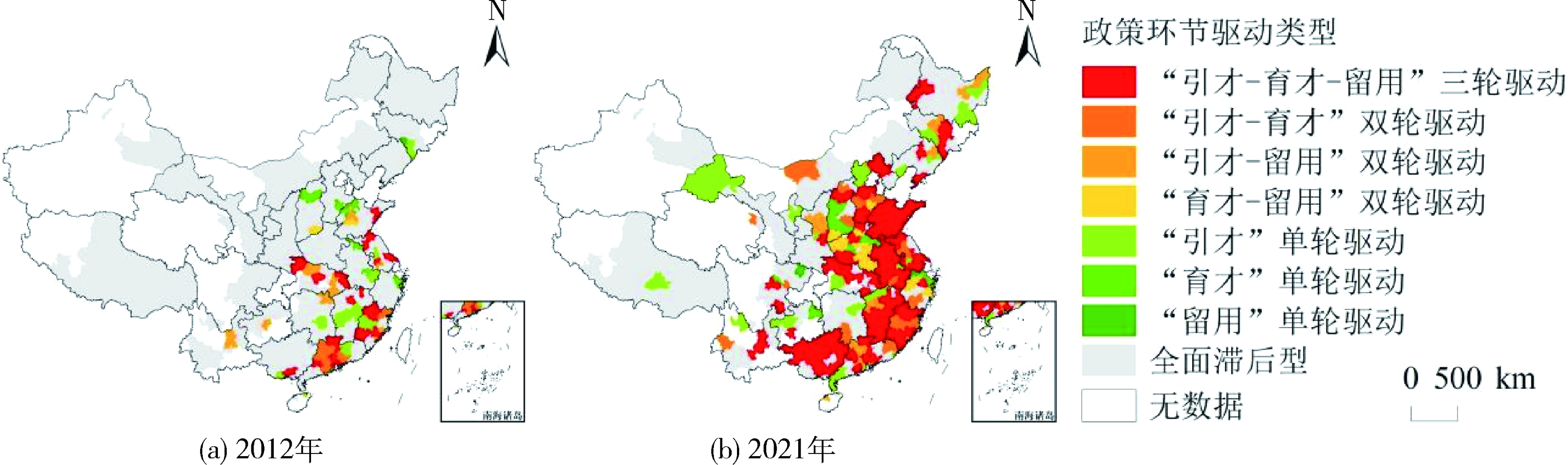
Figure 7 Driving force types in policy links of talent policies in Chinese prefecture-level cities in 2012 and 2021
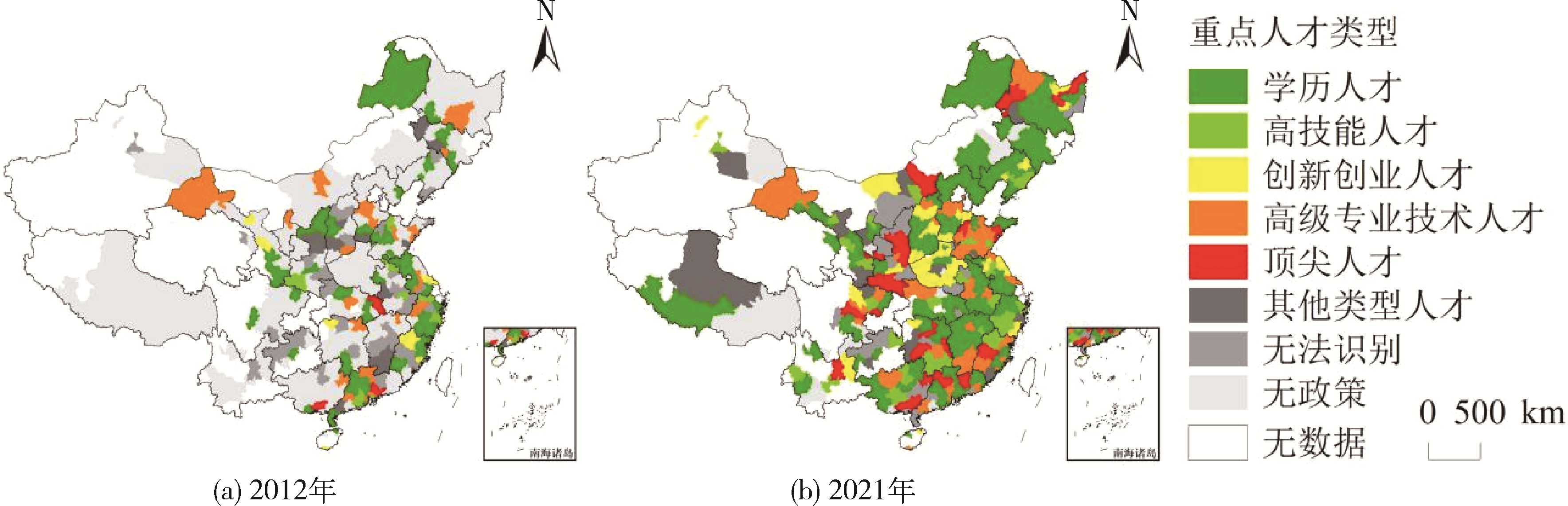
Figure 8 Spatial distribution of prioritized talent types in talent policies of Chinese prefecture-level cities in 2012 and 2021
| 维度 | 构成要素 | 基础指标 | 指标测算 |
|---|---|---|---|
| 实体性要素 | 新劳动者 | 新产业员工数 | 战略性新兴产业和未来产业上市公司的总员工数 |
| 新质人力资本投入 | 教育支出占地方财政支出的比重 | ||
| 新质人力资本产出 | 普通高等学校在校学生数 | ||
| 新劳动资料 | 新生产工具 | 机器人安装密度 | |
| 新基础设施 | 电信业务总量 | ||
| 互联网宽带接入用户 | |||
| 新劳动对象 | 新能源 | 是否入选新能源示范城市 | |
| 新质绿色环境 | 生活垃圾无害化处理率 | ||
| 环境污染治理投资 | |||
| 碳交易、用能权交易、排污权交易总额 | |||
| 渗透性要素 | 技术创新 | 技术研发 | 科学支出占地方财政支出的比重 |
| 创新产出 | 当年申请的发明数量 | ||
| 当年申请的实用新型数量 | |||
| 组织创新 | 智能化 | 人工智能企业数量 | |
| 绿色化 | 当年申请的绿色发明数量 | ||
| 当年申请的绿色实用新型数量 | |||
| 要素创新 | 大数据发展 | 是否处于国家级大数据综合试验区 | |
| 大数据交易 | 有无数据交易所 |
Table 2 Evaluation index system of new quality productivity
| 维度 | 构成要素 | 基础指标 | 指标测算 |
|---|---|---|---|
| 实体性要素 | 新劳动者 | 新产业员工数 | 战略性新兴产业和未来产业上市公司的总员工数 |
| 新质人力资本投入 | 教育支出占地方财政支出的比重 | ||
| 新质人力资本产出 | 普通高等学校在校学生数 | ||
| 新劳动资料 | 新生产工具 | 机器人安装密度 | |
| 新基础设施 | 电信业务总量 | ||
| 互联网宽带接入用户 | |||
| 新劳动对象 | 新能源 | 是否入选新能源示范城市 | |
| 新质绿色环境 | 生活垃圾无害化处理率 | ||
| 环境污染治理投资 | |||
| 碳交易、用能权交易、排污权交易总额 | |||
| 渗透性要素 | 技术创新 | 技术研发 | 科学支出占地方财政支出的比重 |
| 创新产出 | 当年申请的发明数量 | ||
| 当年申请的实用新型数量 | |||
| 组织创新 | 智能化 | 人工智能企业数量 | |
| 绿色化 | 当年申请的绿色发明数量 | ||
| 当年申请的绿色实用新型数量 | |||
| 要素创新 | 大数据发展 | 是否处于国家级大数据综合试验区 | |
| 大数据交易 | 有无数据交易所 |
| (1) | (2) | (3) | (4) | (5) | (6) | |
|---|---|---|---|---|---|---|
| 人才政策得分 | 0.0086*** | 0.0021** | 0.0011*** | 0.0010*** | 0.0010*** | 0.0009*** |
| (0.0009) | (0.0008) | (0.0003) | (0.0003) | (0.0003) | (0.0003) | |
| 控制变量 | 否 | 是 | 否 | 是 | 是 | 是 |
| 城市固定效应 | 否 | 否 | 是 | 是 | 是 | 是 |
| 年份固定效应 | 否 | 否 | 是 | 是 | 是 | 是 |
| 观测值 | 2740 | 2740 | 2740 | 2740 | 2740 | 2466 |
| R-squared | 0.0428 | 0.3897 | 0.9760 | 0.9810 | 0.9810 | 0.9841 |
Table 3 Baseline regression
| (1) | (2) | (3) | (4) | (5) | (6) | |
|---|---|---|---|---|---|---|
| 人才政策得分 | 0.0086*** | 0.0021** | 0.0011*** | 0.0010*** | 0.0010*** | 0.0009*** |
| (0.0009) | (0.0008) | (0.0003) | (0.0003) | (0.0003) | (0.0003) | |
| 控制变量 | 否 | 是 | 否 | 是 | 是 | 是 |
| 城市固定效应 | 否 | 否 | 是 | 是 | 是 | 是 |
| 年份固定效应 | 否 | 否 | 是 | 是 | 是 | 是 |
| 观测值 | 2740 | 2740 | 2740 | 2740 | 2740 | 2466 |
| R-squared | 0.0428 | 0.3897 | 0.9760 | 0.9810 | 0.9810 | 0.9841 |
| (1) | (2) | (3) | (4) | |||
|---|---|---|---|---|---|---|
| 第一阶段 | 第二阶段 | 第一阶段 | 第二阶段 | |||
| 省级有效人才政策数量 | 接壤城市人才政策得分均值 | |||||
| 工具变量 | 0.0261*** (0.0027) | 0.5003*** (0.0517) | ||||
| 人才政策综合得分 | 0.0017* (0.0009) | 0.0014** (0.0007) | ||||
| 控制变量 | 是 | 是 | 是 | 是 | ||
| 固定效应 | 是 | 是 | 是 | 是 | ||
| 观测值 | 2730 | 2730 | 2740 | 2740 | ||
| 第一阶段F值 | 94.98 | 93.73 | ||||
| Kleibergen-Paap rk LM检验 | 88.759*** | 72.845*** | ||||
| Cragg-Donald Wald F统计量 | 170.007 | 220.038 | ||||
| Kleibergen-Paap rk Wald F统计量 | 94.978 | 93.727 | ||||
Table 4 Endogeneity test
| (1) | (2) | (3) | (4) | |||
|---|---|---|---|---|---|---|
| 第一阶段 | 第二阶段 | 第一阶段 | 第二阶段 | |||
| 省级有效人才政策数量 | 接壤城市人才政策得分均值 | |||||
| 工具变量 | 0.0261*** (0.0027) | 0.5003*** (0.0517) | ||||
| 人才政策综合得分 | 0.0017* (0.0009) | 0.0014** (0.0007) | ||||
| 控制变量 | 是 | 是 | 是 | 是 | ||
| 固定效应 | 是 | 是 | 是 | 是 | ||
| 观测值 | 2730 | 2730 | 2740 | 2740 | ||
| 第一阶段F值 | 94.98 | 93.73 | ||||
| Kleibergen-Paap rk LM检验 | 88.759*** | 72.845*** | ||||
| Cragg-Donald Wald F统计量 | 170.007 | 220.038 | ||||
| Kleibergen-Paap rk Wald F统计量 | 94.978 | 93.727 | ||||
| (1) | (2) | (3) | (4) | |
|---|---|---|---|---|
| 人才集聚效应 | 创新驱动效应 | 产业结构升级效应 | ||
| 创新投入 | 创新产出 | |||
| 人才政策综合得分 | 0.0004*** (0.0002) | 0.0004** (0.0001) | 0.0278** (0.0126) | 0.1020** (0.0478) |
| 控制变量 | 是 | 是 | 是 | 是 |
| 城市固定效应 | 是 | 是 | 是 | 是 |
| 年份固定效应 | 是 | 是 | 是 | 是 |
| 观测值 | 2172 | 2739 | 2740 | 2465 |
| R-squared | 0.8856 | 0.8039 | 0.8178 | 0.8938 |
Table 5 Mechanism analysis
| (1) | (2) | (3) | (4) | |
|---|---|---|---|---|
| 人才集聚效应 | 创新驱动效应 | 产业结构升级效应 | ||
| 创新投入 | 创新产出 | |||
| 人才政策综合得分 | 0.0004*** (0.0002) | 0.0004** (0.0001) | 0.0278** (0.0126) | 0.1020** (0.0478) |
| 控制变量 | 是 | 是 | 是 | 是 |
| 城市固定效应 | 是 | 是 | 是 | 是 |
| 年份固定效应 | 是 | 是 | 是 | 是 |
| 观测值 | 2172 | 2739 | 2740 | 2465 |
| R-squared | 0.8856 | 0.8039 | 0.8178 | 0.8938 |
| (1) | (2) | (3) | (4) | |
|---|---|---|---|---|
| 东中部-省会 | 东中部-非省会 | 西部东北-省会 | 西部东北-非省会 | |
| 人才政策综合得分 | 0.0001 | 0.0004* | 0.0011* | 0.0002 |
| (0.0007) | (0.0002) | (0.0006) | (0.0001) | |
| 控制变量 | 是 | 是 | 是 | 是 |
| 城市固定效应 | 是 | 是 | 是 | 是 |
| 年份固定效应 | 是 | 是 | 是 | 是 |
| 观测值 | 130 | 1460 | 140 | 1010 |
| R-squared | 0.9672 | 0.9866 | 0.9905 | 0.9975 |
Table 6 Regression results of urban heterogeneity
| (1) | (2) | (3) | (4) | |
|---|---|---|---|---|
| 东中部-省会 | 东中部-非省会 | 西部东北-省会 | 西部东北-非省会 | |
| 人才政策综合得分 | 0.0001 | 0.0004* | 0.0011* | 0.0002 |
| (0.0007) | (0.0002) | (0.0006) | (0.0001) | |
| 控制变量 | 是 | 是 | 是 | 是 |
| 城市固定效应 | 是 | 是 | 是 | 是 |
| 年份固定效应 | 是 | 是 | 是 | 是 |
| 观测值 | 130 | 1460 | 140 | 1010 |
| R-squared | 0.9672 | 0.9866 | 0.9905 | 0.9975 |
| (1) | (2) | (3) | (4) | (5) | (6) | |
|---|---|---|---|---|---|---|
| 东中部 | 西部东北 | |||||
| 奖励型 | 0.0276*** | 0.0095 | ||||
| (0.0082) | (0.0058) | |||||
| 保障型 | 0.0337*** | 0.0462*** | ||||
| (0.0125) | (0.0121) | |||||
| 发展型 | 0.0302** | 0.0458*** | ||||
| (0.0149) | (0.0142) | |||||
| 控制变量 | 是 | 是 | 是 | 是 | 是 | 是 |
| 城市固定效应 | 是 | 是 | 是 | 是 | 是 | 是 |
| 年份固定效应 | 是 | 是 | 是 | 是 | 是 | 是 |
| 观测值 | 1590 | 1590 | 1590 | 1150 | 1150 | 1150 |
| R-squared | 0.9821 | 0.9821 | 0.9820 | 0.9926 | 0.9927 | 0.9926 |
Table 7 Regression results of policy instruments heterogeneity
| (1) | (2) | (3) | (4) | (5) | (6) | |
|---|---|---|---|---|---|---|
| 东中部 | 西部东北 | |||||
| 奖励型 | 0.0276*** | 0.0095 | ||||
| (0.0082) | (0.0058) | |||||
| 保障型 | 0.0337*** | 0.0462*** | ||||
| (0.0125) | (0.0121) | |||||
| 发展型 | 0.0302** | 0.0458*** | ||||
| (0.0149) | (0.0142) | |||||
| 控制变量 | 是 | 是 | 是 | 是 | 是 | 是 |
| 城市固定效应 | 是 | 是 | 是 | 是 | 是 | 是 |
| 年份固定效应 | 是 | 是 | 是 | 是 | 是 | 是 |
| 观测值 | 1590 | 1590 | 1590 | 1150 | 1150 | 1150 |
| R-squared | 0.9821 | 0.9821 | 0.9820 | 0.9926 | 0.9927 | 0.9926 |
| (1) | (2) | (3) | (4) | (5) | (6) | |
|---|---|---|---|---|---|---|
| 东中部 | 西部东北 | |||||
| 引才 | 0.0218*** | 0.0258*** | ||||
| (0.0063) | (0.0069) | |||||
| 育才 | 0.0219*** | 0.0309** | ||||
| (0.0070) | (0.0124) | |||||
| 留用 | 0.0326** | 0.0414*** | ||||
| (0.0147) | (0.0126) | |||||
| 控制变量 | 是 | 是 | 是 | 是 | 是 | 是 |
| 城市固定效应 | 是 | 是 | 是 | 是 | 是 | 是 |
| 年份固定效应 | 是 | 是 | 是 | 是 | 是 | 是 |
| 观测值 | 1590 | 1590 | 1590 | 1150 | 1150 | 1150 |
| R-squared | 0.9822 | 0.9821 | 0.9820 | 0.9927 | 0.9927 | 0.9926 |
Table 8 Regression results of policy links heterogeneity
| (1) | (2) | (3) | (4) | (5) | (6) | |
|---|---|---|---|---|---|---|
| 东中部 | 西部东北 | |||||
| 引才 | 0.0218*** | 0.0258*** | ||||
| (0.0063) | (0.0069) | |||||
| 育才 | 0.0219*** | 0.0309** | ||||
| (0.0070) | (0.0124) | |||||
| 留用 | 0.0326** | 0.0414*** | ||||
| (0.0147) | (0.0126) | |||||
| 控制变量 | 是 | 是 | 是 | 是 | 是 | 是 |
| 城市固定效应 | 是 | 是 | 是 | 是 | 是 | 是 |
| 年份固定效应 | 是 | 是 | 是 | 是 | 是 | 是 |
| 观测值 | 1590 | 1590 | 1590 | 1150 | 1150 | 1150 |
| R-squared | 0.9822 | 0.9821 | 0.9820 | 0.9927 | 0.9927 | 0.9926 |
| [1] | 顾承卫. 新时期我国地方引进海外科技人才政策分析[J]. 科研管理, 2015,36(S1):272-278. |
| Gu C W. Policy analysis for introducing overseas technology professionals in the new era of China[J]. Science Research Management, 2015, 36(S1): 272-278. | |
| [2] | 刘伟. 科学认识与切实发展新质生产力[J]. 经济研究, 2024, 59(3):4-11. |
| Liu W. Scientific understanding and substantive development of new quality productive forces[J]. Economic Research Journal, 2024, 59(3):4-11. | |
| [3] | 陈丽君, 王雪玲. 改革开放以来浙江省人才政策的演进与未来趋势——基于主题词的量化分析[J]. 治理研究, 2019, 35(4):88-98. |
| Chen L J, Wang X L. A bibliometric study of talent policies of Zhejiang province:1978-2017[J]. Governance Studies, 2019, 35(4): 88-98. | |
| [4] | 解佳龙, 李雯, 雷殷. 国家自主创新示范区科技人才政策文本计量研究——以京汉沪三大自创区为例(2009-2018年)[J]. 中国软科学, 2019(4): 88-97. |
| Xie J L, Li W, Lei Y. Quantitative research on the S&T talent policy texts of the national innovation demonstration zone: A case of three national innovation demonstration zones in Beijing, Wuhan and Shanghai from 2009 to 2018 [J]. China Soft Science, 2019(4): 88-97. | |
| [5] | 何江, 闫淑敏, 谭智丹, 等. “人才争夺战”政策文本计量与效能评价——一个企业使用政策的视角[J]. 科学学与科学技术管理, 2020, 41(12):52-70. |
| He J, Yan S M, Tan Z D, et al. Text measurement and effectiveness evaluation on the talent policy of “the war for talent”: A perspective based on enterprise using policy[J]. Science of Science and Management of S.& T., 2020, 41(12): 52-70. | |
| [6] | 胡峰, 李加陈, 翟婧. 政策文本计量视角下科技人才政策分析与评价——基于“工具—效力”的二维框架[J]. 情报科学, 2024, 42(6):99-112. |
| Hu F, Li J C, Zhai J. Analysis and evaluation of scientific and technological talent policies from the perspective of policy text measurement: Based on a two-dimensional framework of tool-effectiveness[J]. Information Science, 2024, 42(6):99-112. | |
| [7] |
Liu Q, Jia M, Xia D. Dynamic evaluation of new energy vehicle policy based on text mining of PMC knowledge framework[J]. Journal of Cleaner Production, 2023, 392:136237.
DOI URL |
| [8] | Xiao Li, Yuting Yao, Meihong Zhu, et al. The temporal spatial dynamic of land policy in China: Evidence from policy analysis based on machine learning[J]. Mathematical Problems in Engineering, Hindawi, 2022:1-13. |
| [9] |
Yue X, Zhao S, Ding X, et al. How the pilot low-carbon city policy promotes urban green innovation: Based on temporal-spatial dual perspectives[J]. Int. J. Environ. Res. Public Health, 2023, 20:561.
DOI URL |
| [10] | 张明, 张鹭, 宋妍. 异质性环境规制、空间溢出与雾霾污染[J]. 中国人口·资源与环境, 2021, 31(12):53-61. |
| Zhang M, Zhang L, Song Y. Heterogeneous environmental regulations, spatial spillover and haze pollution[J]. China Population, Resources and Environment, 2021, 31(12): 53-61. | |
| [11] |
王羲泽, 罗玮幸, 刘琼, 等. 中国城市住房限购强度的时空扩散特征及其形成机制[J]. 经济地理, 2023, 43(10):75-86.
DOI |
|
Wang X Z, Luo W X, Liu Q, et al. The spatio-temporal diffusion of the intensity of housing-purchase restriction policies and their formation mechanism in Chinese cities[J]. Economic Geography, 2023, 43(10): 75-86.
DOI |
|
| [12] | 乐菡, 黄明, 李元旭. 地区“人才新政”能否提升创新绩效?——基于出台新政城市的准自然实验[J]. 经济管理, 2021, 43(12): 132-149. |
| Yue H, Huang M, Li Y X. Can the regional “new talent policy” promote innovation performance: A quasi-natural experiment based on the issued policy city[J]. Business and Management Journal, 2021, 43(12): 132-149. | |
| [13] | 孙文浩. 地方人才政策、人才数量结构优化与制造业企业创新[J]. 数量经济技术经济研究, 2025, 42(2):153-171. |
| Sun W H. Talent policy, talent quantitative structure optimization and manufacturing firm innovation[J]. Journal of Quantitative & Technological Economics, 2025, 42(2):153-171. | |
| [14] | 孙鲲鹏, 罗婷, 肖星. 人才政策、研发人员招聘与企业创新[J]. 经济研究, 2021, 56(8):143-159. |
| Sun K P, Luo T, Xiao X. Talent policy, R&D recruitment and corporate innovation[J]. Economic Research Journal, 2021, 56(8):143-159. | |
| [15] | 刘春林, 田玲. 人才政策“背书”能否促进企业创新[J]. 中国工业经济, 2021(3):156-173. |
| Liu C L, Tian L. Can talent policy endorsement promote firm innovation[J]. China Industrial Economics, 2021(3):156-173. | |
| [16] | 杨永聪, 沈晓娟, 刘慧婷. 人才政策与城市产业结构转型升级——兼议“抢人大战”现象[J]. 产业经济研究, 2022(5):72-85. |
| Yang Y C, Shen X J, Liu H T. Talent policies and upgrading of urban industrial structure:With an analysis of the scramble for talents[J]. Industrial Economics Research, 2022(5):72-85. | |
| [17] |
Libecap G D. Economic variables and the development of the law: The case of western mineral rights[J]. The Journal of Economic History, 1978, 38(2): 338-362.
DOI URL |
| [18] | 彭纪生, 仲为国, 孙文祥. 政策测量、政策协同演变与经济绩效:基于创新政策的实证研究[J]. 管理世界, 2008(9): 25-36. |
| Peng J S, Zhong W G, Sun W X. Policy measurement, evolution of policy coordination, and economic performance: An empirical study based on innovation policies[J]. Journal of Management World, 2008(9): 25-36. | |
| [19] | 李慷, 黄辰, 邓大胜. 省级科技人才政策对科技人才集聚的影响分析[J]. 调研世界, 2021(7): 41-47. |
| Li K, Huang C, Deng D S. Analysis of the impact of provincial science and technology talent policy on the aglomeration of science and technology talents[J]. The World of Survey and Research, 2021(7): 41-47. | |
| [20] | 林新奇. 不仅要“引才”,还要“育才”“用才”“留才”构建完善的“引育用留”人才制度体系[J]. 人民论坛, 2018(15): 34-36. |
| Lin X Q. Not only “attracting talents”, but also “cultivating”, “utilizing”, and “retaining” talents: Constructing a comprehensive system of talent policies for “attraction, cultivation, utilization, and retention”[J]. People's Tribune, 2018(15): 34-36. | |
| [21] | 洪俊杰, 刘志强, 黄薇. 区域振兴战略与中国工业空间结构变动——对中国工业企业调查数据的实证分析[J]. 经济研究, 2014, 49(8):28-40. |
| Hong J J, Liu Z Q, Huang W. Regional revitalization strategies and the industrial spatial structure changes in China——Evidence based on China industrial survey database[J]. Economic Research Journal, 2014, 49(8):28-40. | |
| [22] | Fischer M M, Getis A. Handbook of Applied Spatial Analysis[M]. Berlin: Springer Berlin Heidelberg, 2010: 27-149. |
| [23] | 韩文龙, 张瑞生, 赵峰. 新质生产力水平测算与中国经济增长新动能[J]. 数量经济技术经济研究, 2024, 41(6):5-25. |
| Han W L, Zhang R S, Zhao F. The measurement of new quality productivity and new driving force of the Chinese economy[J]. Journal of Quantitative & Technological Economics, 2024, 41(6):5-25. | |
| [24] | 宋丽萍. 国家级新区设立与新质生产力发展水平——基于279个地级市的实证分析[J]. 软科学, 2025, 39(5):67-75. |
| Song L P. Establishment of national-level new areas and the level of development of new productive forces - Empirical analysis based on 279 prefecture-level cities[J]. Soft Science, 2025, 39(5):67-75. | |
| [25] | 叶杨, 陈强远, 赵浩云, 等. 人才政策如何影响人才流动?——基于2002-2021年3308项政策文本的量化分析[J]. 科学学研究, 2025, 43(1):162-177. |
| Ye Y, Chen Q Y, Zhao H Y, et al. How does talent policy affect talents mobility?——Based on quantitative analysis of 3308 policy texts from 2002 to 2021[J]. Studies in Science of Science, 2025, 43(1):162-177. | |
| [26] |
Chong T T, Lu L Ongena S. Does banking competition alleviate or worsen credit constraints faced by small-and medium-sized enterprises? Evidence from China[J]. Journal of Banking & Finance, 2013, 37(9):3412-3424.
DOI URL |
| [27] | 李春涛, 闫续文, 宋敏, 等. 金融科技与企业创新——新三板上市公司的证据[J]. 中国工业经济, 2020(1):81-98. |
| Li C T, Yan X W, Song M, et al. Fintech and corporate innovation——Evidence from Chinese NEEQ-listed companies[J]. China Industrial Economics, 2020(1):81-98. | |
| [28] | 王浦劬, 赖先进. 中国公共政策扩散的模式与机制分析[J]. 北京大学学报(哲学社会科学版), 2013, 50(6):14-23. |
| Wang P Q, Lai X J. A study on the model and mechanism of public policy diffusion in China[J]. Journal of Peking University(Philosophy and Social Sciences), 2013, 50(6):14-23. | |
| [29] | 刘伟. 国际公共政策的扩散机制与路径研究[J]. 世界经济与政治, 2012(4):40-58,156-157. |
| Liu W. The diffusion mechanism and path of international public policy[J]. World Economics and Politics, 2012,(4):40-58,156-157. | |
| [30] | 王震. 公共政策70年:社会保障与公共服务供给体系的发展与改革[J]. 北京工业大学学报(社会科学版), 2019, 19(5):25-35. |
| Wang Z. Seventy years of public policy in China:Development and reform of social security and public services provision system[J]. Journal of Beijing University of Technology(Social Sciences Edition), 2019, 19(5):25-35. | |
| [31] | 白俊红, 张艺璇, 卞元超. 创新驱动政策是否提升城市创业活跃度——来自国家创新型城市试点政策的经验证据[J]. 中国工业经济, 2022(6):61-78. |
| Bai J H, Zhang Y X, Bian Y C. Does innovation-driven policy increase entrepreneurial activity in cities——Evidence from the national innovative city pilot policy[J]. China Industrial Economics, 2022(6):61-78. | |
| [32] | 曾婧婧, 陶文清. 科创走廊对经济的双刃剑效应:辐射还是虹吸[J]. 科学学研究, 2024, 42(12):2533-2544. |
| Zeng J J, Tao W Q. The double-edged sword effect of science and technology innovation corridors on economic growth: Radiation or siphon[J]. Studies in Science of Science, 2024, 42(12):2533-2544. | |
| [33] | 陈明, 魏作磊. 中国服务业开放对产业结构升级的影响[J]. 经济学家, 2016(4):24-32. |
| Chen M, Wei Z L. The impact of service industry opening-up on industrial structure upgrading in China[J]. Economist, 2016(4):24-32. | |
| [34] | 李志, 曹雨欣. 我国西部地区柔性引才困境及路向研究[J]. 重庆大学学报(社会科学版), 2022, 28(3):14-24. |
| Li Z, Cao Y X. A study on the dilemma and direction of flexible talent introduction in China’s western region[J]. Journal of Chongqing University(Social Science Edition), 2022, 28(3):14-24. |
| [1] | ZHAO Cheng-wei, LI Wen-ya, CHEN Hong-qi, XIANG Xian-hong, WANG Yan-yu. How does factor agglomeration affect new quality productive forces through dualinnovation? [J]. Studies in Science of Science, 2026, 44(6): 1178-1191. |
| [2] | . The Effect of Housing Price on Enterprise Innovation——From the Perspective of Innovation Investment and Talent Policy [J]. Studies in Science of Science, 2022, 40(12): 2281-2293. |
| [3] | Jue JueWang. Talent Policy: What Matters for Overseas Chinese Scholars? [J]. Studies in Science of Science, 2020, 38(8): 1390-1396. |
| Viewed | ||||||
|
Full text |
|
|||||
|
Abstract |
|
|||||
