
Studies in Science of Science ›› 2026, Vol. 44 ›› Issue (2): 270-280.
• Hot Issues • Previous Articles Next Articles
DU Yu-shen1, XIAO Zi-qi1,2( ), ZHANG Xin-yuan1,2, BAO Hong-li3
Received:2025-01-16
Revised:2025-02-17
Online:2026-02-15
Published:2026-02-15
Contact:
XIAO Zi-qi
杜玉申1, 肖紫琪1,2(), 张馨元1,2, 包红丽3
通讯作者:
肖紫琪
作者简介:杜玉申(1963-),男,教授、博士生导师。基金资助:CLC Number:
DU Yu-shen, XIAO Zi-qi, ZHANG Xin-yuan, BAO Hong-li. Multiple pathways for technology transitions in automotive industry incumbents——A synthesis of history, governance, and strategy[J]. Studies in Science of Science, 2026, 44(2): 270-280.
杜玉申, 肖紫琪, 张馨元, 包红丽. 传统汽车企业技术转型的多重路径——历史、治理与战略的组合[J]. 科学学研究, 2026, 44(2): 270-280.
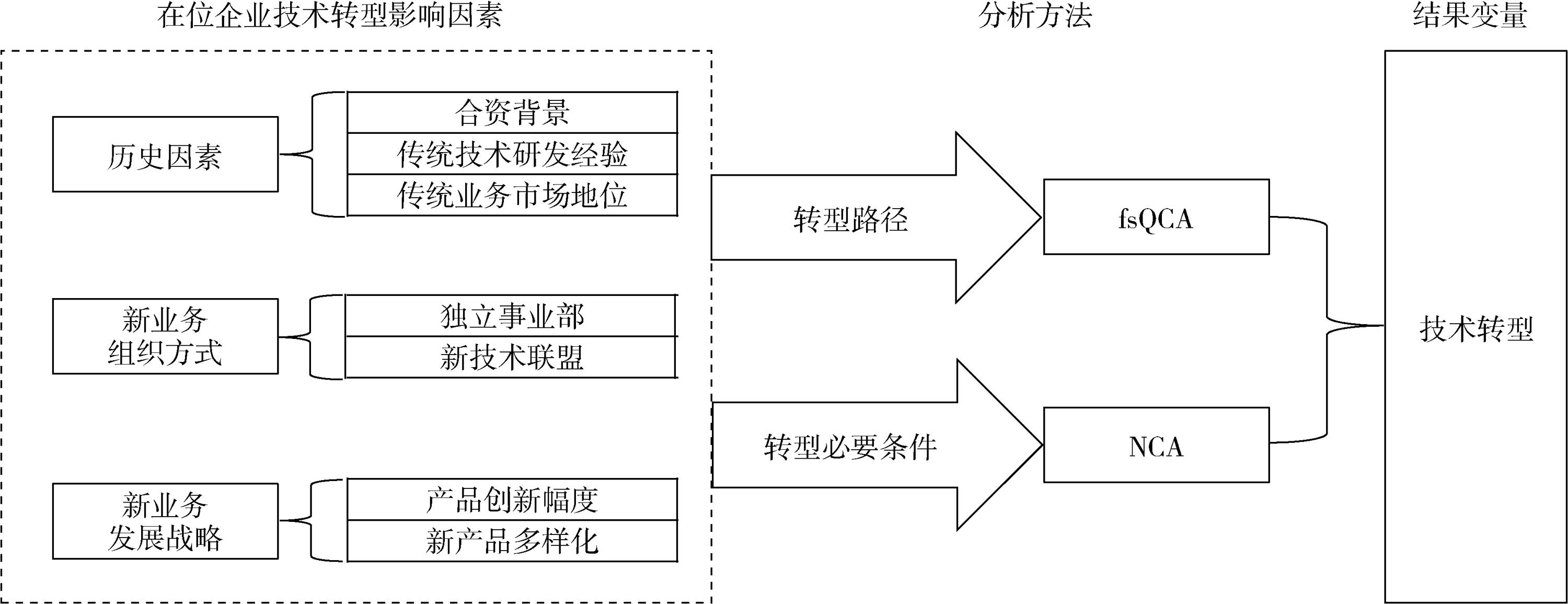
Figure 1 Research framework
| 变量 | 度量方式 | 数据来源 | |
|---|---|---|---|
| 结果变量 | 技术转型 | 近三年(2021-2023年)传统车企新能源汽车销量占其汽车总销量比例的均值 | 中国乘用车市场信息联席会 |
| 前因变量 | 合资背景 | 若该车企为中外合资企业,则赋值为1,否则为0 | 企业年报、官方网站披露的信息 |
| 传统技术 研发经验 | 传统车企进入新能源领域以前在市场上销售过的所有燃油车车型的数目 | 企业年报、官方网站、行业数据库及第三方市场研究机构报告 | |
| 传统业务 市场地位 | 近三年(2021-2023年)传统车企燃油汽车销量占整个市场燃油汽车总销量比例的均值 | 中国乘用车市场信息联席会及中国汽车工业协会发布的年度市场销售报告 | |
| 独立 事业部 | 若设立独立新能源汽车事业部,则赋值为1,否则为0 | 企业官方网站、企业年报、行业分析报告等商业信息查询平台 | |
| 新技术 联盟 | 传统车企进入新能源领域后与其他企业建立新能源技术联盟的总数 | 手工整理汽车公司官网、企业年报以及相关媒体报道等资料 | |
| 产品创新幅度 | 传统车企进入新能源领域后销售的纯电动和氢燃料车型销量总和占所有新能源车型销量的比例 | 中国乘用车市场信息联席会 | |
| 新产品 多样化 | 传统车企进入新能源领域以来在市场上销售过的所有新能源车型的数量 | 企业年报与财务报告、企业官方网站和产品发布公告 | |
Table 1 Variable measures and data sources
| 变量 | 度量方式 | 数据来源 | |
|---|---|---|---|
| 结果变量 | 技术转型 | 近三年(2021-2023年)传统车企新能源汽车销量占其汽车总销量比例的均值 | 中国乘用车市场信息联席会 |
| 前因变量 | 合资背景 | 若该车企为中外合资企业,则赋值为1,否则为0 | 企业年报、官方网站披露的信息 |
| 传统技术 研发经验 | 传统车企进入新能源领域以前在市场上销售过的所有燃油车车型的数目 | 企业年报、官方网站、行业数据库及第三方市场研究机构报告 | |
| 传统业务 市场地位 | 近三年(2021-2023年)传统车企燃油汽车销量占整个市场燃油汽车总销量比例的均值 | 中国乘用车市场信息联席会及中国汽车工业协会发布的年度市场销售报告 | |
| 独立 事业部 | 若设立独立新能源汽车事业部,则赋值为1,否则为0 | 企业官方网站、企业年报、行业分析报告等商业信息查询平台 | |
| 新技术 联盟 | 传统车企进入新能源领域后与其他企业建立新能源技术联盟的总数 | 手工整理汽车公司官网、企业年报以及相关媒体报道等资料 | |
| 产品创新幅度 | 传统车企进入新能源领域后销售的纯电动和氢燃料车型销量总和占所有新能源车型销量的比例 | 中国乘用车市场信息联席会 | |
| 新产品 多样化 | 传统车企进入新能源领域以来在市场上销售过的所有新能源车型的数量 | 企业年报与财务报告、企业官方网站和产品发布公告 | |
| 模糊集校准锚点 | 描述性统计 | ||||||
|---|---|---|---|---|---|---|---|
| 集合 | 完全不隶属 | 交叉点 | 完全隶属 | 均值 | 标准差 | 最小值 | 最大值 |
| 技术转型 | 0.0399 | 0.0794 | 0.1610 | 0.1328 | 0.1696 | 0.0020 | 0.9360 |
| 合资背景 | — | — | — | 0.5000 | 0.5000 | 0.0000 | 1.0000 |
| 传统技术研发经验 | 11.0000 | 19.0000 | 25.7500 | 22.5476 | 15.8583 | 3.0000 | 67.0000 |
| 传统业务市场地位 | 0.0027 | 0.0097 | 0.0359 | 0.0201 | 0.0204 | 0.0003 | 0.0704 |
| 独立事业部 | — | — | — | 0.3333 | 0.4714 | 0.0000 | 1.0000 |
| 新技术联盟 | 2.0000 | 5.5000 | 10.7500 | 8.8333 | 10.2025 | 0.0000 | 40.0000 |
| 产品创新幅度 | 0.6028 | 0.7143 | 0.8705 | 0.7163 | 0.2337 | 0.0000 | 1.0000 |
| 新产品多样化 | 5.0000 | 7.0000 | 10.0000 | 9.0714 | 7.3368 | 1.0000 | 33.0000 |
Table 2 Ensembles, calibration anchors and descriptive statistics
| 模糊集校准锚点 | 描述性统计 | ||||||
|---|---|---|---|---|---|---|---|
| 集合 | 完全不隶属 | 交叉点 | 完全隶属 | 均值 | 标准差 | 最小值 | 最大值 |
| 技术转型 | 0.0399 | 0.0794 | 0.1610 | 0.1328 | 0.1696 | 0.0020 | 0.9360 |
| 合资背景 | — | — | — | 0.5000 | 0.5000 | 0.0000 | 1.0000 |
| 传统技术研发经验 | 11.0000 | 19.0000 | 25.7500 | 22.5476 | 15.8583 | 3.0000 | 67.0000 |
| 传统业务市场地位 | 0.0027 | 0.0097 | 0.0359 | 0.0201 | 0.0204 | 0.0003 | 0.0704 |
| 独立事业部 | — | — | — | 0.3333 | 0.4714 | 0.0000 | 1.0000 |
| 新技术联盟 | 2.0000 | 5.5000 | 10.7500 | 8.8333 | 10.2025 | 0.0000 | 40.0000 |
| 产品创新幅度 | 0.6028 | 0.7143 | 0.8705 | 0.7163 | 0.2337 | 0.0000 | 1.0000 |
| 新产品多样化 | 5.0000 | 7.0000 | 10.0000 | 9.0714 | 7.3368 | 1.0000 | 33.0000 |
| 条件a | 方法 | 精确度 | 上限区域 | 范围 | 效应量(d) | p值b |
|---|---|---|---|---|---|---|
| 合资背景 | CR | 100% | 0 | 1 | 0 | 1 |
| CE | 100% | 0 | 1 | 0 | 1 | |
| 传统技术研发经验 | CR | 100% | 0 | 1 | 0 | 0.4970 |
| CE | 100% | 0 | 1 | 0 | 0.4130 | |
| 传统业务市场地位 | CR | 100% | 0 | 1 | 0 | 0.7720 |
| CE | 100% | 0 | 1 | 0 | 0.7130 | |
| 独立事业部 | CR | 100% | 0 | 1 | 0 | 0 |
| CE | 100% | 0.0100 | 1 | 0.0100 | 0 | |
| 新技术联盟 | CR | 93% | 0.1600 | 1 | 0.1600 | 0.0050 |
| CE | 100% | 0.0700 | 1 | 0.0700 | 0 | |
| 产品创新幅度 | CR | 92.90% | 0 | 0.9900 | 0 | 0.3000 |
| CE | 100% | 0 | 0.9900 | 0 | 0.3520 | |
| 新产品多样化 | CR | 90.50% | 0.0600 | 0.9900 | 0.0600 | 0.0740 |
| CE | 100% | 0 | 0.9900 | 0 | 0.0710 |
Table 3 Analysis of necessary conditions for the NCA method
| 条件a | 方法 | 精确度 | 上限区域 | 范围 | 效应量(d) | p值b |
|---|---|---|---|---|---|---|
| 合资背景 | CR | 100% | 0 | 1 | 0 | 1 |
| CE | 100% | 0 | 1 | 0 | 1 | |
| 传统技术研发经验 | CR | 100% | 0 | 1 | 0 | 0.4970 |
| CE | 100% | 0 | 1 | 0 | 0.4130 | |
| 传统业务市场地位 | CR | 100% | 0 | 1 | 0 | 0.7720 |
| CE | 100% | 0 | 1 | 0 | 0.7130 | |
| 独立事业部 | CR | 100% | 0 | 1 | 0 | 0 |
| CE | 100% | 0.0100 | 1 | 0.0100 | 0 | |
| 新技术联盟 | CR | 93% | 0.1600 | 1 | 0.1600 | 0.0050 |
| CE | 100% | 0.0700 | 1 | 0.0700 | 0 | |
| 产品创新幅度 | CR | 92.90% | 0 | 0.9900 | 0 | 0.3000 |
| CE | 100% | 0 | 0.9900 | 0 | 0.3520 | |
| 新产品多样化 | CR | 90.50% | 0.0600 | 0.9900 | 0.0600 | 0.0740 |
| CE | 100% | 0 | 0.9900 | 0 | 0.0710 |
| 前因条件 | 高技术转型 | 非高技术转型 | ||
|---|---|---|---|---|
| 一致性 | 覆盖度 | 一致性 | 覆盖度 | |
| 合资背景 | 0.2593 | 0.2496 | 0.7232 | 0.7504 |
| ~合资背景 | 0.7407 | 0.7128 | 0.2768 | 0.2872 |
| 传统技术研发经验 | 0.5612 | 0.5552 | 0.4623 | 0.4931 |
| ~传统技术研发经验 | 0.4876 | 0.4569 | 0.5830 | 0.5889 |
| 传统业务市场地位 | 0.4902 | 0.4833 | 0.5556 | 0.5905 |
| ~传统业务市场地位 | 0.5847 | 0.5496 | 0.5138 | 0.5207 |
| 独立事业部 | 0.5981 | 0.8634 | 0.0878 | 0.1366 |
| ~独立事业部 | 0.4019 | 0.2901 | 0.9122 | 0.7099 |
| 新技术联盟 | 0.7844 | 0.7976 | 0.2860 | 0.3135 |
| ~新技术联盟 | 0.3248 | 0.2968 | 0.8153 | 0.8030 |
| 产品创新幅度 | 0.5968 | 0.5535 | 0.5274 | 0.5274 |
| ~产品创新幅度 | 0.4904 | 0.4905 | 0.5534 | 0.5967 |
| 新产品多样化 | 0.6499 | 0.6752 | 0.4623 | 0.4931 |
| ~新产品多样化 | 0.4312 | 0.3865 | 0.5830 | 0.5889 |
Table 4 Analysis of single condition necessity of fsQCA method
| 前因条件 | 高技术转型 | 非高技术转型 | ||
|---|---|---|---|---|
| 一致性 | 覆盖度 | 一致性 | 覆盖度 | |
| 合资背景 | 0.2593 | 0.2496 | 0.7232 | 0.7504 |
| ~合资背景 | 0.7407 | 0.7128 | 0.2768 | 0.2872 |
| 传统技术研发经验 | 0.5612 | 0.5552 | 0.4623 | 0.4931 |
| ~传统技术研发经验 | 0.4876 | 0.4569 | 0.5830 | 0.5889 |
| 传统业务市场地位 | 0.4902 | 0.4833 | 0.5556 | 0.5905 |
| ~传统业务市场地位 | 0.5847 | 0.5496 | 0.5138 | 0.5207 |
| 独立事业部 | 0.5981 | 0.8634 | 0.0878 | 0.1366 |
| ~独立事业部 | 0.4019 | 0.2901 | 0.9122 | 0.7099 |
| 新技术联盟 | 0.7844 | 0.7976 | 0.2860 | 0.3135 |
| ~新技术联盟 | 0.3248 | 0.2968 | 0.8153 | 0.8030 |
| 产品创新幅度 | 0.5968 | 0.5535 | 0.5274 | 0.5274 |
| ~产品创新幅度 | 0.4904 | 0.4905 | 0.5534 | 0.5967 |
| 新产品多样化 | 0.6499 | 0.6752 | 0.4623 | 0.4931 |
| ~新产品多样化 | 0.4312 | 0.3865 | 0.5830 | 0.5889 |
| 前因条件 | 高技术转型 | 非高技术转型 | ||||||||||
|---|---|---|---|---|---|---|---|---|---|---|---|---|
| S1a | S1b | S1c | S1d | S2a | S2b | NS1 | NS2 | NS3 | NS4 | NS5 | ||
| 历史 因素 | 合资背景 | |||||||||||
| 传统技术研发 经验 | ||||||||||||
| 传统业务市场 地位 | ||||||||||||
| 新业务 组织方式 | 独立事业部 | |||||||||||
| 新技术联盟 | ||||||||||||
| 新业务发 展战略 | 产品创新幅度 | |||||||||||
| 新产品多样化 | ||||||||||||
| 一致性 | 0.9255 | 0.9290 | 0.9226 | 0.9078 | 0.8838 | 0.9312 | 0.9528 | 1 | 1 | 1 | 0.9949 | |
| 原始覆盖度 | 0.2230 | 0.2346 | 0.2379 | 0.2617 | 0.1308 | 0.0289 | 0.3636 | 0.2016 | 0.1380 | 0.0310 | 0.0796 | |
| 唯一覆盖度 | 0.0301 | 0.0411 | 0.0387 | 0.0579 | 0.1034 | 0.0289 | 0.1271 | 0.0270 | 0.0331 | 0.0310 | 0.0394 | |
| 总体一致性 | 0.9251 | 0.9649 | ||||||||||
| 总体覆盖度 | 0.5106 | 0.5056 | ||||||||||
Table 5 Sufficient conditional configuration analysis results
| 前因条件 | 高技术转型 | 非高技术转型 | ||||||||||
|---|---|---|---|---|---|---|---|---|---|---|---|---|
| S1a | S1b | S1c | S1d | S2a | S2b | NS1 | NS2 | NS3 | NS4 | NS5 | ||
| 历史 因素 | 合资背景 | |||||||||||
| 传统技术研发 经验 | ||||||||||||
| 传统业务市场 地位 | ||||||||||||
| 新业务 组织方式 | 独立事业部 | |||||||||||
| 新技术联盟 | ||||||||||||
| 新业务发 展战略 | 产品创新幅度 | |||||||||||
| 新产品多样化 | ||||||||||||
| 一致性 | 0.9255 | 0.9290 | 0.9226 | 0.9078 | 0.8838 | 0.9312 | 0.9528 | 1 | 1 | 1 | 0.9949 | |
| 原始覆盖度 | 0.2230 | 0.2346 | 0.2379 | 0.2617 | 0.1308 | 0.0289 | 0.3636 | 0.2016 | 0.1380 | 0.0310 | 0.0796 | |
| 唯一覆盖度 | 0.0301 | 0.0411 | 0.0387 | 0.0579 | 0.1034 | 0.0289 | 0.1271 | 0.0270 | 0.0331 | 0.0310 | 0.0394 | |
| 总体一致性 | 0.9251 | 0.9649 | ||||||||||
| 总体覆盖度 | 0.5106 | 0.5056 | ||||||||||
| 前因条件 | 调高案例数阈值 | ||
|---|---|---|---|
| S1 | S2 | ||
| 历史因素 | 合资背景 | ||
| 传统技术研发经验 | |||
| 传统业务市场地位 | |||
| 新业务 组织方式 | 独立事业部 | ||
| 新技术联盟 | |||
| 新业务 发展战略 | 产品创新幅度 | ||
| 新产品多样化 | |||
| 一致性 | 0.9078 | 0.8602 | |
| 原始覆盖度 | 0.2617 | 0.1061 | |
| 唯一覆盖度 | 0.2484 | 0.0933 | |
| 总体一致性 | 0.9053 | ||
| 总体覆盖度 | 0.3544 | ||
Table 6 Robustness tests
| 前因条件 | 调高案例数阈值 | ||
|---|---|---|---|
| S1 | S2 | ||
| 历史因素 | 合资背景 | ||
| 传统技术研发经验 | |||
| 传统业务市场地位 | |||
| 新业务 组织方式 | 独立事业部 | ||
| 新技术联盟 | |||
| 新业务 发展战略 | 产品创新幅度 | ||
| 新产品多样化 | |||
| 一致性 | 0.9078 | 0.8602 | |
| 原始覆盖度 | 0.2617 | 0.1061 | |
| 唯一覆盖度 | 0.2484 | 0.0933 | |
| 总体一致性 | 0.9053 | ||
| 总体覆盖度 | 0.3544 | ||
| [1] |
Christensen C M, Bower J L. Customer power, strategic investment, and the failure of leading firms[J]. Strategic Management Journal, 1996, 17(3): 197-218.
DOI URL |
| [2] |
Eggers J P, Park K F. Incumbent adaptation to technological change: The past, present, and future of research on heterogeneous incumbent response[J]. Academy of Management Annals, 2018, 12(1): 357-389.
DOI URL |
| [3] |
Agarwal R, Audretsch D B. Does entry size matter? The impact of the life cycle and technology on firm survival[J]. Journal of Industrial Economics, 2001, 49: 21-43.
DOI URL |
| [4] |
Kapoor R, Adner R. What firms make vs. What they know: How firms' production and knowledge boundaries affect competitive advantage in the face of technological change[J]. Organization Science, 2012, 23(5): 1227-1248.
DOI URL |
| [5] |
Eggers J P, Kaplan S. Cognition and renewal: Comparing CEO and organizational effects on incumbent adaptation to technical change[J]. Organization Science, 2009, 20(2): 461-477.
DOI URL |
| [6] |
Eggers J P. All experience is not created equal: Learning, adapting, and focusing in product portfolio management[J]. Strategic Management Journal, 2012, 33(3): 315-335.
DOI URL |
| [7] |
Teece D J. Profiting from technological innovation: Implications for integration, collaboration, licensing and public policy[J]. Research Policy, 1986, 15(6): 285-305.
DOI URL |
| [8] | 薛红志, 张玉利. 突破性创新、互补性资产与企业间合作的整合研究[J]. 中国工业经济, 2006(8): 101-108. |
| Xue H Z, Zhang Y L. An integrated research on radical Innovation,complementary assets and inter- firm cooperation[J]. China Industrial Economy, 2006, (8): 101-108. | |
| [9] |
Benner M J, Ranganathan R. Measuring up? Persistence and change in analysts’ evaluative schemas following technological change[J]. Organization Science, 2017, 28(4): 760-780.
DOI URL |
| [10] |
Afuah A. How much do your co-opetitors' capabilities matter in the face of technological change?[J]. Strategic Management Journal, 2000, 21(3): 397-404.
DOI URL |
| [11] |
Tripsas M, Gavetti G. Capabilities, cognition, and inertia: Evidence from digital imaging[J]. Strategic Management Journal, 2000, 21(10-11): 1147-1161.
DOI URL |
| [12] |
Chandy R K, Tellis G J. Organizing for radical product innovation: The overlooked role of willingness to cannibalize[J]. Journal of Marketing Research, 1998, 35(4): 474-487.
DOI URL |
| [13] | Kennedy S. China’s risky drive into new-energy vehicles[R]. Center for Strategic and International Studies (CSIS): I-II. 2018. |
| [14] | 陈宏辉, 贾生华. 企业利益相关者的利益协调与公司治理的平衡原理[J]. 中国工业经济, 2005(8): 114-121. |
| Chen H H, Jia S H. Coordination among stakeholders’ interests and principles of balance of corporate governance[J]. China Industrial Economy, 2005(8):114-121. | |
| [15] | 武建龙, 刘禹彤, 王珊珊, 等. 在位企业如何实现颠覆性技术创新?——基于组织惰性和动态创新能力的匹配性研究[J]. 科学学研究, 2024, 42(11):2434-2444. |
| Wu J L, Liu Y T, Wang S S, et al. How can incumbents achieve disruptive technological innovation? — Matching organizational inertia with dynamic innovation capabilities[J]. Studies in Science of Science, 2024, 42(11):2434-2444. | |
| [16] | Sydow J, Schreyögg G, Koch J. Organizational path dependence: Opening the black box[J]. Academy of Management Review, 2009, 34(4): 689-709. |
| [17] |
Abernathy W J, Clark K B. Innovation: Mapping the winds of creative destruction[J]. Research Policy, 1985, 14(1): 3-22.
DOI URL |
| [18] |
Mori A. Temporal dynamics of infrasystem transition: The case of electricity system transition in Japan[J]. Technological Forecasting and Social Change, 2019, 145: 186-194.
DOI URL |
| [19] |
Hill C W L, Rothaermel F T. The performance of incumbent firms in the face of radical technological innovation[J]. Academy of Management Review, 2003, 28(2): 257-274.
DOI URL |
| [20] |
Rothaermel F T. Complementary assets, strategic alliances, and the incumbent’s advantage: An empirical study of industry and firm effects in the biopharmaceutical industry[J]. Research Policy, 2001, 30(8): 1235-1251.
DOI URL |
| [21] | Shapiro C, Varian H R. Information Rules: A Strategic Guide to the Network Economy[M]. Boston,Massachusetts: Harvard Business School Press, 1998:68-75. |
| [22] |
Steen M, Weaver T. Incumbents’ diversification and cross-sectorial energy industry dynamics[J]. Research Policy, 2017, 46(6):1071-1086.
DOI URL |
| [23] | 菲利普·科特勒. 营销管理(第13版)[M]. 北京: 中国人民大学出版社, 2009:205-225. |
| Philip K. Marketing Management(13th Edition)[M]. Beijing: China Renmin University Press, 2009:205-225. | |
| [24] | 杜运周, 贾良定. 组态视角与定性比较分析(QCA):管理学研究的一条新道路[J]. 管理世界, 2017(6): 155-167. |
| Du Y Z, Jia L D. Configuration perspective and qualitative comparative analysis (QCA):A new path for management research[J]. Management World, 2017(6): 155-167. | |
| [25] |
Dul J. Necessary condition analysis (NCA): Logic and methodology of “necessary but not sufficient” causality[J]. Organizational Research Methods, 2016, 19(1): 10-52.
DOI URL |
| Viewed | ||||||
|
Full text |
|
|||||
|
Abstract |
|
|||||
