
Studies in Science of Science ›› 2026, Vol. 44 ›› Issue (2): 325-333.
• Theories and Methods • Previous Articles Next Articles
SHEN Nan1, WANG Chen2( )
)
Received:2024-09-11
Revised:2025-06-12
Online:2026-02-15
Published:2026-02-15
Contact:
WANG Chen
沈楠1, 汪琛2()
通讯作者:
汪琛
作者简介:沈楠(1980-),男,副教授,博士。
基金资助:CLC Number:
SHEN Nan, WANG Chen. Further exploration of the peak age of outstanding scientists in scientific research[J]. Studies in Science of Science, 2026, 44(2): 325-333.
沈楠, 汪琛. 关于杰出科学家科研高峰年龄的再探索[J]. 科学学研究, 2026, 44(2): 325-333.
| 变量名 | 样本量 | 最大值 | 最小值 | 均值 | 中位数 |
|---|---|---|---|---|---|
| 年龄 | 680 | 83 | 19 | 38.875 | 38 |
Table 1 Central tendency analysis of relevant data
| 变量名 | 样本量 | 最大值 | 最小值 | 均值 | 中位数 |
|---|---|---|---|---|---|
| 年龄 | 680 | 83 | 19 | 38.875 | 38 |
| 变量名 | 样本量 | 方差 | 标准差 | 变异系数 |
|---|---|---|---|---|
| 年龄 | 680 | 98.339 | 9.917 | 0.255 |
Table 2 Analysis of dispersion trends of relevant data
| 变量名 | 样本量 | 方差 | 标准差 | 变异系数 |
|---|---|---|---|---|
| 年龄 | 680 | 98.339 | 9.917 | 0.255 |
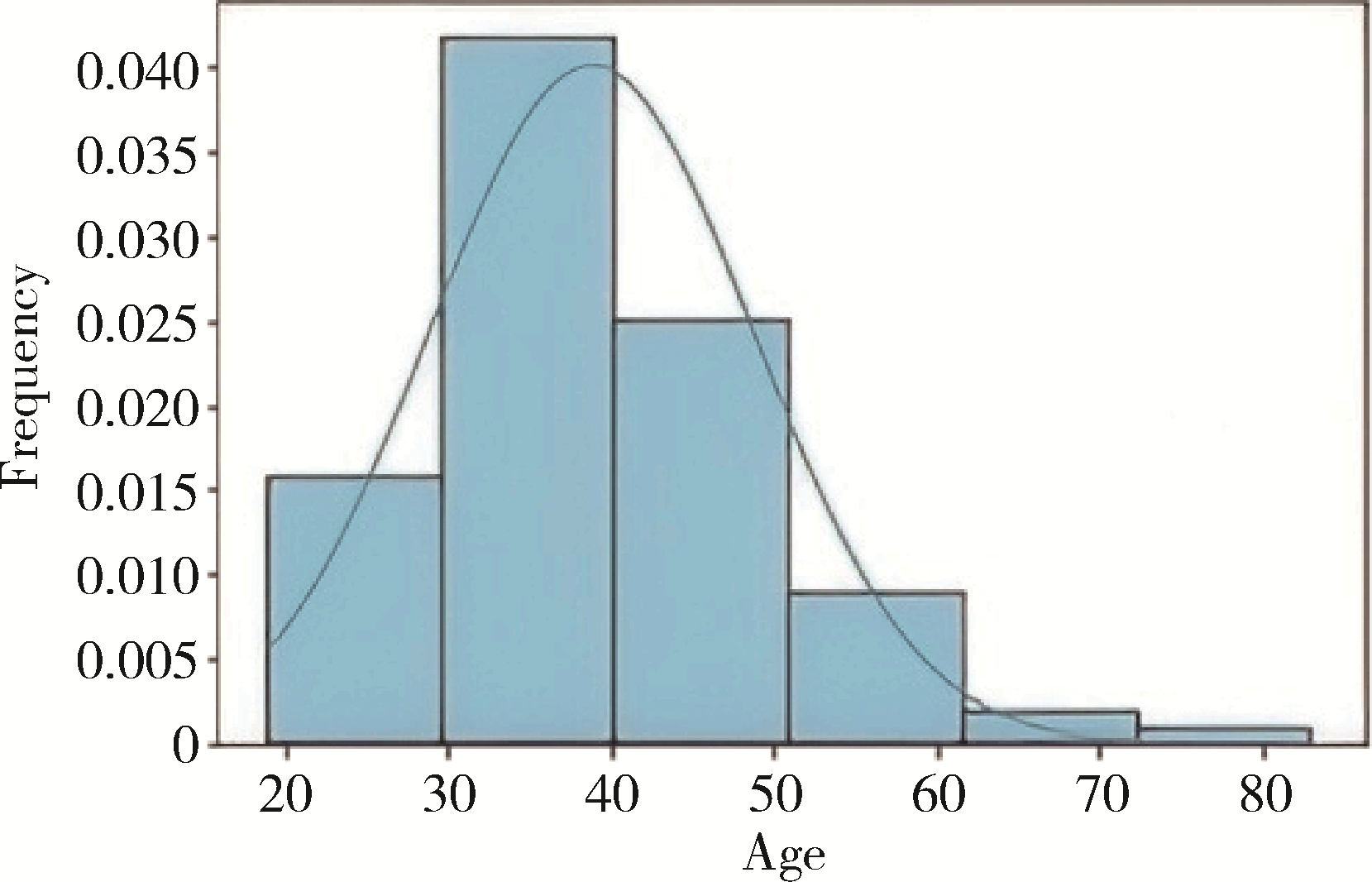
Figure 1 Current dataset histogram
| 分布 | 总误差平方和 | BIC | Ks_static | Ks_pvalue |
|---|---|---|---|---|
| 正态逆高斯分布 | 0.029618 | -6802.11762 | 0.034785 | 0.376973 |
| Ncf分布 | 0.029629 | -6795.34125 | 0.034234 | 0.397146 |
| α分布 | 0.029630 | -6808.35960 | 0.036234 | 0.327412 |
| F分布 | 0.029630 | -6801.83420 | 0.034147 | 0.400411 |
| 反Gamma分布 | 0.029632 | -6808.31733 | 0.034303 | 0.394599 |
Table 3 The top 5 distributions with the best fitting effects
| 分布 | 总误差平方和 | BIC | Ks_static | Ks_pvalue |
|---|---|---|---|---|
| 正态逆高斯分布 | 0.029618 | -6802.11762 | 0.034785 | 0.376973 |
| Ncf分布 | 0.029629 | -6795.34125 | 0.034234 | 0.397146 |
| α分布 | 0.029630 | -6808.35960 | 0.036234 | 0.327412 |
| F分布 | 0.029630 | -6801.83420 | 0.034147 | 0.400411 |
| 反Gamma分布 | 0.029632 | -6808.31733 | 0.034303 | 0.394599 |
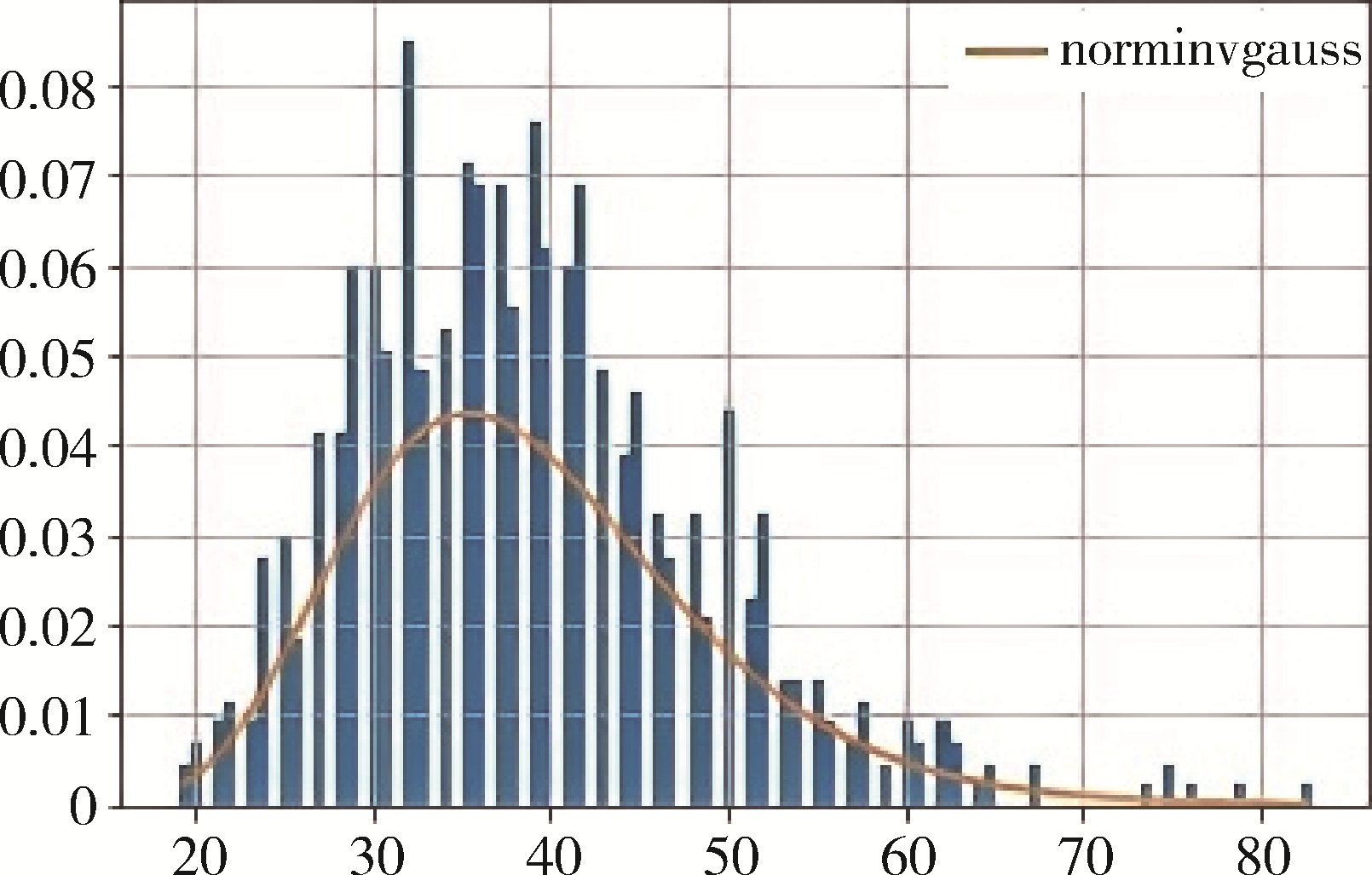
Figure 2 Norminvgauss distribution graph
| 年代 | 平均峰值年龄 |
|---|---|
| 1500-1599 | 40.000 |
| 1600-1699 | 42.357 |
| 1700-1799 | 41.471 |
| 1800-1899 | 38.606 |
| 1900-1999 | 38.987 |
| 2000-2022 | 47.056 |
Table 4 Mean age data of different decades
| 年代 | 平均峰值年龄 |
|---|---|
| 1500-1599 | 40.000 |
| 1600-1699 | 42.357 |
| 1700-1799 | 41.471 |
| 1800-1899 | 38.606 |
| 1900-1999 | 38.987 |
| 2000-2022 | 47.056 |
| 年代 | 中位数年龄 |
|---|---|
| 1500-1599 | 40.000 |
| 1600-1699 | 41.500 |
| 1700-1799 | 46.000 |
| 1800-1899 | 37.000 |
| 1900-1999 | 39.000 |
| 2000-2022 | 45.500 |
Table 5 Median age data of different decades
| 年代 | 中位数年龄 |
|---|---|
| 1500-1599 | 40.000 |
| 1600-1699 | 41.500 |
| 1700-1799 | 46.000 |
| 1800-1899 | 37.000 |
| 1900-1999 | 39.000 |
| 2000-2022 | 45.500 |
| 年代 | 最大峰值年龄 |
|---|---|
| 1500-1599 | 51.000 |
| 1600-1699 | 61.000 |
| 1700-1799 | 54.000 |
| 1800-1899 | 76.000 |
| 1900-1999 | 75.000 |
| 2000-2022 | 75.000 |
Table 6 Maximum peak age data of scientific research output of different decades
| 年代 | 最大峰值年龄 |
|---|---|
| 1500-1599 | 51.000 |
| 1600-1699 | 61.000 |
| 1700-1799 | 54.000 |
| 1800-1899 | 76.000 |
| 1900-1999 | 75.000 |
| 2000-2022 | 75.000 |
| 年代 | 最小峰值年龄 |
|---|---|
| 1500-1599 | 29.000 |
| 1600-1699 | 28.000 |
| 1700-1799 | 19.000 |
| 1800-1899 | 20.000 |
| 1900-1999 | 20.000 |
| 2000-2022 | 29.000 |
Table 7 Minimum peak age data of scientific research output of different decades
| 年代 | 最小峰值年龄 |
|---|---|
| 1500-1599 | 29.000 |
| 1600-1699 | 28.000 |
| 1700-1799 | 19.000 |
| 1800-1899 | 20.000 |
| 1900-1999 | 20.000 |
| 2000-2022 | 29.000 |
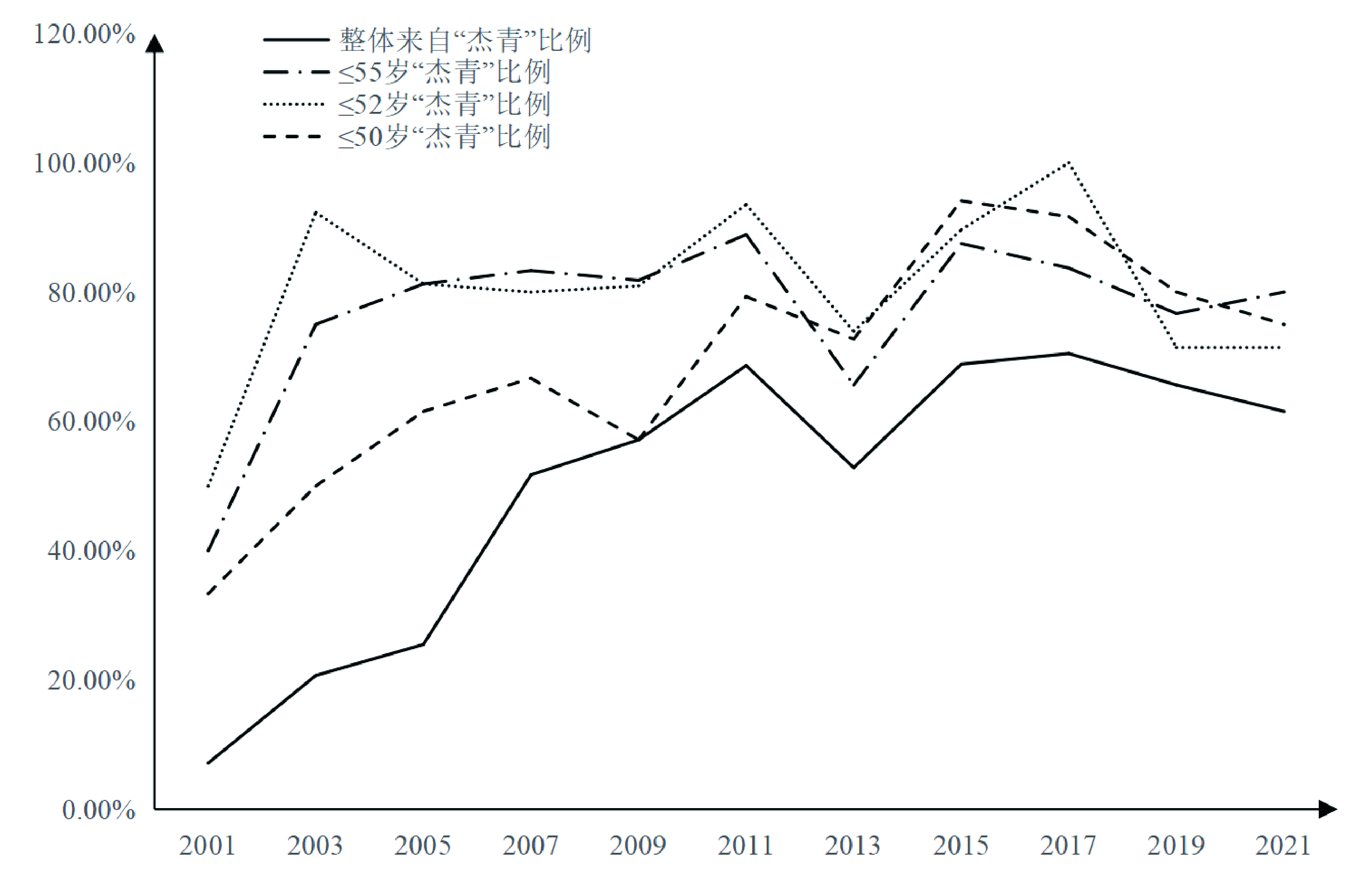
Figure 3 Proportion of New CAS Academicians voted out of “Outstanding Young Scientists” from 2001 to 2021
| [1] | 赵红州. 关于科学家社会年龄问题的研究[J]. 自然辩证法通讯, 1979(4): 29-44. |
| Zhao H Z. The research on the social age of scientists[J]. Journal of Dialectics of Nature, 1979(4): 29-44. | |
| [2] | 梁立明, 赵红州. 科学发现年龄定律是一种威布尔分布[J]. 自然辩证法通讯, 1991, 13(1): 28-36. |
| Liang L M, Zhao H Z. The age law of scientific discoveries is a Weibull Distribution[J]. Journal of Dialectics of Nature, 1991, 13(1): 28-36. | |
| [3] | 赵红州, 梁立明, 王元. 重大科技成果威布尔分布的普遍性[J]. 科学学与科学技术管理, 1992, 13(3): 5-12. |
| Zhao H Z, Liang L M, Wang Y. The Universality of Weibull distribution in major scientific and technological achievements[J]. Science of Science and Management of S.&.T, 1992, 13(3): 5-12. | |
| [4] |
Liang L M, Zhao H Z, Wang Y et al. Distribution of major scientific and technological achievements in terms of age group—Welbull distribution[J]. Scientometrics, 1996, 36(1): 3-18.
DOI URL |
| [5] | 夏水华. 对80年间诺贝尔物理奖获得者的统计分析及思考[J]. 科技进步与对策, 2001(3): 128-130. |
| Xia S H. The statistical analysis and reflections on Nobel Prize Winners in Physics over 80 Years[J]. Science & Technology Progress and Policy, 2001(3): 128-130. | |
| [6] | 刘俊婉. 从诺贝尔奖现象看科学创造的特征[J]. 科学学研究, 2009, 27(9): 1289-1297. |
| Liu J W. Some characteristics of scientific creation based on Nobel Prize analysis[J]. Studies in Science of Science, 2009, 27(9): 1289-1297. | |
| [7] | 吴晓东. 诺贝尔生理学或医学奖得主的创造峰值年龄研究[J]. 中国科学院院刊, 2009, 24(6): 655-658. |
| Wu X D. Research on the age of creation peak value of laureates of Nobel Physiology or Medicine Prize[J]. Bulletin of Chinese Academy of Sciences, 2009, 24(6): 655-658. | |
| [8] | 门伟莉, 张志强. 科研创造峰值年龄变化规律研究综述[J]. 科学学研究, 2013, 31(11): 1623-1629. |
| Men W L, Zhang Z Q. Research review of age of peak creative performance[J]. Studies in Science of Science, 2013, 31(11): 1623-1629. | |
| [9] |
樊向伟, 肖仙桃. 科研产出高峰期研究的现状与问题[J]. 图书情报工作, 2015, 59(5): 100-105.
DOI |
|
Fan X W, Xiao X T. The research status and problems of peak age period of scientific output[J]. Library And Information Service, 2015, 59(5): 100-105.
DOI |
|
| [10] |
Mumford M D. Age and outstanding occupational achievement: Lehman revisited[J]. Journal of Vocational Behavior, 1984, 25(02): 225-244.
DOI URL |
| [11] |
Stephan P G, Levin S E. Age and the Nobel Prize revisited[J]. Scientometrics, 1993, 28(3): 387-399.
DOI URL |
| [12] | Fortunato S. Growing time lag threatens Nobels[J]. Nature, 2014, 508(7495): 186. |
| [13] | 王素丽. 基于学科引文的文献生命周期模型探析[J]. 情报理论与实践, 2012, 35(3): 37-41. |
| Wang S L. The analysis of document life cycle model based on disciplinary citations[J]. Information Studies: Theory & Application, 2012, 35(3): 37-41. | |
| [14] |
Jones B F. Age and great invention[J]. Review of Economics and Statistics, 2010, 92(1): 1-14.
DOI URL |
| [15] |
Jones B F, Weinberg B A. Age dynamics in scientific creativity[J]. Proceedings of the National Academy of Sciences, 2011, 108 (47): 18910-18914.
DOI URL |
| [16] |
Simonton D K. Age and outstanding achievement: What do we know after a century of research?[J]. Psychological Bulletin, 1988, 104(2): 251-267.
PMID |
| [17] | Weinberg B A, Galenson D W. Creative careers: The life cycles of Nobel laureates in economics[R]. NBER Working Paper, 2003. |
| [18] | 梁立明, 王元, 丁凡, 等. 科学与文化成果年龄分布研究的新发展[J]. 自然辩证法通讯, 1999, 21(4): 28-33. |
| Liang L M, Wang Y, Ding F, et al. New development of age distribution study about science and culture achievements[J]. Journal of Dialectics of Nature, 1999, 21(4): 28-33. | |
| [19] | 蔺亚琼. 人才项目与当代中国学术精英的塑造[J]. 高等教育研究, 2018, 39(11): 1-12. |
| Lin Y Q. Talent projects and the making of academic elites in China[J]. Journal of Higher Education, 2018, 39(11): 1-12. | |
| [20] | Sinatra R, et al. Quantifying the evolution of individual scientific impact[J]. Science, 2016, 354(6312): 596-604. |
| Viewed | ||||||
|
Full text |
|
|||||
|
Abstract |
|
|||||
