
- 中国科学学与科技政策研究会
- 中国科学院科技战略咨询研究院
- 清华大学科学技术与社会研究中心
ISSN 1003-2053 CN 11-1805/G3
科学学研究 ›› 2025, Vol. 43 ›› Issue (2): 358-370.
郎元柯1,2, 范柏乃1( ), 曾辰宇1, 黄素勤3
收稿日期:2023-12-18
修回日期:2024-06-12
出版日期:2025-02-15
发布日期:2025-02-15
通讯作者:
范柏乃(1965-),男,教授、博士生导师,E-mail:作者简介:郎元柯(2003-),男,助理研究员。基金资助:
LANG Yuan-ke1,2, FAN Bo-nai1(), ZENG Chen-yu1, HUANG Su-qin3
Received:2023-12-18
Revised:2024-06-12
Online:2025-02-15
Published:2025-02-15
摘要:
数字经济作为产业发展的主要引擎,对产业跃迁具有显著的驱动效应。为了探究数字经济是否以及如何促进产业跃迁,本研究利用2011-2021年我国30个省域数据进行深入分析。研究结果表明,数字经济显著推动产业跃迁,其中产业数字化对产业跃迁的贡献更为突出。同时,产业数字化和数字产业化呈现出与产业跃迁关联的“倒U型”趋势。此外,本研究通过门槛模型发现在数字经济推动产业跃迁的过程中,把握产业集聚规模具有关键作用。本研究深化了对产业跃迁动因和数字经济之于产业发展效应和机制的理解,突显科技创新质量和产业生态的重要性,为政府制定数字经济发展政策提供了理论依据和实证支持。
中图分类号:
郎元柯, 范柏乃, 曾辰宇, 黄素勤. 数字经济对产业跃迁的驱动机制与提升路径——基于科技创新的中介作用和产业生态的调节效应[J]. 科学学研究, 2025, 43(2): 358-370.
LANG Yuan-ke, FAN Bo-nai, ZENG Chen-yu, HUANG Su-qin. The driving mechanism and enhancement path of digital economy for industrial leapfrogging: Based on the mediating role of science and technology innovation and the regulating effect of industrial ecology[J]. Studies in Science of Science, 2025, 43(2): 358-370.
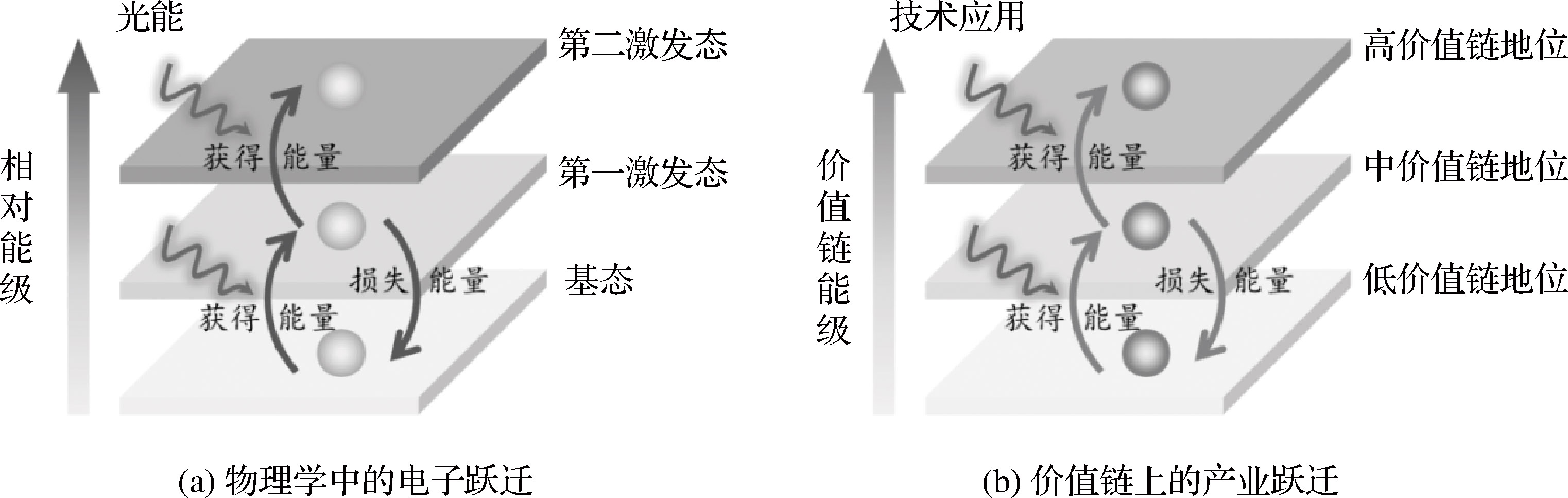
图1 产业跃迁概念的示意图
Figure 1 Schematic diagram of the concept of industrial transition
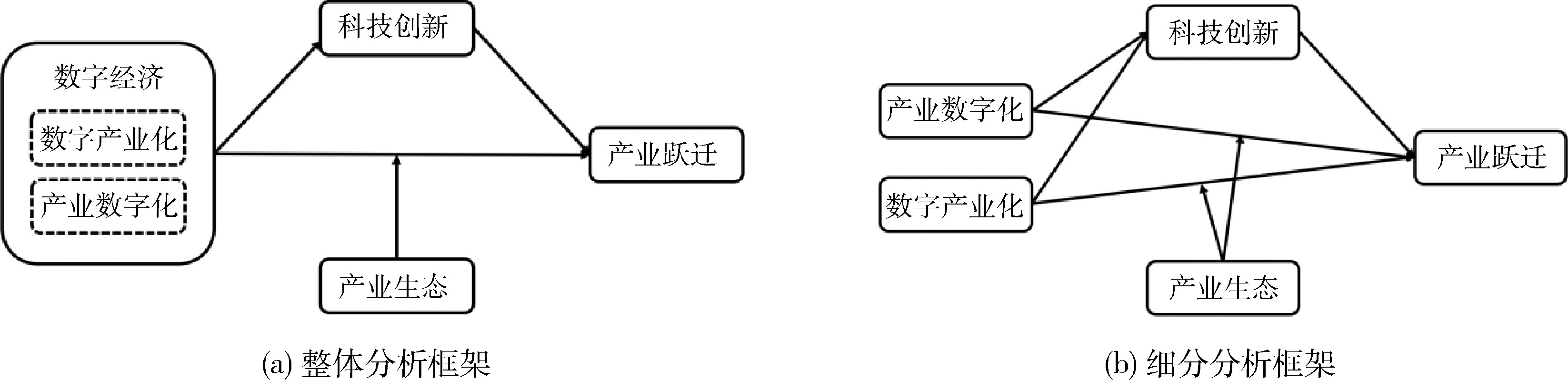
图2 理论分析框架
Figure 2 Theoretical analysis framework
| 数字经济 | |||
| 产业数字化 | 期末使用计算机数(台) | 王军等,2021 | + |
| 电子商务采购额(亿元) | 王军等,2021 | + | |
| 有电子商务交易活动企业数(个) | 潘为华等,2021 | + | |
| 有电子商务交易活动企业比重(%) | 王军等,2021 | + | |
| 数字产业化 | 信息传输、软件和信息技术服务业城镇单位就业人员(万人) | 潘为华等,2021 | + |
| 电子信息制造业收入(亿元) | 潘为华等,2021 | + | |
| 信息传输、软件和信息技术服务业固定投资(亿元) | 潘为华等,2021 | + |
表1 数字经济发展水平测度
Table 1 Measurement of the development level of digital economy
| 数字经济 | |||
| 产业数字化 | 期末使用计算机数(台) | 王军等,2021 | + |
| 电子商务采购额(亿元) | 王军等,2021 | + | |
| 有电子商务交易活动企业数(个) | 潘为华等,2021 | + | |
| 有电子商务交易活动企业比重(%) | 王军等,2021 | + | |
| 数字产业化 | 信息传输、软件和信息技术服务业城镇单位就业人员(万人) | 潘为华等,2021 | + |
| 电子信息制造业收入(亿元) | 潘为华等,2021 | + | |
| 信息传输、软件和信息技术服务业固定投资(亿元) | 潘为华等,2021 | + |
| 变量 | 均值 | 标准差 | 最小值 | 中位数 | 最大值 | |
|---|---|---|---|---|---|---|
| 解释变量 | Indleap | 0.082 | 0.075 | -0.071 | 0.067 | 0.344 |
| 被解释变量 | Dige | 0.135 | 0.129 | -0.037 | 0.090 | 0.867 |
| Digi | 0.095 | 0.125 | 0.006 | 0.050 | 0.872 | |
| Indd | 0.150 | 0.143 | -0.023 | 0.105 | 0.704 | |
| 控制变量 | Humcap | 0.020 | 0.005 | 0.009 | 0.020 | 0.038 |
| Infom | 0.060 | 0.055 | 0.014 | 0.036 | 0.290 | |
| Labor | 7.606 | 0.767 | 5.624 | 7.672 | 8.864 | |
| Market | 8.039 | 1.907 | 3.564 | 8.171 | 11.934 | |
| Taxbur | 0.082 | 0.029 | 0.048 | 0.075 | 0.191 | |
| Diginfra | 6.600 | 0.919 | 4.006 | 6.660 | 8.259 | |
表2 描述性统计分析结果
Table 2 Descriptive statistical analysis results
| 变量 | 均值 | 标准差 | 最小值 | 中位数 | 最大值 | |
|---|---|---|---|---|---|---|
| 解释变量 | Indleap | 0.082 | 0.075 | -0.071 | 0.067 | 0.344 |
| 被解释变量 | Dige | 0.135 | 0.129 | -0.037 | 0.090 | 0.867 |
| Digi | 0.095 | 0.125 | 0.006 | 0.050 | 0.872 | |
| Indd | 0.150 | 0.143 | -0.023 | 0.105 | 0.704 | |
| 控制变量 | Humcap | 0.020 | 0.005 | 0.009 | 0.020 | 0.038 |
| Infom | 0.060 | 0.055 | 0.014 | 0.036 | 0.290 | |
| Labor | 7.606 | 0.767 | 5.624 | 7.672 | 8.864 | |
| Market | 8.039 | 1.907 | 3.564 | 8.171 | 11.934 | |
| Taxbur | 0.082 | 0.029 | 0.048 | 0.075 | 0.191 | |
| Diginfra | 6.600 | 0.919 | 4.006 | 6.660 | 8.259 | |
| 变量 | Indleap | Dige | Digi | Indd | Humcap | Infom | Labor | Market | Taxbur | Diginfra |
|---|---|---|---|---|---|---|---|---|---|---|
| Indleap | 1 | 0.208*** | 0.109** | 0.139** | -0.229*** | -0.001 | 0.305*** | 0.020 | -0.032 | 0.109** |
| Dige | 0.055 | 1 | -0.292*** | -0.249*** | -0.142*** | -0.051 | -0.283*** | -0.328*** | 0.179*** | -0.369*** |
| Digi | 0.066 | -0.152*** | 1 | 0.774*** | 0.453*** | 0.056 | 0.567*** | 0.889*** | 0.010 | 0.742*** |
| Indd | 0.264*** | -0.158*** | 0.767*** | 1 | 0.215*** | 0.339*** | 0.450*** | 0.724*** | 0.151*** | 0.655*** |
| Humcap | -0.200*** | -0.177*** | 0.217*** | 0.077 | 1 | -0.010 | -0.127** | 0.460*** | -0.088 | 0.231*** |
| Infom | -0.005 | -0.163*** | 0.057 | 0.170*** | 0.064 | 1 | -0.084 | 0.018 | 0.140** | 0.200*** |
| Labor | 0.309*** | -0.236*** | 0.369*** | 0.407*** | -0.045 | -0.098* | 1 | 0.427*** | -0.354*** | 0.773*** |
| Market | 0.068 | -0.291*** | 0.632*** | 0.655*** | 0.494*** | -0.002 | 0.473*** | 1 | 0.089 | 0.637*** |
| Taxbur | -0.014 | 0.151*** | 0.316*** | 0.357*** | 0.081 | -0.065 | -0.317*** | 0.190*** | 1 | -0.309*** |
| Diginfra | 0.180*** | -0.346*** | 0.502*** | 0.548*** | 0.223*** | 0.194*** | 0.825*** | 0.663*** | -0.235*** | 1 |
表3 相关性分析结果
Table 3 Correlation analysis results
| 变量 | Indleap | Dige | Digi | Indd | Humcap | Infom | Labor | Market | Taxbur | Diginfra |
|---|---|---|---|---|---|---|---|---|---|---|
| Indleap | 1 | 0.208*** | 0.109** | 0.139** | -0.229*** | -0.001 | 0.305*** | 0.020 | -0.032 | 0.109** |
| Dige | 0.055 | 1 | -0.292*** | -0.249*** | -0.142*** | -0.051 | -0.283*** | -0.328*** | 0.179*** | -0.369*** |
| Digi | 0.066 | -0.152*** | 1 | 0.774*** | 0.453*** | 0.056 | 0.567*** | 0.889*** | 0.010 | 0.742*** |
| Indd | 0.264*** | -0.158*** | 0.767*** | 1 | 0.215*** | 0.339*** | 0.450*** | 0.724*** | 0.151*** | 0.655*** |
| Humcap | -0.200*** | -0.177*** | 0.217*** | 0.077 | 1 | -0.010 | -0.127** | 0.460*** | -0.088 | 0.231*** |
| Infom | -0.005 | -0.163*** | 0.057 | 0.170*** | 0.064 | 1 | -0.084 | 0.018 | 0.140** | 0.200*** |
| Labor | 0.309*** | -0.236*** | 0.369*** | 0.407*** | -0.045 | -0.098* | 1 | 0.427*** | -0.354*** | 0.773*** |
| Market | 0.068 | -0.291*** | 0.632*** | 0.655*** | 0.494*** | -0.002 | 0.473*** | 1 | 0.089 | 0.637*** |
| Taxbur | -0.014 | 0.151*** | 0.316*** | 0.357*** | 0.081 | -0.065 | -0.317*** | 0.190*** | 1 | -0.309*** |
| Diginfra | 0.180*** | -0.346*** | 0.502*** | 0.548*** | 0.223*** | 0.194*** | 0.825*** | 0.663*** | -0.235*** | 1 |
| 变量 | (1) Indleap | (2) Indleap | (3) Indleap |
|---|---|---|---|
| Dige | 0.060** | ||
| (2.20) | |||
| Indd | 0.124** | ||
| (2.12) | |||
| Digi | -0.228*** | ||
| (-3.30) | |||
| Humcap | -2.964 | -2.859 | -5.081** |
| (-1.25) | (-1.20) | (-2.09) | |
| Infom | 0.047 | 0.124 | -0.018 |
| (0.33) | (0.83) | (-0.12) | |
| Labor | -0.121** | -0.136*** | -0.079 |
| (-2.34) | (-2.63) | (-1.48) | |
| Market | 0.006 | 0.006 | 0.008 |
| (1.01) | (1.06) | (1.43) | |
| Taxbur | -0.866*** | -0.800** | -0.883*** |
| (-2.61) | (-2.42) | (-2.70) | |
| Diginfra | 0.081*** | 0.074*** | 0.061*** |
| (3.88) | (3.51) | (2.83) | |
| Constant | 0.639 | 0.788* | 0.479 |
| (1.52) | (1.86) | (1.14) | |
| 观测值 | 330 | 330 | 330 |
| R2 | 0.543 | 0.542 | 0.552 |
| 个体固定效应 | 是 | 是 | 是 |
| 时间固定效应 | 是 | 是 | 是 |
表4 基准回归结果
Table 4 Benchmark regression results
| 变量 | (1) Indleap | (2) Indleap | (3) Indleap |
|---|---|---|---|
| Dige | 0.060** | ||
| (2.20) | |||
| Indd | 0.124** | ||
| (2.12) | |||
| Digi | -0.228*** | ||
| (-3.30) | |||
| Humcap | -2.964 | -2.859 | -5.081** |
| (-1.25) | (-1.20) | (-2.09) | |
| Infom | 0.047 | 0.124 | -0.018 |
| (0.33) | (0.83) | (-0.12) | |
| Labor | -0.121** | -0.136*** | -0.079 |
| (-2.34) | (-2.63) | (-1.48) | |
| Market | 0.006 | 0.006 | 0.008 |
| (1.01) | (1.06) | (1.43) | |
| Taxbur | -0.866*** | -0.800** | -0.883*** |
| (-2.61) | (-2.42) | (-2.70) | |
| Diginfra | 0.081*** | 0.074*** | 0.061*** |
| (3.88) | (3.51) | (2.83) | |
| Constant | 0.639 | 0.788* | 0.479 |
| (1.52) | (1.86) | (1.14) | |
| 观测值 | 330 | 330 | 330 |
| R2 | 0.543 | 0.542 | 0.552 |
| 个体固定效应 | 是 | 是 | 是 |
| 时间固定效应 | 是 | 是 | 是 |
| 变量 | (1) Indleap | (2) Indleap | (3) Indleap |
|---|---|---|---|
| Dige | 0.153** | ||
| (2.34) | |||
| Dige2 | -0.148 | ||
| (-1.56) | |||
| Indd | 0.415*** | ||
| (3.00) | |||
| Indd2 | -0.391** | ||
| (-2.32) | |||
| Digi | 0.105 | ||
| (0.64) | |||
| Digi2 | -0.341** | ||
| (-2.24) | |||
| 控制变量 | 是 | 是 | 是 |
| 个体固定效应 | 是 | 是 | 是 |
| 时间固定效应 | 是 | 是 | 是 |
| 观测值 | 330 | 330 | 330 |
| R2 | 0.545 | 0.549 | 0.558 |
表5 非线性效应结果
Table 5 Results of nonlinear effects
| 变量 | (1) Indleap | (2) Indleap | (3) Indleap |
|---|---|---|---|
| Dige | 0.153** | ||
| (2.34) | |||
| Dige2 | -0.148 | ||
| (-1.56) | |||
| Indd | 0.415*** | ||
| (3.00) | |||
| Indd2 | -0.391** | ||
| (-2.32) | |||
| Digi | 0.105 | ||
| (0.64) | |||
| Digi2 | -0.341** | ||
| (-2.24) | |||
| 控制变量 | 是 | 是 | 是 |
| 个体固定效应 | 是 | 是 | 是 |
| 时间固定效应 | 是 | 是 | 是 |
| 观测值 | 330 | 330 | 330 |
| R2 | 0.545 | 0.549 | 0.558 |
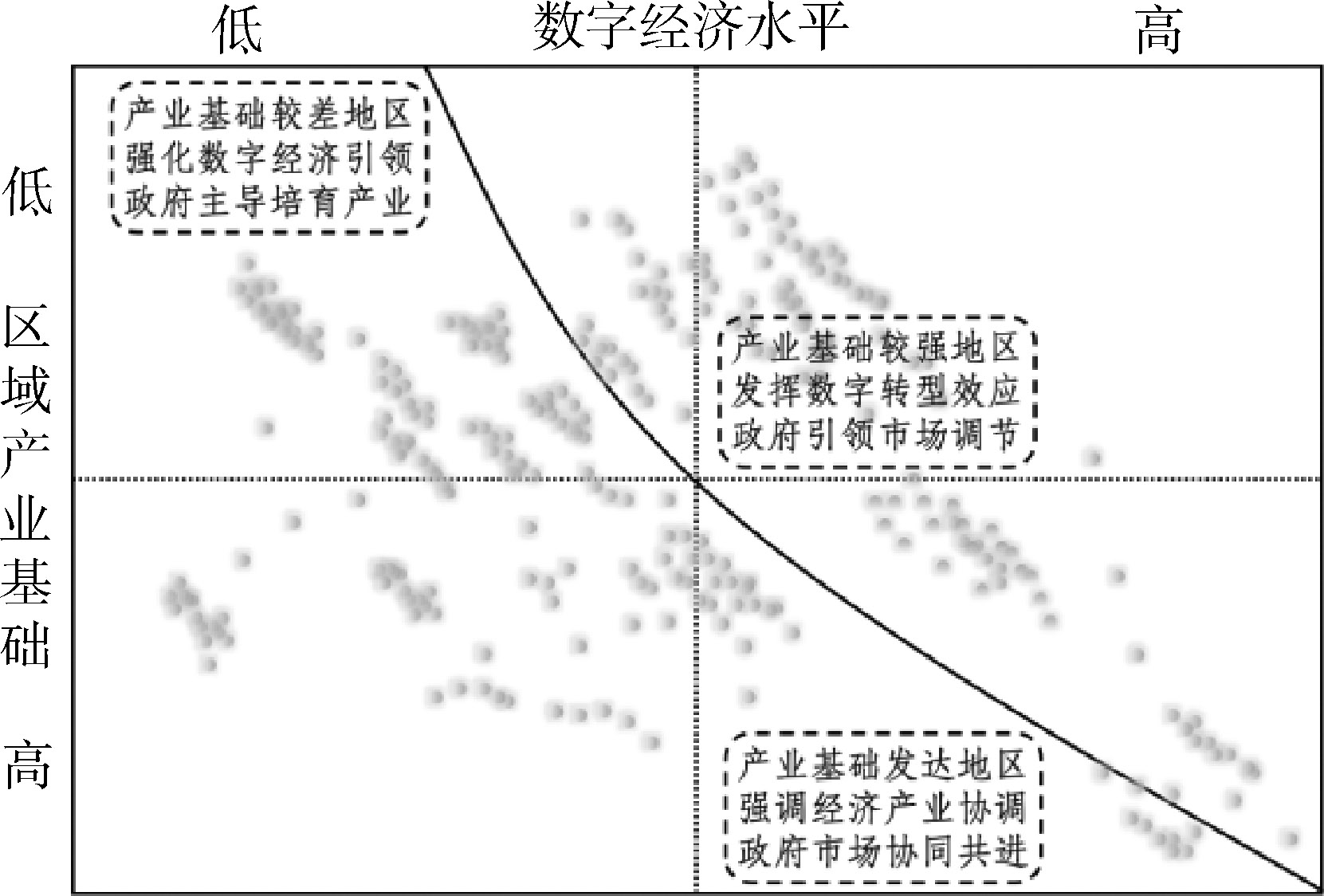
图3 数字经济与区域产业的协同耦合发展
Figure 3 Collaborative and coupled development of digital economy and regional industries
| 数字经济 | 产业数字化 | 数字产业化 | ||||
|---|---|---|---|---|---|---|
| 门槛值 | 区间 | 门槛值 | 区间 | 门槛值 | 区间 | |
| 第一门槛 | 0.846 | [0.764,1.115] | 1.041 | [1.033,1.099] | 0.902 | [0.743,1.128] |
| 第二门槛 | 1.079 | [0.944,1.114] | 1.041 | [0.743,1.055] | ||
表6 门槛效应检验结果
Table 6 Threshold effect test results
| 数字经济 | 产业数字化 | 数字产业化 | ||||
|---|---|---|---|---|---|---|
| 门槛值 | 区间 | 门槛值 | 区间 | 门槛值 | 区间 | |
| 第一门槛 | 0.846 | [0.764,1.115] | 1.041 | [1.033,1.099] | 0.902 | [0.743,1.128] |
| 第二门槛 | 1.079 | [0.944,1.114] | 1.041 | [0.743,1.055] | ||
| 变量 | (1) Indleap | (2) F.Indleap | (3) Indleap |
|---|---|---|---|
| L.Dige | 0.053* | ||
| (1.87) | |||
| Dige | 0.060** | 0.079*** | |
| (2.19) | (2.85) | ||
| 控制变量 | 是 | 是 | 是 |
| 个体固定效应 | 是 | 是 | 是 |
| 时间固定效应 | 是 | 是 | 是 |
| 观测值 | 300 | 300 | 330 |
| R2 | 0.530 | 0.558 | 0.578 |
表7 稳健性检验结果
Table 7 Robustness test results
| 变量 | (1) Indleap | (2) F.Indleap | (3) Indleap |
|---|---|---|---|
| L.Dige | 0.053* | ||
| (1.87) | |||
| Dige | 0.060** | 0.079*** | |
| (2.19) | (2.85) | ||
| 控制变量 | 是 | 是 | 是 |
| 个体固定效应 | 是 | 是 | 是 |
| 时间固定效应 | 是 | 是 | 是 |
| 观测值 | 300 | 300 | 330 |
| R2 | 0.530 | 0.558 | 0.578 |
| 变量 | (1) | (2) | (3) | (4) | (5) | (6) | (7) | (8) |
|---|---|---|---|---|---|---|---|---|
| Dige | Indleap | Dige | Indleap | Dige | Indleap | Dige | Indleap | |
| IV1 | -0.020*** | |||||||
| (-4.06) | ||||||||
| IV2 | -0.024*** | |||||||
| (-4.81) | ||||||||
| IV3 | -0.027*** | |||||||
| (-4.73) | ||||||||
| IV4 | -0.019*** | |||||||
| (-4.42) | ||||||||
| Dige | 0.311** | 0.282** | 0.297** | 0.317** | ||||
| (1.96) | (2.12) | (2.18) | (2.16) | |||||
| 控制变量 | 是 | 是 | 是 | 是 | 是 | 是 | 是 | 是 |
| 个体固定效应 | 是 | 是 | 是 | 是 | 是 | 是 | 是 | 是 |
| 时间固定效应 | 是 | 是 | 是 | 是 | 是 | 是 | 是 | 是 |
| 观测值 | 330 | 330 | 330 | 330 | 330 | 330 | 330 | 330 |
| R2 | 0.184 | -0.023 | 0.199 | 0.013 | 0.198 | -0.005 | 0.191 | -0.031 |
| 工具变量识别不足检验 | 16.099 (0.000) | 22.079 (0.000) | 21.417 (0.000) | 18.909 (0.000) | ||||
| 弱工具变量检验 | 16.515 | 23.089 | 22.349 | 19.572 | ||||
| Stock-Yogo weak ID test critical values: 10% maximal IV size | 16.38 | 16.38 | 16.38 | 16.38 | ||||
| Sargan检验 | 0.000 | 0.000 | 0.000 | 0.000 |
表8 内生性检验结果
Table 8 Endogeneity test results
| 变量 | (1) | (2) | (3) | (4) | (5) | (6) | (7) | (8) |
|---|---|---|---|---|---|---|---|---|
| Dige | Indleap | Dige | Indleap | Dige | Indleap | Dige | Indleap | |
| IV1 | -0.020*** | |||||||
| (-4.06) | ||||||||
| IV2 | -0.024*** | |||||||
| (-4.81) | ||||||||
| IV3 | -0.027*** | |||||||
| (-4.73) | ||||||||
| IV4 | -0.019*** | |||||||
| (-4.42) | ||||||||
| Dige | 0.311** | 0.282** | 0.297** | 0.317** | ||||
| (1.96) | (2.12) | (2.18) | (2.16) | |||||
| 控制变量 | 是 | 是 | 是 | 是 | 是 | 是 | 是 | 是 |
| 个体固定效应 | 是 | 是 | 是 | 是 | 是 | 是 | 是 | 是 |
| 时间固定效应 | 是 | 是 | 是 | 是 | 是 | 是 | 是 | 是 |
| 观测值 | 330 | 330 | 330 | 330 | 330 | 330 | 330 | 330 |
| R2 | 0.184 | -0.023 | 0.199 | 0.013 | 0.198 | -0.005 | 0.191 | -0.031 |
| 工具变量识别不足检验 | 16.099 (0.000) | 22.079 (0.000) | 21.417 (0.000) | 18.909 (0.000) | ||||
| 弱工具变量检验 | 16.515 | 23.089 | 22.349 | 19.572 | ||||
| Stock-Yogo weak ID test critical values: 10% maximal IV size | 16.38 | 16.38 | 16.38 | 16.38 | ||||
| Sargan检验 | 0.000 | 0.000 | 0.000 | 0.000 |
| 变量 | (1) | (2) | (3) |
|---|---|---|---|
| inno1 | inno2 | Indleap | |
| Dige | 0.253** | 0.011*** | -0.057 |
| (2.48) | (3.30) | (-0.76) | |
| ecology | -0.118** | ||
| (-1.98) | |||
| Dige_ecology | 0.519* | ||
| (1.70) | |||
| 控制变量 | 是 | 是 | 是 |
| 个体固定效应 | 是 | 是 | 是 |
| 时间固定效应 | 是 | 是 | 是 |
| 观测值 | 330 | 330 | 330 |
| R2 | 0.756 | 0.171 | 0.546 |
表9 机制分析的检验结果
Table 9 Test results of mechanism analysis
| 变量 | (1) | (2) | (3) |
|---|---|---|---|
| inno1 | inno2 | Indleap | |
| Dige | 0.253** | 0.011*** | -0.057 |
| (2.48) | (3.30) | (-0.76) | |
| ecology | -0.118** | ||
| (-1.98) | |||
| Dige_ecology | 0.519* | ||
| (1.70) | |||
| 控制变量 | 是 | 是 | 是 |
| 个体固定效应 | 是 | 是 | 是 |
| 时间固定效应 | 是 | 是 | 是 |
| 观测值 | 330 | 330 | 330 |
| R2 | 0.756 | 0.171 | 0.546 |
| 变量 | (1) | (2) | (3) | (4) | (5) | (6) |
|---|---|---|---|---|---|---|
| 东部 | 中西部 | 南方 | 北方 | 人均GDP高 | 人均GDP低 | |
| Indleap | Indleap | Indleap | Indleap | Indleap | Indleap | |
| Dige | 0.133* | 0.026 | 0.085* | 0.063* | 0.106** | 0.043 |
| (1.72) | (0.88) | (1.77) | (1.76) | (1.98) | (0.87) | |
| 控制变量 | 是 | 是 | 是 | 是 | 是 | 是 |
| 个体固定效应 | 是 | 是 | 是 | 是 | 是 | 是 |
| 时间固定效应 | 是 | 是 | 是 | 是 | 是 | 是 |
| 观测值 | 121 | 209 | 165 | 165 | 165 | 165 |
| R2 | 0.539 | 0.535 | 0.465 | 0.590 | 0.464 | 0.500 |
表10 区域异质性检验结果
Table 10 Regional heterogeneity test results
| 变量 | (1) | (2) | (3) | (4) | (5) | (6) |
|---|---|---|---|---|---|---|
| 东部 | 中西部 | 南方 | 北方 | 人均GDP高 | 人均GDP低 | |
| Indleap | Indleap | Indleap | Indleap | Indleap | Indleap | |
| Dige | 0.133* | 0.026 | 0.085* | 0.063* | 0.106** | 0.043 |
| (1.72) | (0.88) | (1.77) | (1.76) | (1.98) | (0.87) | |
| 控制变量 | 是 | 是 | 是 | 是 | 是 | 是 |
| 个体固定效应 | 是 | 是 | 是 | 是 | 是 | 是 |
| 时间固定效应 | 是 | 是 | 是 | 是 | 是 | 是 |
| 观测值 | 121 | 209 | 165 | 165 | 165 | 165 |
| R2 | 0.539 | 0.535 | 0.465 | 0.590 | 0.464 | 0.500 |
| [1] | 陈昌盛, 许伟, 兰宗敏, 等. “十四五”时期我国发展内外部环境研究[J]. 管理世界, 2020, 36(10): 1-14,40,15. |
| Chen C S, Xu W, Lan Z M, et al. Research on internal and external environment of China's development in the period of “14th Five-Year Plan”[J]. Management World, 2020, 36(10): 1-14,40,15. | |
| [2] | 陈晓东, 杨晓霞. 数字经济发展对产业结构升级的影响——基于灰关联熵与耗散结构理论的研究[J]. 改革, 2021(3): 26-39. |
| Chen X D, Yang X X. The impact of digital economy development on industrial structure upgrading - A study based on gray correlation entropy and dissipative structure theory[J]. Reform, 2021(3): 26-39. | |
| [3] | 史丹. 数字经济条件下产业发展趋势的演变[J]. 中国工业经济, 2022(11): 26-42. |
| Shi D. Evolution of industrial development trend under the condition of digital economy[J]. China Industrial Economy, 2022(11): 26-42. | |
| [4] | 刘友金, 黄鲁成. 技术创新与产业的跨越式发展——A—U模型的改进及其应用[J]. 中国软科学, 2001(2): 38-42,47. |
| Liu Y J, Huang L C. Technological innovation and leapfrog development of industries-Improvement of A-U Model and its application[J]. China Soft Science, 2001(2): 38-42,47. | |
| [5] | 朱瑞博. 核心技术链、核心产业链及其区域产业跃迁式升级路径[J]. 经济管理, 2011, 33(4): 43-53. |
| Zhu R B. Core technology chain, core industry chain and its regional industrial leapfrog upgrading path[J]. Economic Management, 2011, 33(4): 43-53. | |
| [6] | 刘海兵, 刘洋, 黄天蔚. 数字技术驱动高端颠覆性创新的过程机理:探索性案例研究[J]. 管理世界, 2023, 39(7): 63-81,99,82. |
| Liu H B, Liu Y, Huang T W. Process mechanism of high-end disruptive innovation driven by digital technology: An exploratory case study[J]. Management World, 2023, 39(7): 63-81,99,82. | |
| [7] | 邵安菊. 全球价值链重构与我国产业跃迁[J]. 宏观经济管理, 2016(2): 74-78. |
| Shao A J. Global value chain reconstruction and China's industrial leapfrog[J]. Macroeconomic Management, 2016(2): 74-78. | |
| [8] |
曾繁华, 王飞. 技术创新驱动战略性新兴产业跃迁机理与对策——基于全球价值链视角[J]. 科技进步与对策, 2014, 31(23): 51-55.
DOI |
| Zeng F H, Wang F. Mechanism and countermeasures of strategic emerging industries driven by technological innovation-Based on the perspective of global value chain[J]. Science and Technology Progress and Countermeasures, 2014, 31(23): 51-55. | |
| [9] | 徐兰, 吴超林. 数字经济赋能制造业价值链攀升:影响机理、现实因素与靶向路径[J]. 经济学家, 2022(7): 76-86. |
| Xu L, Wu C L. Digital economy empowers manufacturing value chain climbing: Influence mechanism, realistic factors and target path[J]. Economist, 2022(7): 76-86. | |
| [10] | 田秀娟, 李睿. 数字技术赋能实体经济转型发展——基于熊彼特内生增长理论的分析框架[J]. 管理世界, 2022, 38(5): 56-74. |
| Tian X J, Li R. Digital technology empowers the transformation and development of real economy-An analytical framework based on Schumpeter's endogenous growth theory[J]. Management World, 2022, 38(5): 56-74. | |
| [11] | 任保平, 王子月. 数字新质生产力推动经济高质量发展的逻辑与路径[J]. 湘潭大学学报(哲学社会科学版), 2023, 47(6): 23-30. |
| Ren B P, Wang Z Y. The logic and path of digital new quality productivity to promote high-quality economic development[J]. Journal of Xiangtan University (Philosophy and Social Science Edition), 2023, 47(6): 23-30. | |
| [12] | 祝合良, 王春娟. “双循环”新发展格局战略背景下产业数字化转型:理论与对策[J]. 财贸经济, 2021, 42(3): 14-27. |
| Zhu H L, Wang C J. Digital transformation of industries under the strategic background of “double cycle” new development pattern:Theory and countermeasures[J]. Finance and Trade Economics, 2021, 42(3): 14-27. | |
| [13] | 王俊豪, 周晟佳. 中国数字产业发展的现状、特征及其溢出效应[J]. 数量经济技术经济研究, 2021, 38(3): 103-119. |
| Wang J H, Zhou S J. Status quo, characteristics and spillover effects of China's digital industry development[J]. The Journal of Quantitative & Technical Economics, 2021, 38(3): 103-119. | |
| [14] | 蔡跃洲, 牛新星. 中国数字经济增加值规模测算及结构分析[J]. 中国社会科学, 2021(11): 4-30,204. |
| Cai Y Z, Niu X X. Measurement of the scale and structural analysis of the value added of China's digital economy[J]. China Social Science, 2021(11): 4-30,204. | |
| [15] | 刘洋, 陈晓东. 中国数字经济发展对产业结构升级的影响[J]. 经济与管理研究, 2021, 42(8): 15-29. |
| Liu Y, Chen X D. Impact of China's digital economy development on industrial structure upgrading[J]. Economic and Management Research, 2021, 42(8): 15-29. | |
| [16] | 王俊娜, 李纪珍, 禇文博. 颠覆性创新的价值系统分析——以广东省LED照明行业为例[J]. 科学学研究, 2012, 30(4): 614-621. |
| Wang J N, Li J Z, Wei W B. Value system analysis of disruptive innovation-The case of LED lighting industry in Guangdong Province[J]. Studies in Science of Science, 2012, 30(4): 614-621. | |
| [17] | 李晓华, 刘峰. 产业生态系统与战略性新兴产业发展[J]. 中国工业经济, 2013(3): 20-32. |
| Li X H, Liu F. Industrial ecosystem and development of strategic emerging industries[J]. China Industrial Economy, 2013(3): 20-32. | |
| [18] | 王海兵. 数字经济的“破坏性”:典型现象及政策建议[J]. 当代经济管理, 2022, 44(10): 17-22. |
| Wang H B. The “disruptive” of digital economy:Typical phenomena and policy suggestions[J]. Contemporary Economic Management, 2022, 44(10): 17-22. | |
| [19] |
Maskell P, Lorenzen M. The cluster as market organization[J]. Urban Studies, 2004, 41(5-6): 991-1009.
DOI URL |
| [20] | 黎峰. 双重价值链嵌入下的中国省级区域角色——一个综合理论分析框架[J]. 中国工业经济, 2020(1): 136-154. |
| Li F. The role of Chinese provincial regions under dual value chain embeddedness-A comprehensive theoretical analysis framework[J]. China Industrial Economy, 2020(1): 136-154. | |
| [21] | 黎峰. 进口贸易、本土关联与国内价值链重塑[J]. 中国工业经济, 2017(9): 25-43. |
| Li F. Import trade, local linkages and domestic value chain reshaping[J]. China Industrial Economy, 2017(9): 25-43. | |
| [22] | Wang Z, Wei S J, Yu X D. Measures of participation in global value chains and global business cycles[R]. NBER Working Paper, 2017. |
| [23] | 王军, 朱杰, 罗茜. 中国数字经济发展水平及演变测度[J]. 数量经济技术经济研究, 2021, 38(7): 26-42. |
| Wang J, Zhu J, Luo Q. Development level and evolution measurement of China's digital economy[J]. The Journal of Quantitative & Technical Economics, 2021, 38(7): 26-42. | |
| [24] | 潘为华, 贺正楚, 潘红玉. 中国数字经济发展的时空演化和分布动态[J]. 中国软科学, 2021(10): 137-147. |
| Pan W H, He Z C, Pan H Y. Spatio-temporal evolution and distribution dynamics of China's digital economy development[J]. China Soft Science, 2021(10): 137-147. | |
| [25] | 王斌, 谭清美. 要素投入能推动高技术产业创新成果的转化吗?[J]. 科学学研究, 2015, 33(6): 850-858. |
| Wang B, Tan Q M. Can factor inputs promote the transformation of innovations in high-tech industries?[J]. Studies in Science of Science, 2015, 33(6): 850-858. | |
| [26] | 郭峰, 王靖一, 王芳, 等. 测度中国数字普惠金融发展:指数编制与空间特征[J]. 经济学(季刊), 2020, 19(4): 1401-1418. |
| Guo F, Wang J Y, Wang F, et al. Measuring the development of digital inclusive finance in China:Indexing and spatial characterization[J]. Economics(Quarterly), 2020, 19(4): 1401-1418. | |
| [27] | 樊纲, 王小鲁, 张立文, 等. 中国各地区市场化相对进程报告[J]. 经济研究, 2003(3): 9-18,89. |
| Fan G, Wang X L, Zhang L W, et al. A report on the relative process of marketization in various regions of China[J]. Economic Research, 2003(3): 9-18,89. | |
| [28] | 徐细雄, 李万利. 儒家传统与企业创新:文化的力量[J]. 金融研究, 2019(9): 112-130. |
| Xu X X, Li W L. Confucian tradition and corporate innovation:The power of culture[J]. Financial Research, 2019(9): 112-130. |
| [1] | 马天月, 柳卸林. 破坏性创新:中国企业抵御西方战略遏制的路径——以东南亚地区数字经济市场为例[J]. 科学学研究, 2026, 44(9): 1793-1801. |
| [2] | 程雪军. 我国金融科技双峰监管体系的构建[J]. 科学学研究, 2026, 44(7): 1422-1431. |
| [3] | 任春晓 李秀婷 董纪昌 王艳芬. 公民科学素质影响创新发展的理论和实践分析[J]. 科学学研究, 2026, 44(4): 721-730. |
| [4] | 宋河发, 李竿影. 人工智能生成物知识产权保护制度体系构建——基于激励创新与权益平衡视角[J]. 科学学研究, 2026, 44(3): 482-490. |
| [5] | 蒋自然, 吴悦, 张建珍, 杨修, 康志男. 扩容背景下金砖国家科技创新合作网络研究——结构演化与驱动因素[J]. 科学学研究, 2026, 44(2): 346-358. |
| [6] | 杜语, 廖予熙. 技术向善:短视频可以赋能第三次分配吗?[J]. 科学学研究, 2026, 44(10): 2050-2061. |
| [7] | 杨武, 袁媛, 王坤. 科技创新对中国中小工业企业发展的驱动研究[J]. 科学学研究, 2026, 44(10): 2207-2217. |
| [8] | 王超, 孙福全. 科技创新支撑我国清洁能源产业发展战略研究[J]. 科学学研究, 2026, 44(1): 86-93. |
| [9] | 王今, 李均艳, 武建龙. 大数据综合试验区对区域科技创新能力的影响——基于多期DID的政策效应评估[J]. 科学学研究, 2026, 44(1): 166-177. |
| [10] | 戎珂 黄成 周迪 寇宏伟 许正中. 后摩尔时代中国集成电路产业生态发展进路[J]. 科学学研究, 2025, 43(9): 1793-1800. |
| [11] | 钱贵明, 阳镇, 陈劲. 欧美提升数字经济竞争力的政策比较与借鉴[J]. 科学学研究, 2025, 43(3): 651-660. |
| [12] | 潘墨涛, 朱胜姣. 中国为何构建“新型举国体制”?——与欧盟的比较[J]. 科学学研究, 2025, 43(2): 225-237. |
| [13] | 雷小苗. 新时代推进科技自立自强的路径研究[J]. 科学学研究, 2025, 43(2): 238-245. |
| [14] | 张翱 孙久文. 数据流动、数据要素化与数字经济运行[J]. 科学学研究, 2025, 43(11): 2438-2446. |
| [15] | 梅亮. 国家科技战略:芯片产业美对华行动逻辑与启示[J]. 科学学研究, 2025, 43(1): 3-13. |
| 阅读次数 | ||||||
|
全文 |
|
|||||
|
摘要 |
|
|||||
