
- 中国科学学与科技政策研究会
- 中国科学院科技战略咨询研究院
- 清华大学科学技术与社会研究中心
ISSN 1003-2053 CN 11-1805/G3
科学学研究 ›› 2025, Vol. 43 ›› Issue (2): 437-448.
• 前沿与观点 • 上一篇
赵思萌1,2, 赵作权1,2( ), 眭纪刚1,2
收稿日期:2023-12-07
修回日期:2024-01-23
出版日期:2025-02-15
发布日期:2025-02-15
通讯作者:
赵作权(1962-),男,研究员,E-mail:作者简介:赵思萌(1995-),女,博士研究生。基金资助:
ZHAO Si-meng1,2, ZHAO Zuo-quan1,2(), SUI Ji-gang1,2
Received:2023-12-07
Revised:2024-01-23
Online:2025-02-15
Published:2025-02-15
摘要:
创新活动的空间集聚影响着城市创新能力和创新布局效率,如何精准度量和描述创新集聚一直是学术界关注的科学问题。本研究使用授权发明专利微观数据,采用标准差椭圆、正六边形格网及相对集中系数,分析北京市2020年战略性新兴产业专利分布的空间集中及其形成机制。研究发现:(1)北京市专利分布比专利区位格局的空间集中水平高;(2)北京市专利分布的空间集聚格局呈现以单核心、“入字形”的高度集聚状态,合作专利分布的空间集聚格局呈现单核心、“n字形”的高度集聚形态;(3)在形成机制上,创新合作促进了北京市创新的空间集聚,其中合作专利呈现更高的空间集中水平;合作专利的空间集中主要受高校分布制约,其次是企业和科研单位。最后,本文提出了几点政策启示。
中图分类号:
赵思萌, 赵作权, 眭纪刚. 专利的空间集中及其形成机制:以北京市为例[J]. 科学学研究, 2025, 43(2): 437-448.
ZHAO Si-meng, ZHAO Zuo-quan, SUI Ji-gang. Multi-layered spatial concentration of patents and its formation mechanism in Beijing[J]. Studies in Science of Science, 2025, 43(2): 437-448.
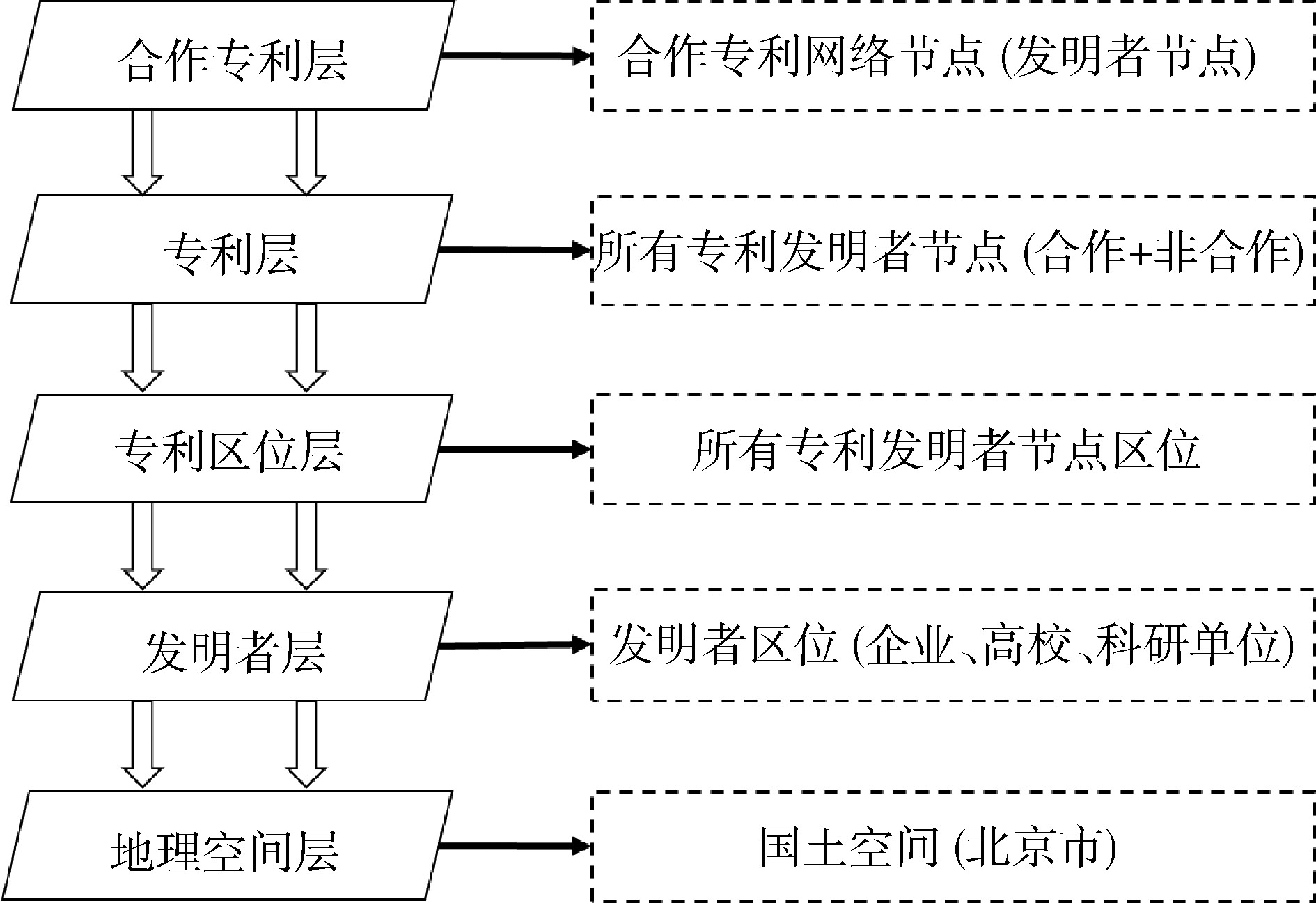
图1 专利集聚多层空间模型
Figure 1 Multi -layered space model of patent agglomeration
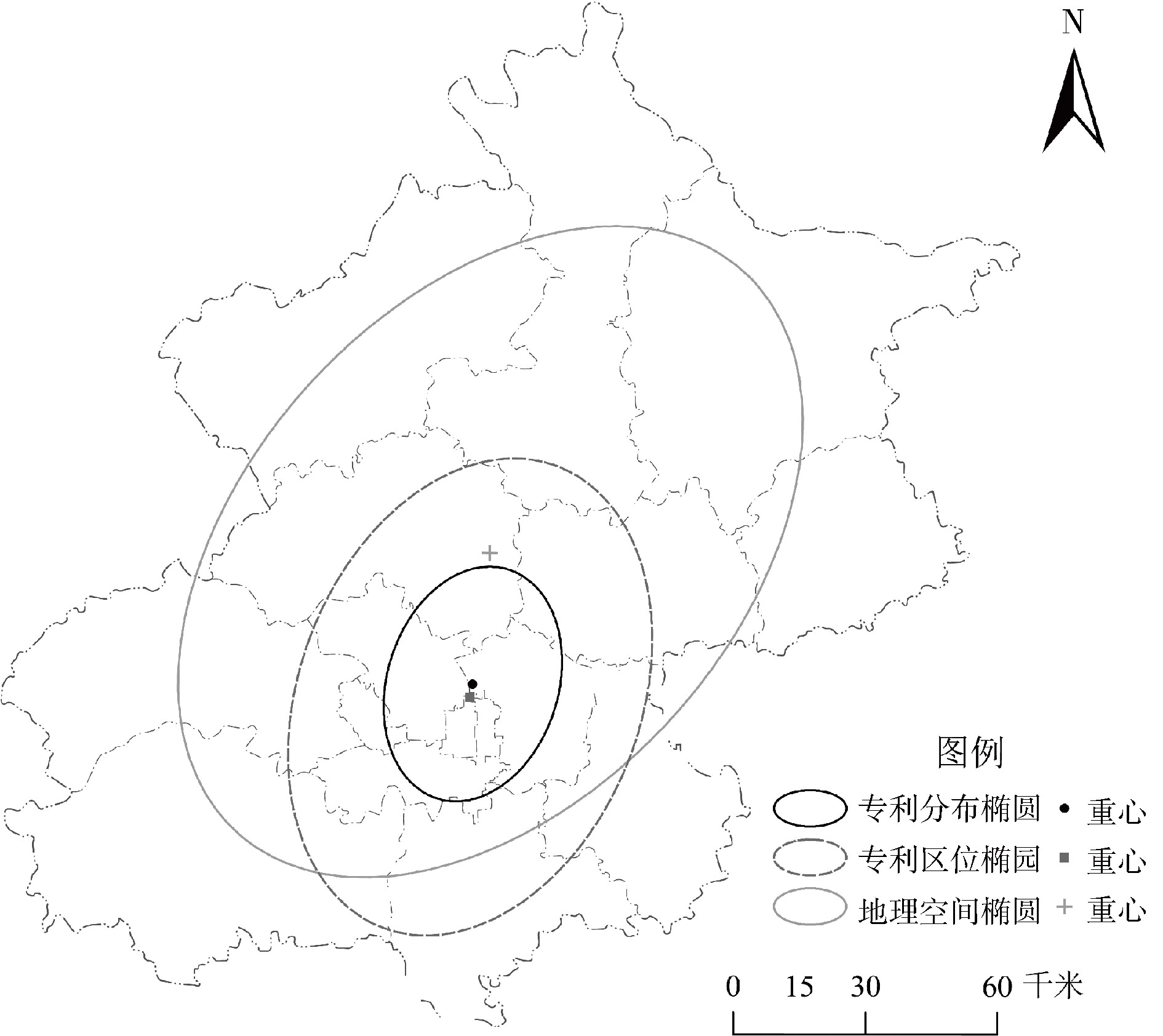
图2 北京市专利分布及专利区位标准差椭圆及重心 注:该图基于天地图北京-标准地图服务网站下载的审图号为京S(2016)024的标准地图制作,底图无修改。
Figure 2 Standard deviational ellipses and gravity centers of patent distribution and patent location
| 中心经度 | 中心纬度 | 长半轴(km) | 短半轴(km) | 面积(km2) | 密集度(个/km2) | 方位角(度) | 形状指数 | |
|---|---|---|---|---|---|---|---|---|
| 专利分布 | 116.38 | 39.98 | 21.29 | 14.74 | 985.98 | 196.103 | 8.54 | 0.69 |
| 专利区位 | 116.37 | 39.96 | 43.75 | 29.46 | 4049.03 | 3.079 | 11.93 | 0.67 |
| 地理空间 | 116.41 | 40.19 | 66.07 | 42.84 | 8890.081 | —— | 32.52 | 0.65 |
表1 北京市专利分布及专利区位标准差椭圆参数
Table 1 Standard deviational ellipses parameters of patent distribution and patent location
| 中心经度 | 中心纬度 | 长半轴(km) | 短半轴(km) | 面积(km2) | 密集度(个/km2) | 方位角(度) | 形状指数 | |
|---|---|---|---|---|---|---|---|---|
| 专利分布 | 116.38 | 39.98 | 21.29 | 14.74 | 985.98 | 196.103 | 8.54 | 0.69 |
| 专利区位 | 116.37 | 39.96 | 43.75 | 29.46 | 4049.03 | 3.079 | 11.93 | 0.67 |
| 地理空间 | 116.41 | 40.19 | 66.07 | 42.84 | 8890.081 | —— | 32.52 | 0.65 |
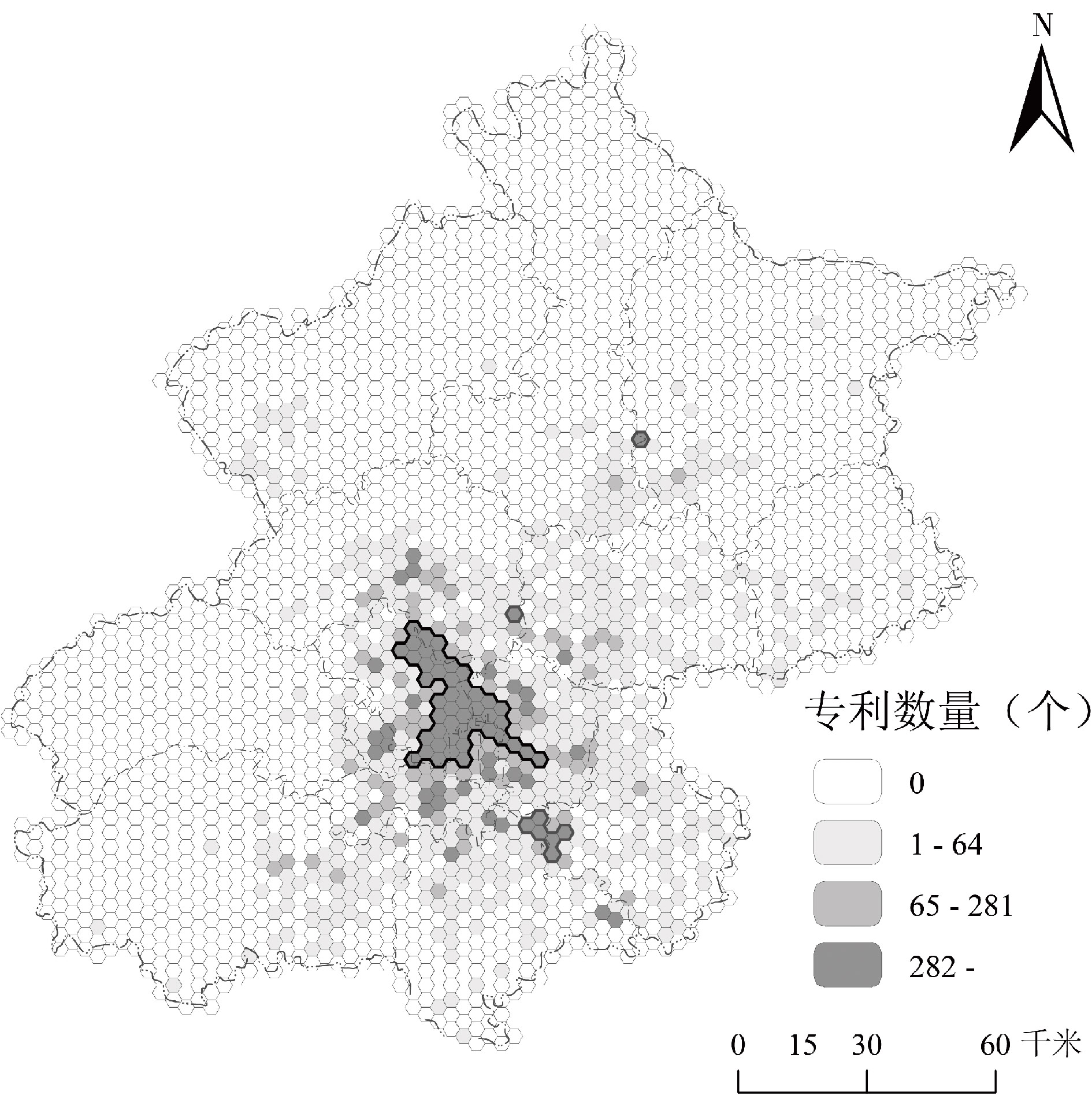
图3 北京市专利分布的空间集聚形态 注:该图基于天地图北京-标准地图服务网站下载的审图号为京S(2016)024的标准地图制作,底图无修改。
Figure 3 The characteristics of agglomeration of patent distribution
| 格网面积(km2) | 格网数量(个) | 面积(km2) | 密度(个/10km2) | |
|---|---|---|---|---|
| 地理空间 | 10 | 3019 | 30190 | 64.04 |
| 足迹空间 | 10 | 687 | 6870 | 281.42 |
| 高度集聚区 | 10 | 83 | 830 | 2130.48 |
| 核心集聚区 | 10 | 45 | 450 | 2934.91 |
表2 北京市专利分布的格网剖分信息
Table 2 The grid information of patent distribution in Beijing
| 格网面积(km2) | 格网数量(个) | 面积(km2) | 密度(个/10km2) | |
|---|---|---|---|---|
| 地理空间 | 10 | 3019 | 30190 | 64.04 |
| 足迹空间 | 10 | 687 | 6870 | 281.42 |
| 高度集聚区 | 10 | 83 | 830 | 2130.48 |
| 核心集聚区 | 10 | 45 | 450 | 2934.91 |
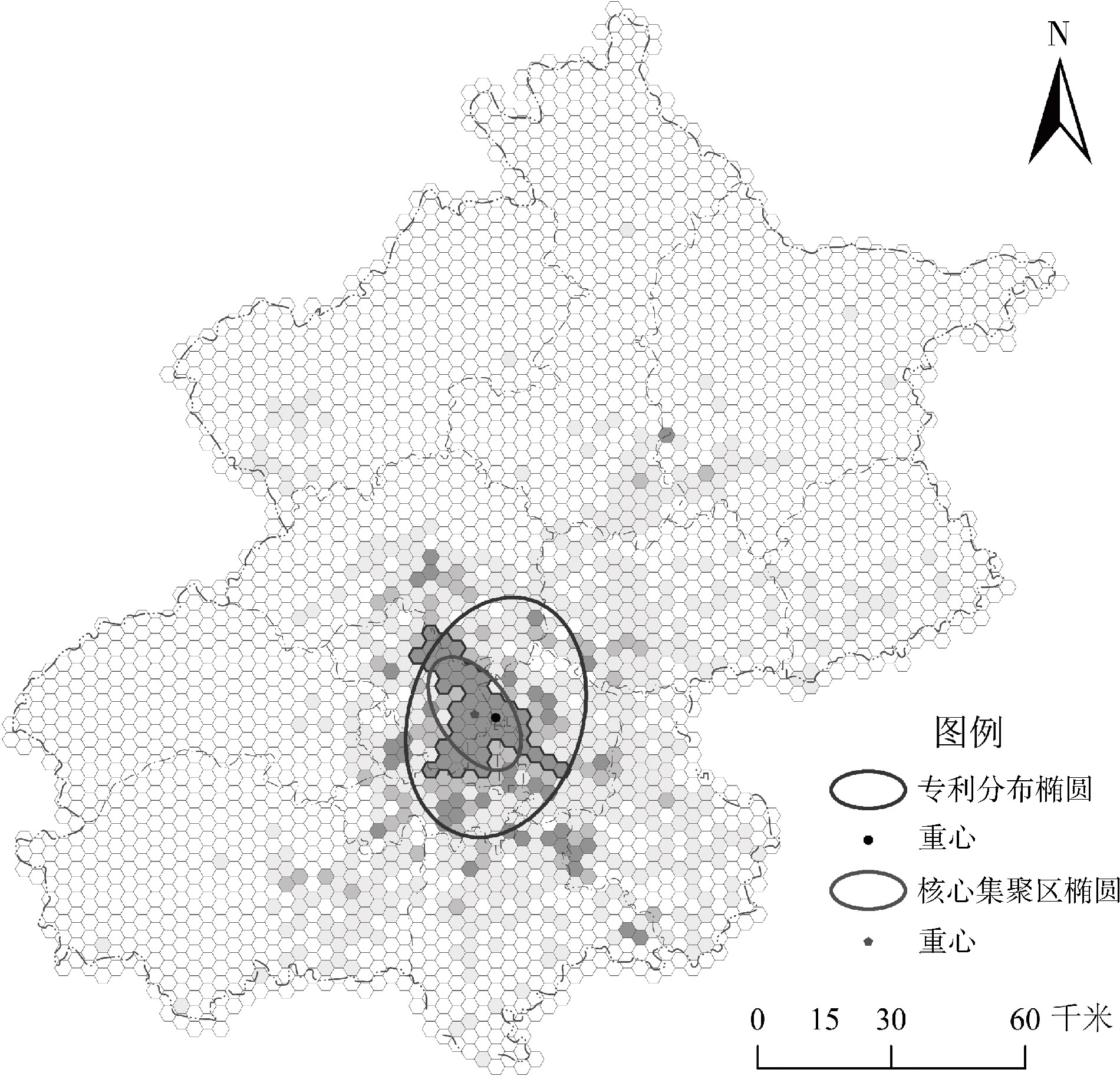
图4 北京市专利分布及核心集聚区椭圆及重心 注:该图基于天地图北京-标准地图服务网站下载的审图号为京S(2016)024的标准地图制作,底图无修改。
Figure 4 SDE and gravity centers of patent distribution and core agglomeration area
| 中心经度 | 中心纬度 | 长半轴(km) | 短半轴(km) | 面积(km2) | 密集度(个/km2) | 方位角(度) | 形状指数 | |
|---|---|---|---|---|---|---|---|---|
| 专利分布 | 116.38 | 39.98 | 21.29 | 14.74 | 985.98 | 196.11 | 8.539 | 0.69 |
| 核心集聚区 | 116.34 | 39.99 | 11.02 | 6.14 | 212.45 | 621.65 | 140.94 | 0.56 |
表3 北京市专利及核心集聚区的标准差椭圆参数
Table 3 Standard deviational ellipses parameters of patent distribution and core agglomeration area
| 中心经度 | 中心纬度 | 长半轴(km) | 短半轴(km) | 面积(km2) | 密集度(个/km2) | 方位角(度) | 形状指数 | |
|---|---|---|---|---|---|---|---|---|
| 专利分布 | 116.38 | 39.98 | 21.29 | 14.74 | 985.98 | 196.11 | 8.539 | 0.69 |
| 核心集聚区 | 116.34 | 39.99 | 11.02 | 6.14 | 212.45 | 621.65 | 140.94 | 0.56 |
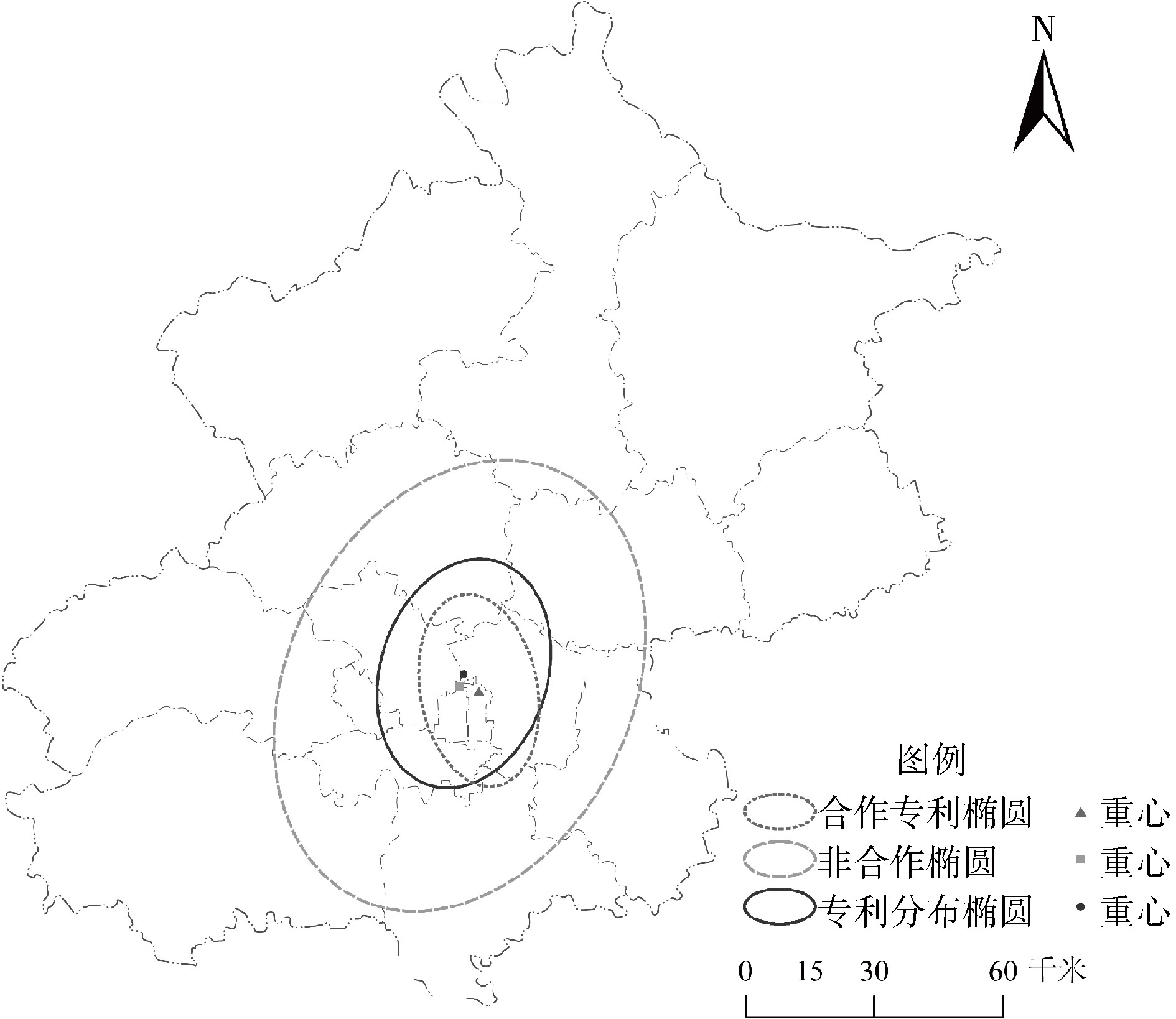
图5 北京市专利标准差椭圆及重心 注:该图基于天地图北京-标准地图服务网站下载的审图号为京S(2016)024的标准地图制作,底图无修改。
Figure 5 Standard deviational ellipses and gravity centers of patent distribution
| 中心经度 | 中心纬度 | 长半轴(km) | 短半轴(km) | 面积(km2) | 密集度(个/km2) | 方位角(度) | 形状指数 | 相对集中系数 | |
|---|---|---|---|---|---|---|---|---|---|
| 合作专利 | 116.41 | 39.96 | 17.75 | 10.31 | 574.89 | 67.83 | 163.67 | 0.58 | 0.94 |
| 非合作专利 | 116.37 | 39.96 | 42.87 | 30.50 | 4107.71 | 2.63 | 16.35 | 0.71 | 0.54 |
| 专利分布 | 116.38 | 39.98 | 21.29 | 14.74 | 985.98 | 196.10 | 8.54 | 0.69 | 0.89 |
表4 北京市专利分布标准差椭圆参数
Table 4 Standard deviational ellipses parameters of patent
| 中心经度 | 中心纬度 | 长半轴(km) | 短半轴(km) | 面积(km2) | 密集度(个/km2) | 方位角(度) | 形状指数 | 相对集中系数 | |
|---|---|---|---|---|---|---|---|---|---|
| 合作专利 | 116.41 | 39.96 | 17.75 | 10.31 | 574.89 | 67.83 | 163.67 | 0.58 | 0.94 |
| 非合作专利 | 116.37 | 39.96 | 42.87 | 30.50 | 4107.71 | 2.63 | 16.35 | 0.71 | 0.54 |
| 专利分布 | 116.38 | 39.98 | 21.29 | 14.74 | 985.98 | 196.10 | 8.54 | 0.69 | 0.89 |
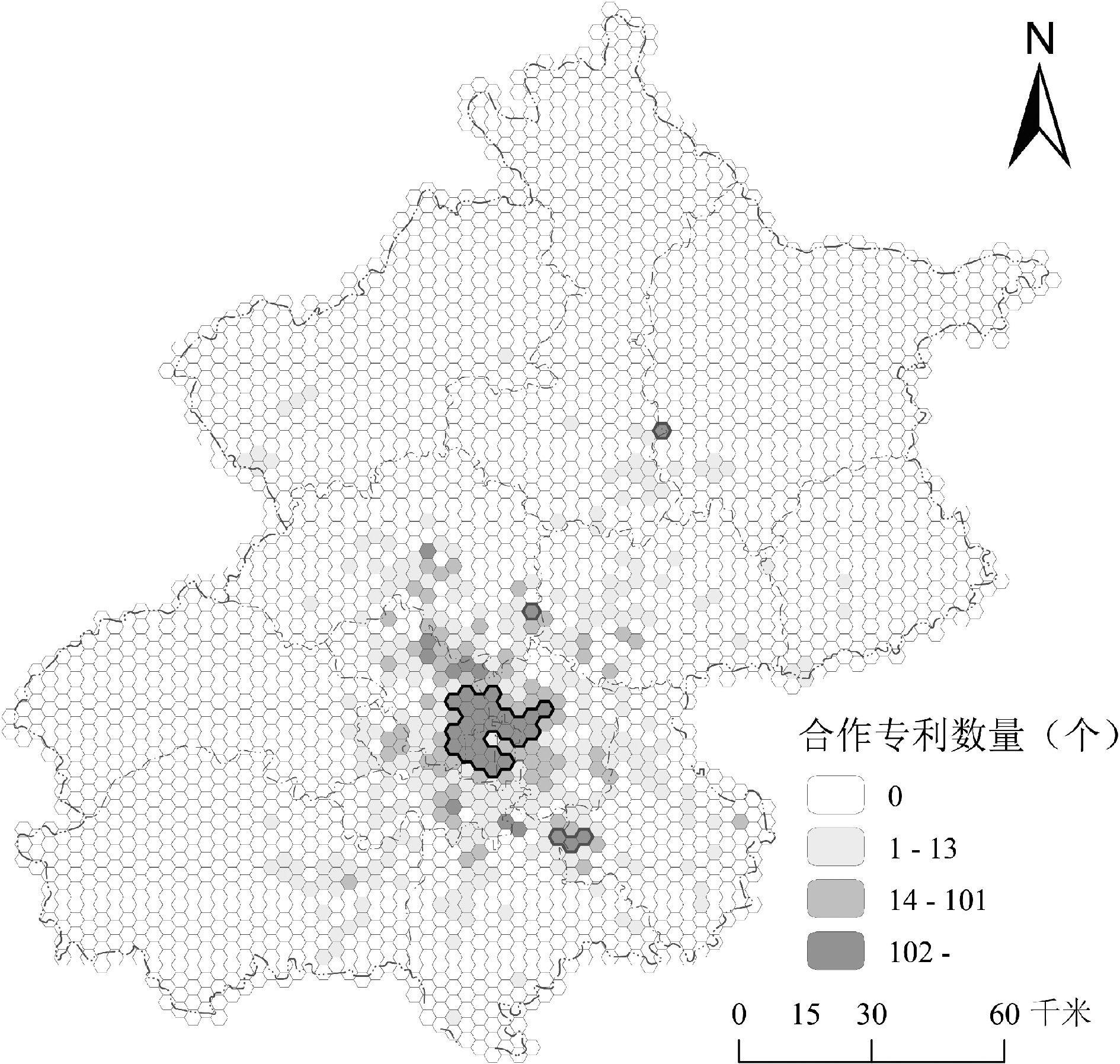
图6 北京市合作专利的空间集聚形态 注:该图基于天地图北京-标准地图服务网站下载的审图号为京S(2016)024的标准地图制作,底图无修改。
Figure 6 Agglomeration shape of co-patenting in Beijing
| 格网面积(km2) | 格网数量(个) | 面积(km2) | 密度(个/10km2) | |
|---|---|---|---|---|
| 地理空间 | 10 | 3019 | 30190 | 12.92 |
| 足迹空间 | 10 | 387 | 3870 | 100.75 |
| 高度集聚区 | 10 | 40 | 400 | 886.95 |
| 核心集聚区 | 10 | 26 | 260 | 1088.19 |
表5 北京市合作专利的正六边形剖分信息
Table 5 The grid information of co-patenting in Beijing
| 格网面积(km2) | 格网数量(个) | 面积(km2) | 密度(个/10km2) | |
|---|---|---|---|---|
| 地理空间 | 10 | 3019 | 30190 | 12.92 |
| 足迹空间 | 10 | 387 | 3870 | 100.75 |
| 高度集聚区 | 10 | 40 | 400 | 886.95 |
| 核心集聚区 | 10 | 26 | 260 | 1088.19 |
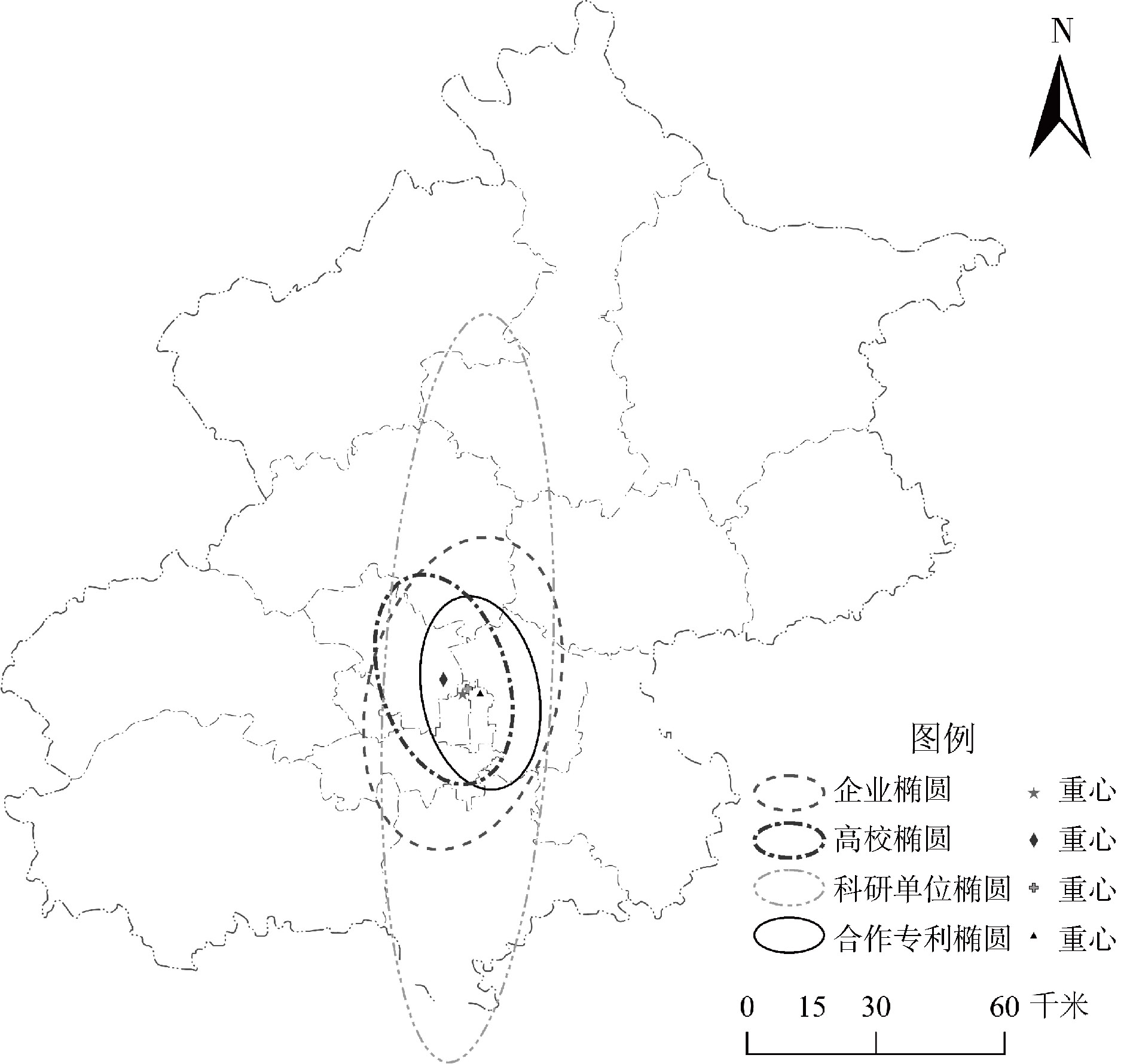
图7 北京市发明者区位标准差椭圆及重心 注:该图基于天地图北京-标准地图服务网站下载的审图号为京S(2016)024的标准地图制作,底图无修改。
Figure 7 Standard deviational ellipses and gravity centers of inventor location
| 中心经度 | 中心纬度 | 长半轴(km) | 短半轴(km) | 面积(km2) | 密集度(个/km2) | 方位角(度) | 形状系数 | 相关系数 | |
|---|---|---|---|---|---|---|---|---|---|
| 合作专利 | 116.41 | 39.96 | 17.75 | 10.31 | 574.89 | 67.83 | 163.67 | 0.58 | —— |
| 企业 | 116.38 | 39.95 | 28.83 | 16.71 | 1513.84 | 22.01 | 6.08 | 0.58 | 0.38 |
| 高校 | 116.34 | 39.98 | 19.55 | 11.25 | 690.92 | 3.38 | 157.26 | 0.58 | 0.47 |
| 科研单位 | 116.39 | 39.96 | 68.06 | 14.75 | 3153.08 | 1.06 | 176.36 | 0.22 | 0.18 |
表6 北京市发明者区位标准差椭圆参数及相关系数
Table 6 Standard deviational ellipses parameters of inventor location
| 中心经度 | 中心纬度 | 长半轴(km) | 短半轴(km) | 面积(km2) | 密集度(个/km2) | 方位角(度) | 形状系数 | 相关系数 | |
|---|---|---|---|---|---|---|---|---|---|
| 合作专利 | 116.41 | 39.96 | 17.75 | 10.31 | 574.89 | 67.83 | 163.67 | 0.58 | —— |
| 企业 | 116.38 | 39.95 | 28.83 | 16.71 | 1513.84 | 22.01 | 6.08 | 0.58 | 0.38 |
| 高校 | 116.34 | 39.98 | 19.55 | 11.25 | 690.92 | 3.38 | 157.26 | 0.58 | 0.47 |
| 科研单位 | 116.39 | 39.96 | 68.06 | 14.75 | 3153.08 | 1.06 | 176.36 | 0.22 | 0.18 |
| [1] |
Kerr W R, KeRobert-Nicoudrr F. Tech clusters[J]. Journal of Economic Perspectives, 2020, 34(3): 50-76.
DOI URL |
| [2] |
Kerr W R, Kominers S D. Agglomerative forces and cluster shapes[J]. Review of Economics and Statistics, 2015, 97(4): 877-899.
DOI URL |
| [3] |
Lyu L, Wu W, Hu H, et al. An evolving regional innovation network: Collaboration among industry, university, and research institution in China’s first technology hub[J]. Journal of Technology Transfer, 2019, 44: 659-680.
DOI |
| [4] |
孙瑜康, 孙铁山, 席强敏. 北京市创新集聚的影响因素及其空间溢出效应[J]. 地理研究, 2017, 36(12): 2419-2431.
DOI |
| Sun KY, Sun T S, Xi Q M. Influence factors and spillover effect of the innovation agglomeration in Beijing[J]. Geographical Research, 2017, 36(12): 2419-2431. | |
| [5] | Fischer M, Nijkamp P. Handbook of Regional Science[M]. SpringerLink, 2021. |
| [6] | Audretsch D B, Feldman M P. R&D spillovers and the geography of innovation and production[J]. American Economic Review, 1996, 86(3): 630-640. |
| [7] | Ciccone A, Hall R E. Productivity and the density of economic activity[J]. American Economic Review, 1996, 86(1): 54-70. |
| [8] |
Crescenzi R, Rodriguez-Pose A, Storper M. The territorial dynamics of innovation in China and India[J]. Journal of Economic Geography, 2012, 12(5): 1055-1085.
DOI URL |
| [9] | 黄亮, 黄建中, 徐剑光. 上海研发创新的空间演化与趋势研究:基于专利的分析视角[J]. 城乡规划, 2020, 4: 70-79. |
| Huang L, Huang J Z, Xu J G. Research on the spatial evolution and trend of R&D innovation in Shanghai from the perspective of patent analysis[J]. Urban & Rural Planning, 2020, 4: 70-79. | |
| [10] | Carlino G, Kerr W R. Agglomeration and innovation[J]. Handbook of Regional and Urban Economics, 2015, 5: 349-404. |
| [11] |
Ellison G, Glaeser E L, Kerr W R. What causes industry agglomeration? Evidence from coagglomeration patterns[J]. American Economic Review, 2010, 100(3): 1195-1213.
DOI URL |
| [12] | Rosenthal S S, Strange W C. How close is close? The spatial reach of agglomeration economies[J]. Journal of Economic Perspectives, 2020, 34(3): 27-49. |
| [13] | Polanyi M. Personal Knowledge: Towards a Post-Critical Philosophy[M]. Chicago: University of Chicago Press, 1958. |
| [14] | Polanyi M. The Tacit Dimension[M]. GardenCity N. Y: Anchor Books, 1967. |
| [15] |
Cooke P. Regional innovation systems: Competitive regulation in the new Europe[J]. Geoforum, 1992, 23(3): 365-382.
DOI URL |
| [16] |
Tassey G. Rationales and mechanisms for revitalizing US manufacturing R&D strategies[J]. Journal of Technology Transfer, 2010, 35: 283-333.
DOI URL |
| [17] |
Jaffe A B, Trajtenberg M, Henderson R. Geographic localization of knowledge spillovers as evidenced by patent citations[J]. The Quarterly Journal of Economics, 1993, 108(3): 577-598.
DOI URL |
| [18] | Inoue H. Co-patenting: An Analytic Tool for Cooperative Research and Development[M]. Springer Japan, 2020. |
| [19] | Christ J P. Innovative Places in Europe: Research Clustering, Co-patenting Networks and the Growth of Regions[M]. Peter Lang International Academic Publishers, 2012. |
| [20] | 关峻, 任嘉琪, 邢李志, 等. 中关村高新技术企业合作申请专利网络集聚效应分析[J]. 科技进步与对策, 2022, 39(21): 56-64. |
| Guan J, Ren J Q, Xing L Z, et al. Analysis of the agglomeration effect in high-tech enterprise patent cooperation network of Zhongguancun Science Park[J]. Science & Technology Progress and Policy, 2022, 39(21): 56-64. | |
| [21] | 沈映春, 廖舫仪. 人工智能产业产学研合作申请专利超网络模型研究——以北京为例[J]. 产业经济评论, 2021(6): 68-81. |
| Shen Y C, Liao F Y. Research on industry-university-research cooperative hypernetwork for applying patent of Artificial Intelligence Industry in Beijing[J]. Review of Industrial Economics, 2021(6): 68-81. | |
| [22] |
席强敏, 李国平, 孙瑜康, 等. 京津冀科技合作网络的演变特征及影响因素[J]. 地理学报, 2022, 77(6): 1359-1373.
DOI |
|
Xi Q M, Li G P, Sun Y K, et al. Evolutionary characteristics of science and technology cooperation network of Beijing-Tianjin-Hebei region and its influencing factors[J]. Acta Geographica Sinica, 2022, 77(6): 1359-1373.
DOI |
|
| [23] |
Crescenzi R, Rodriguez-Pose A, Storper M. The territorial dynamics of innovation: A Europe-United States comparative analysis[J]. Journal of Economic Geography, 2007, 7(6): 673-709.
DOI URL |
| [24] |
Li L, Zhang X. Spatial evolution and critical factors of urban innovation: Evidence from Shanghai, China[J]. Sustainability, 2020, 12(3): 938.
DOI URL |
| [25] | 王黎萤, 池仁勇. 专利合作网络研究前沿探析与展望[J]. 科学学研究, 2015, 33(1): 55-61,145. |
| Wang L Y, Chi R Y. The frontier analysis and prospect of patent cooperation network research[J]. Studies in Science of Science, 2015, 33(1): 55-61,145. | |
| [26] |
Lobo J, Strumsky D. Metropolitan patenting, inventor agglomeration and social networks: A tale of two effects[J]. Journal of Urban Economics, 2008, 63(3): 871-884.
DOI URL |
| [27] |
张凯煌, 千庆兰. 中国新能源汽车产业创新网络特征及其多维邻近性成因[J]. 地理研究, 2021, 40(8): 2170-2187.
DOI |
| Zhang K H, Qian Q L. Characteristics and proximities mechanism of China's new energy vehicle industry innovation network[J]. Geographical Research, 2021, 40(8): 2170-2187. | |
| [28] | 唐恒, 高粱洲, 刘桂锋. 京津冀产学研专利合作网络时空演化研究[J]. 情报杂志, 2017, 36(10): 130-136. |
| Tang H, Gao L Z, Liu G F. Study on the spatio-temporal evolution of industry-university-research institute patent cooperation network of Beijing-Tianjin-Hebei[J]. Journal of Intelligence, 2017, 36(10): 130-136. | |
| [29] |
吴康敏, 叶玉瑶, 张虹鸥, 等. 粤港澳大湾区战略性产业技术创新的地理格局及其多样性特征[J]. 热带地理, 2022, 42(2): 183-194.
DOI |
|
Wu K M, Ye Y Y, Zhang H O, et al. The geographical pattern and diversity of strategic industry technological innovation in the Guangdong-Hong Kong-Macao Greater Bay Area[J]. Tropical Geography, 2022, 42(2): 183-194.
DOI |
|
| [30] |
赵思萌, 赵作权, 赵紫威. 中国技术创新的大规模空间集聚与趋势[J]. 经济地理, 2023, 43(11): 126-134.
DOI |
|
Zhao S M, Zhao Z Q, Zhao Z W. Large-scale spatial agglomeration of technical innovation in China and its trend[J]. Economic Geography, 2023, 43(11): 126-134.
DOI |
|
| [31] |
Fernández-Villaverde J, Koyama M, Lin Y, et al. The fractured-land hypothesis[J]. The Quarterly Journal of Economics, 2023, 138(2): 1173-1231.
DOI URL |
| [32] | Ellison G, Glaeser E L. Geographic concentration in U.S. manufacturing industries: A dartboard approach[J]. Journal of Political Economy, 1997, 105(5): 899-927. |
| [33] |
Duranton G, Overman H. Testing for localization using micro-geographic data[J]. Review of Economic Studies, 2005, 72(4): 1077-1106.
DOI URL |
| [34] |
白冰, 赵作权, 张佩. 中国南北区域经济空间融合发展的趋势与布局[J]. 经济地理, 2021, 41(2): 1-10.
DOI |
|
Bai B, Zhao Z Q, Zhang P. Trends and layout of economic integration between north and south China[J]. Economic Geography, 2021, 41(2): 1-10.
DOI |
|
| [35] |
Lefever D W. Measuring geographic concentration by means of the standard deviational Ellipse[J]. The American Journal of Sociology, 1926, 32(1): 88-94.
DOI URL |
| [36] |
白冰, 赵作权. 基于多椭圆模型的中国制造业空间集中度计量[J]. 地理科学, 2024, 44(1): 50-58.
DOI |
| Bai B, Zhao Z Q. Relatively concentrated measurement of China's manufacturing based on a spatial statistical ellipse[J]. Scientia Geographica Sinica, 2024, 44(1): 50-58. | |
| [37] |
马淑燕, 赵作权, 赵紫威, 等. 2000—2019年中国航空客运格局演变及其影响因素研究[J]. 地理科学, 2023, 43(6): 1011-1021.
DOI |
|
Ma S Y, Zhao Z Q, Zhao Z W, et al. Evolution and influencing factors of air passenger transport in China from 2000 to 2019[J]. Scientia Geographica Sinica, 2023, 43(6): 1011-1021.
DOI |
|
| [38] | 赵作权. 空间格局统计与空间经济分析[M]. 北京: 科学出版社, 2014. |
| Zhao Z Q. Spatial Pattern Statistics and Spatial Economic Analysis[M]. Beijing: Science Press, 2014. | |
| [39] |
Hamidi S, Zandiatashbar A, Bonakdar A. The relationship between regional compactness and regional innovation capacity (RIC): Empirical evidence from a national study[J]. Technological Forecasting and Social Change, 2019, 142: 394-402.
DOI |
| No related articles found! |
| 阅读次数 | ||||||
|
全文 |
|
|||||
|
摘要 |
|
|||||
