
- 中国科学学与科技政策研究会
- 中国科学院科技战略咨询研究院
- 清华大学科学技术与社会研究中心
ISSN 1003-2053 CN 11-1805/G3
科学学研究 ›› 2026, Vol. 44 ›› Issue (6): 1241-1251.
陈柏彤1, 肖翔1( ), 鲍新中2, 徐梓钧1
收稿日期:2025-05-18
修回日期:2025-07-02
出版日期:2026-06-15
发布日期:2026-06-15
通讯作者:
肖翔(1970-),女,教授、博士生导师, E-mail:作者简介:陈柏彤(1998-),女,博士研究生。基金资助:
CHEN Bai-tong1, XIAO Xiang1(), BAO Xin-zhong2, XU Zi-jun1
Received:2025-05-18
Revised:2025-07-02
Online:2026-06-15
Published:2026-06-15
摘要:
以制造业单项冠军企业为样本,使用动态QCA方法探究动机、机会和能力三方面的6个前因条件对创新“言行差异”的复杂影响。研究发现:单一要素并不构成创新“言行不一”和创新“言行一致”的必要条件。造成创新“言行不一”的路径可归纳为政策迎合型、包装创新型和生存压力型,驱动创新“言行一致”的路径可归纳为稳健创新型和务实创新型。虽然各组态未表现出明显的时间效应,但造成创新“言行不一”的组态一致性在2020年出现明显波动,驱动创新“言行一致”的组态一致性在2022年集中上升,这可能与疫情的爆发和全面放开有关。在传统制造业企业中,创新“言行不一”现象主要源于政策迎合和包装创新两类路径,而驱动创新“言行一致”的务实创新型组态所能解释的案例多分布于高端制造业。研究结果不仅丰富了以制造业单项冠军企业为代表的专精特新企业创新行为的理论认知,也为优化创新激励机制、提升信息披露真实性及强化创新执行力提供实践参考。对推动专精特新企业的高质量发展具有重要现实意义。
中图分类号:
陈柏彤, 肖翔, 鲍新中, 徐梓钧. 制造业单项冠军企业创新言行差异的前因研究[J]. 科学学研究, 2026, 44(6): 1241-1251.
CHEN Bai-tong, XIAO Xiang, BAO Xin-zhong, XU Zi-jun. Antecedents of innovation talk-action gaps in manufacturing single champion firms[J]. Studies in Science of Science, 2026, 44(6): 1241-1251.
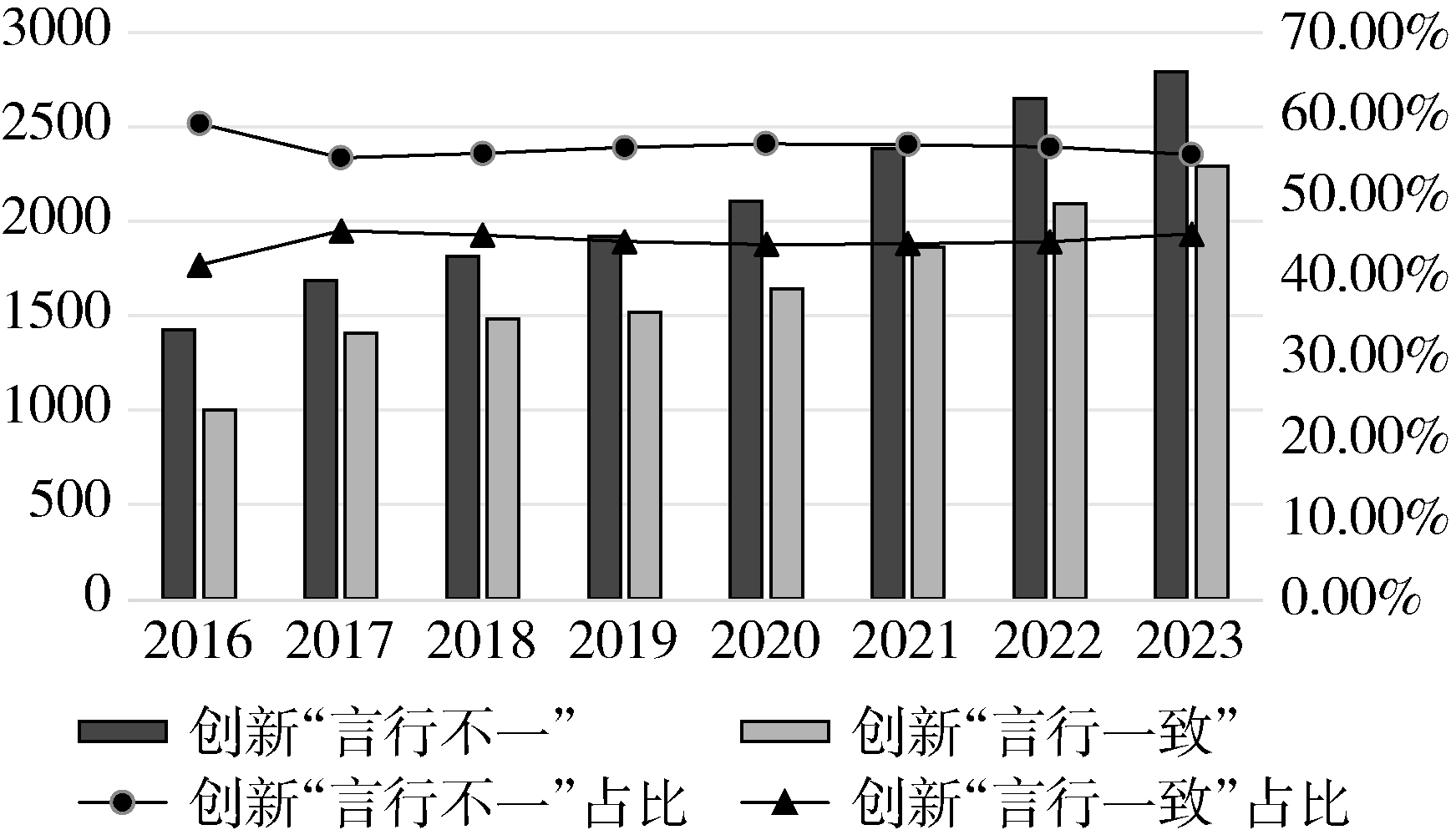
图1 A股企业创新“言行差异”情况 数据来源:作者自行计算整理。
Figure 1 Difference between words and deeds in innovation of A-share companies
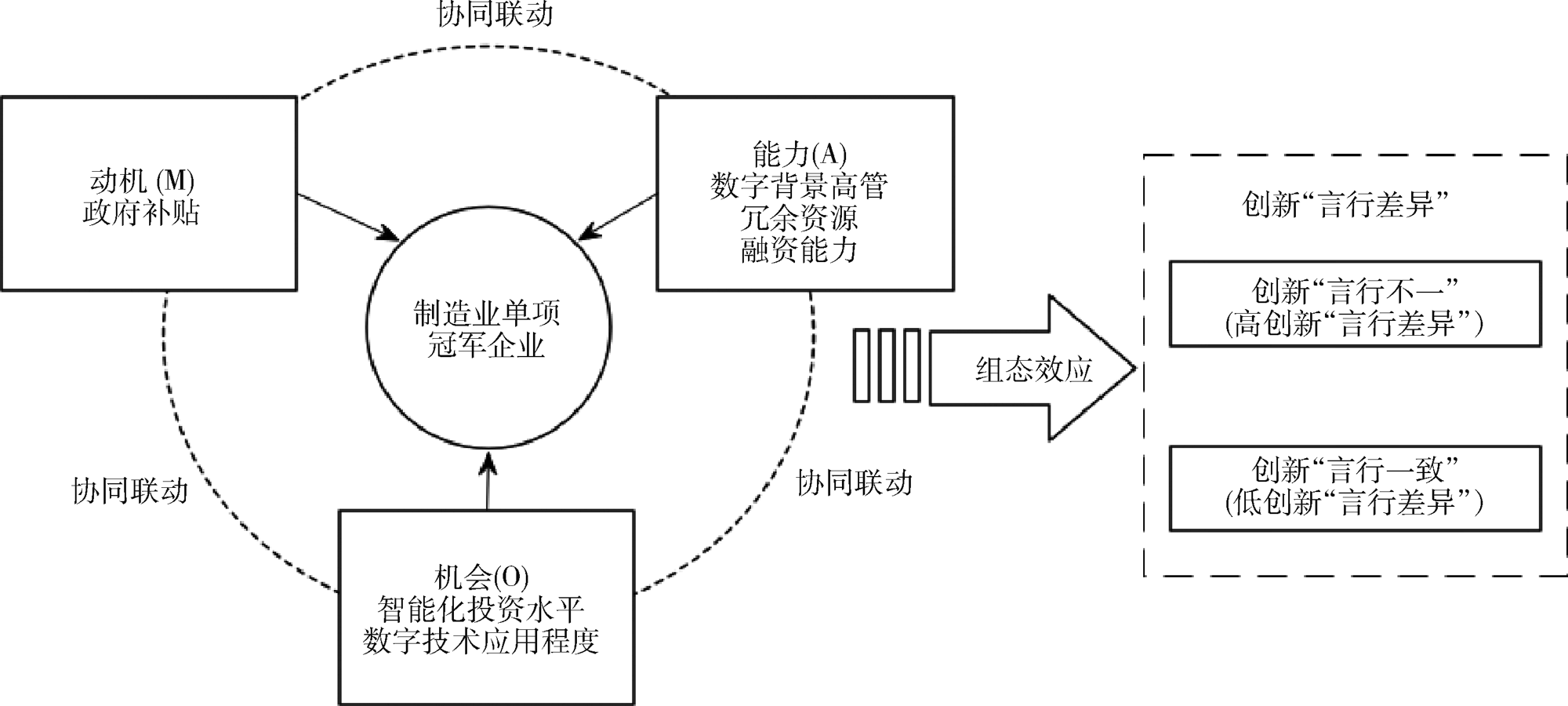
图2 理论框架
Figure 2 Theoretical framework
| 变量名称 | 变量定义 | ||
|---|---|---|---|
| 结果变量 | 创新“言行差异” | 使用专利申请数与创新文本信息披露的标准化回归残差计算得到 | |
| 动机 | 政府补贴 | 政府补贴金额/年末总资产 | |
| 机会 | 智能化投资水平 | 智能化投资总额/年末总资产 | |
| 条件变量 | 数字化应用程度 | 数字赋能相关关键词的逆文档概率词频 | |
| 数字背景高管 | 拥有数字化背景的高管数量 | ||
| 能力 | 冗余资源 | 流动比率=流动资产/流动负债 | |
| 融资能力 | ROE=净利润/净资产 | ||
表1 变量定义
Table 1 Variable definition
| 变量名称 | 变量定义 | ||
|---|---|---|---|
| 结果变量 | 创新“言行差异” | 使用专利申请数与创新文本信息披露的标准化回归残差计算得到 | |
| 动机 | 政府补贴 | 政府补贴金额/年末总资产 | |
| 机会 | 智能化投资水平 | 智能化投资总额/年末总资产 | |
| 条件变量 | 数字化应用程度 | 数字赋能相关关键词的逆文档概率词频 | |
| 数字背景高管 | 拥有数字化背景的高管数量 | ||
| 能力 | 冗余资源 | 流动比率=流动资产/流动负债 | |
| 融资能力 | ROE=净利润/净资产 | ||
| 变量名称 | 描述性统计 | 校准 | ||||||
|---|---|---|---|---|---|---|---|---|
| 均值 | 标准差 | 最大值 | 最小值 | 完全隶属 | 交叉点 | 完全不隶属 | ||
| 结果变量 | 创新“言行差异” | 0.001 | 0.160 | 0.443 | -0.915 | 0.273 | 0.000 | -0.256 |
| 条件变量 | 政府补贴 | 0.023 | 0.024 | 0.200 | 0.000 | 0.070 | 0.017 | 0.000 |
| 智能化投资水平 | 0.115 | 0.163 | 0.815 | 0.000 | 0.495 | 0.026 | 0.000 | |
| 数字化应用程度 | 0.001 | 0.001 | 0.012 | 0.000 | 0.003 | 0.000 | 0.000 | |
| 数字背景高管 | 5.016 | 3.647 | 27.000 | 0.000 | 12.000 | 5.000 | 0.000 | |
| 冗余资源 | 1.820 | 1.681 | 30.319 | 0.000 | 3.970 | 1.521 | 0.000 | |
| 融资能力 | 0.081 | 0.108 | 0.433 | -1.432 | 0.214 | 0.083 | -0.028 | |
表2 变量的描述性统计与校准锚点
Table 2 Descriptive statistics of variables with calibrated anchors
| 变量名称 | 描述性统计 | 校准 | ||||||
|---|---|---|---|---|---|---|---|---|
| 均值 | 标准差 | 最大值 | 最小值 | 完全隶属 | 交叉点 | 完全不隶属 | ||
| 结果变量 | 创新“言行差异” | 0.001 | 0.160 | 0.443 | -0.915 | 0.273 | 0.000 | -0.256 |
| 条件变量 | 政府补贴 | 0.023 | 0.024 | 0.200 | 0.000 | 0.070 | 0.017 | 0.000 |
| 智能化投资水平 | 0.115 | 0.163 | 0.815 | 0.000 | 0.495 | 0.026 | 0.000 | |
| 数字化应用程度 | 0.001 | 0.001 | 0.012 | 0.000 | 0.003 | 0.000 | 0.000 | |
| 数字背景高管 | 5.016 | 3.647 | 27.000 | 0.000 | 12.000 | 5.000 | 0.000 | |
| 冗余资源 | 1.820 | 1.681 | 30.319 | 0.000 | 3.970 | 1.521 | 0.000 | |
| 融资能力 | 0.081 | 0.108 | 0.433 | -1.432 | 0.214 | 0.083 | -0.028 | |
| 条件变量 | 创新“言行不一” | 创新“言行一致” | ||||||
|---|---|---|---|---|---|---|---|---|
| 汇总一致性 | 汇总覆盖度 | 组间一致性 调整距离 | 组内一致性 调整距离 | 汇总一致性 | 汇总覆盖度 | 组间一致性 调整距离 | 组内一致性 调整距离 | |
| 高政府补贴 | 0.572 | 0.622 | 0.171 | 0.399 | 0.687 | 0.739 | 0.144 | 0.311 |
| 非高政府补贴 | 0.760 | 0.711 | 0.091 | 0.266 | 0.649 | 0.600 | 0.117 | 0.366 |
| 高智能化投资 | 0.546 | 0.640 | 0.386 | 0.455 | 0.578 | 0.669 | 0.339 | 0.433 |
| 非高智能化投资 | 0.717 | 0.632 | 0.288 | 0.288 | 0.689 | 0.600 | 0.285 | 0.322 |
| 高数字技术应用程度 | 0.555 | 0.648 | 0.205 | 0.477 | 0.630 | 0.727 | 0.154 | 0.410 |
| 非高数字技术应用程度 | 0.766 | 0.677 | 0.107 | 0.311 | 0.696 | 0.607 | 0.087 | 0.366 |
| 具有数字背景高管 | 0.551 | 0.610 | 0.134 | 0.488 | 0.672 | 0.735 | 0.138 | 0.355 |
| 不具有数字背景高管 | 0.761 | 0.701 | 0.054 | 0.311 | 0.644 | 0.587 | 0.084 | 0.377 |
| 高冗余资源 | 0.689 | 0.692 | 0.070 | 0.322 | 0.677 | 0.672 | 0.097 | 0.311 |
| 非高冗余资源 | 0.673 | 0.678 | 0.034 | 0.355 | 0.689 | 0.686 | 0.050 | 0.333 |
| 高融资能力 | 0.672 | 0.686 | 0.117 | 0.322 | 0.627 | 0.632 | 0.104 | 0.366 |
| 非高融资能力 | 0.639 | 0.634 | 0.117 | 0.366 | 0.688 | 0.675 | 0.094 | 0.322 |
表3 必要性条件分析
Table 3 Analysis of the conditions of necessity
| 条件变量 | 创新“言行不一” | 创新“言行一致” | ||||||
|---|---|---|---|---|---|---|---|---|
| 汇总一致性 | 汇总覆盖度 | 组间一致性 调整距离 | 组内一致性 调整距离 | 汇总一致性 | 汇总覆盖度 | 组间一致性 调整距离 | 组内一致性 调整距离 | |
| 高政府补贴 | 0.572 | 0.622 | 0.171 | 0.399 | 0.687 | 0.739 | 0.144 | 0.311 |
| 非高政府补贴 | 0.760 | 0.711 | 0.091 | 0.266 | 0.649 | 0.600 | 0.117 | 0.366 |
| 高智能化投资 | 0.546 | 0.640 | 0.386 | 0.455 | 0.578 | 0.669 | 0.339 | 0.433 |
| 非高智能化投资 | 0.717 | 0.632 | 0.288 | 0.288 | 0.689 | 0.600 | 0.285 | 0.322 |
| 高数字技术应用程度 | 0.555 | 0.648 | 0.205 | 0.477 | 0.630 | 0.727 | 0.154 | 0.410 |
| 非高数字技术应用程度 | 0.766 | 0.677 | 0.107 | 0.311 | 0.696 | 0.607 | 0.087 | 0.366 |
| 具有数字背景高管 | 0.551 | 0.610 | 0.134 | 0.488 | 0.672 | 0.735 | 0.138 | 0.355 |
| 不具有数字背景高管 | 0.761 | 0.701 | 0.054 | 0.311 | 0.644 | 0.587 | 0.084 | 0.377 |
| 高冗余资源 | 0.689 | 0.692 | 0.070 | 0.322 | 0.677 | 0.672 | 0.097 | 0.311 |
| 非高冗余资源 | 0.673 | 0.678 | 0.034 | 0.355 | 0.689 | 0.686 | 0.050 | 0.333 |
| 高融资能力 | 0.672 | 0.686 | 0.117 | 0.322 | 0.627 | 0.632 | 0.104 | 0.366 |
| 非高融资能力 | 0.639 | 0.634 | 0.117 | 0.366 | 0.688 | 0.675 | 0.094 | 0.322 |
| 条件变量 | 创新“言行不一” | |||||||
|---|---|---|---|---|---|---|---|---|
| 政策迎合型 | 包装创新型 | 生存压力型 | ||||||
| A1 | A2 | B1 | B2 | B3 | B4 | C1 | C2 | |
| 政府补贴 |  |  |  | |||||
| 智能化投资水平 |  |  |  |  |  | |||
| 数字技术应用程度 |  |  |  |  |  | |||
| 数字背景高管 |  |  |  |  |  | |||
| 冗余资源 |  |  |  |  |  | |||
| 融资能力 |  |  |  |  | ||||
| 原始一致性 | 0.826 | 0.814 | 0.890 | 0.901 | 0.900 | 0.877 | 0.886 | 0.906 |
| PRI一致性 | 0.639 | 0.611 | 0.717 | 0.693 | 0.679 | 0.659 | 0.676 | 0.710 |
| 覆盖度 | 0.550 | 0.540 | 0.372 | 0.317 | 0.361 | 0.348 | 0.329 | 0.318 |
| 唯一覆盖度 | 0.040 | 0.062 | 0.007 | 0.001 | 0.014 | 0.008 | 0.007 | 0.010 |
| 组间一致性调整距离 | 0.030 | 0.047 | 0.034 | 0.027 | 0.030 | 0.020 | 0.034 | 0.030 |
| 组内一致性调整距离 | 0.266 | 0.266 | 0.211 | 0.200 | 0.200 | 0.222 | 0.222 | 0.200 |
| 总体一致性 | 0.779 | |||||||
| 总体PRI | 0.593 | |||||||
| 总体覆盖度 | 0.719 | |||||||
表4 创新“言行不一”的前因组态
Table 4 The antecedent configuration of the innovation “word and deed” inconsistency
| 条件变量 | 创新“言行不一” | |||||||
|---|---|---|---|---|---|---|---|---|
| 政策迎合型 | 包装创新型 | 生存压力型 | ||||||
| A1 | A2 | B1 | B2 | B3 | B4 | C1 | C2 | |
| 政府补贴 | | | | |||||
| 智能化投资水平 | | | | | | |||
| 数字技术应用程度 | | | | | | |||
| 数字背景高管 | | | | | | |||
| 冗余资源 | | | | | | |||
| 融资能力 | | | | | ||||
| 原始一致性 | 0.826 | 0.814 | 0.890 | 0.901 | 0.900 | 0.877 | 0.886 | 0.906 |
| PRI一致性 | 0.639 | 0.611 | 0.717 | 0.693 | 0.679 | 0.659 | 0.676 | 0.710 |
| 覆盖度 | 0.550 | 0.540 | 0.372 | 0.317 | 0.361 | 0.348 | 0.329 | 0.318 |
| 唯一覆盖度 | 0.040 | 0.062 | 0.007 | 0.001 | 0.014 | 0.008 | 0.007 | 0.010 |
| 组间一致性调整距离 | 0.030 | 0.047 | 0.034 | 0.027 | 0.030 | 0.020 | 0.034 | 0.030 |
| 组内一致性调整距离 | 0.266 | 0.266 | 0.211 | 0.200 | 0.200 | 0.222 | 0.222 | 0.200 |
| 总体一致性 | 0.779 | |||||||
| 总体PRI | 0.593 | |||||||
| 总体覆盖度 | 0.719 | |||||||
| 条件变量 | 创新“言行一致” | |||
|---|---|---|---|---|
| 稳健创新型 | 务实创新型 | |||
| D1 | D2 | E1 | E2 | |
| 政府补贴 |  |  |  |  |
| 智能化投资水平 |  | |||
| 数字技术应用程度 |  |  | ||
| 数字背景高管 |  |  |  |  |
| 冗余资源 |  |  | ||
| 融资能力 |  |  |  | |
| 原始一致性 | 0.886 | 0.887 | 0.877 | 0.872 |
| PRI一致性 | 0.682 | 0.721 | 0.651 | 0.677 |
| 覆盖度 | 0.400 | 0.434 | 0.366 | 0.402 |
| 唯一覆盖度 | 0.007 | 0.071 | 0.009 | 0.015 |
| 组间一致性调整距离 | 0.023 | 0.017 | 0.040 | 0.030 |
| 组内一致性调整距离 | 0.244 | 0.244 | 0.244 | 0.255 |
| 总体一致性 | 0.867 | |||
| 总体PRI | 0.698 | |||
| 总体覆盖度 | 0.517 | |||
表5 实现创新“言行一致”的前因组态
Table 5 Antecedent configurations for realizing the “walk the talk” of innovation
| 条件变量 | 创新“言行一致” | |||
|---|---|---|---|---|
| 稳健创新型 | 务实创新型 | |||
| D1 | D2 | E1 | E2 | |
| 政府补贴 | | | | |
| 智能化投资水平 | | |||
| 数字技术应用程度 | | | ||
| 数字背景高管 | | | | |
| 冗余资源 | | | ||
| 融资能力 | | | | |
| 原始一致性 | 0.886 | 0.887 | 0.877 | 0.872 |
| PRI一致性 | 0.682 | 0.721 | 0.651 | 0.677 |
| 覆盖度 | 0.400 | 0.434 | 0.366 | 0.402 |
| 唯一覆盖度 | 0.007 | 0.071 | 0.009 | 0.015 |
| 组间一致性调整距离 | 0.023 | 0.017 | 0.040 | 0.030 |
| 组内一致性调整距离 | 0.244 | 0.244 | 0.244 | 0.255 |
| 总体一致性 | 0.867 | |||
| 总体PRI | 0.698 | |||
| 总体覆盖度 | 0.517 | |||
| [1] | Glaeser S, Lang M. Measuring innovation and navigating its unique information issues: A review of the accounting literature on innovation[J]. Journal of Accounting & Economics, 2024:101720. |
| [2] | 陈逢文, 付龙望, 张露, 等. 创业者个体学习、组织学习如何交互影响企业创新行为?——基于整合视角的纵向单案例研究[J]. 管理世界, 2020, 36(3):142-164. |
| Chen F W, Fu L W, Zhang L, et al. How do individual and organizational learning interact to influence corporate innovation behavior? A longitudinal single-case study from an integrative perspective[J]. Management World, 2020, 36(3): 142-164. | |
| [3] | 凌鸿程, 阳镇, 陈劲, 等. 监管距离与企业创新:“鞭长莫及”抑或“如臂使指”[J]. 科学学研究, 2023, 41(5):936-949. |
| Ling H C, Yang Z, Chen J, et al. Regulatory distance and enterprise innovation: “Beyond reach” or “Under command”?[J]. Studies in Science of Science, 2023, 41(5): 936-949. | |
| [4] | 谢在阳, 吴宝. 对华“脱钩”抑制中国制造业企业创新发展吗?[J]. 科学学研究, 2024, 42(8):1748-1759. |
| Xie Z Y, Wu B. Does decoupling from China suppress innovation in Chinese manufacturing firms?[J]. Studies in Science of Science, 2024, 42(8): 1748-1759. | |
| [5] |
田昆儒, 孙夫祥, 徐成凯. 控制权转移对企业“多言寡行”研发创新信息披露的影响[J]. 科技进步与对策, 2025, 42(16):101-111.
DOI |
| Tian K R, Sun F X, Xu C K. The impact of control rights transfer on “say-do gap” in R&D innovation disclosure[J]. Science & Technology Progress and Policy, 2025, 42(16):101-111. | |
| [6] | Maclnnis D J, Moorman C, Jaworski B J. Enhancing and measuring consumers' motivation, opportunity, and ability to process brand information from ads[J]. Journal of Marketing, 1991, 55(4):32-53. |
| [7] | 郭玥. 政府创新补助的信号传递机制与企业创新[J]. 中国工业经济, 2018(9):98-116. |
| Guo Y. Signaling mechanism of government innovation subsidies and corporate innovation[J]. China Industrial Economics, 2018(9): 98-116. | |
| [8] | Ragin C C. Redesigning SocialInquiry: Fuzzy Sets and Beyond[M]. Chicago: University of Chicago Press, 2008: 11. |
| [9] | 张明, 杜运周. 组织与管理研究中QCA方法的应用:定位、策略和方向[J]. 管理学报, 2019, 16(9):1312-1323. |
| Zhang M, Du Y Z. The application of QCA in organizational and management research: Positioning, strategies and directions[J]. Chinese Journal of Management, 2019, 16(9): 1312-1323. | |
| [10] | 蒙克, 魏必. 反思QCA方法的“时间盲区”:为公共管理研究找回“时间”[J]. 中国行政管理, 2023(1):96-104. |
| Meng K, Wei B. Rethinking the “temporal blind spot” in QCA: Reclaiming time in public administration research[J]. Chinese Public Administration, 2023(1): 96-104. | |
| [11] | Beynon M J, Jones P, Pickernell D. Country-level entrepreneurial attitudes and activity through the years: A panel data analysis using fsQCA[J]. Journal of Business Research, 2020(115):443-455. |
| [12] | 张远, 李焕杰. 企业智能化转型对内部劳动力结构转换的影响研究[J]. 中国人力资源开发, 2022, 39(1):98-118. |
| Zhang Y, Li H J. The impact of enterprise intelligent transformation on internal labor structure adjustment[J]. China Human Resources Development, 2022, 39(1): 98-118. | |
| [13] | 包群, 但佳丽, 王云廷. 国内贸易网络、地理距离与供应商本地化[J]. 经济研究, 2023, 58(6):102-118. |
| Bao Q, Dan J L, Wang Y T. Domestic trade networks, geographic distance, and supplier localization[J]. Economic Research Journal, 2023, 58(6): 102-118. | |
| [14] | 王超, 余典范, 龙睿. 经济政策不确定性与企业数字化——垫脚石还是绊脚石?[J]. 经济管理, 2023, 45(6):79-100. |
| Wang C, Yu D F, Long R. Economic policy uncertainty and enterprise digitalization: Stepping stone or stumbling block?[J]. Economic Management, 2023, 45(6): 79-100. | |
| [15] | 杨林, 徐培栋. 有无相生:数字化背景下“专精特新”单项冠军企业双元创新的前因组态及其效应研究[J]. 南开管理评论, 2024, 27(2):137-151. |
| Yang L, Xu P D. Mutual generation of opposites: Antecedent configurations and effects of ambidextrous innovation in specialized and sophisticated champion enterprises under digitalization[J]. Nankai Business Review, 2024, 27(2): 137-151. | |
| [16] | 黄哲, 杜斐烨, 金洪飞, 王晶. “多言寡行”的数字化转型披露能否被投资者识别?——基于股票错误定价的证据[J]. 外国经济与管理, 2025, 47(1): 1-19. |
| Huang Z, Du F Y, Jin H F, Wang J. Can investors identify “all talk and no action” in digital transformation disclosures? Evidence from stock mispricing[J]. Journal of Foreign Economics and Management, 2025, 47(1): 1-19. | |
| [17] | 曹伟, 赵璨, 杨德明. 夸大其词的“互联网+”信息披露能够影响银行信贷决策吗?[J]. 财经研究, 2022, 43(2): 83-97. |
| Cao W, Zhao C, Yang D M. Can exaggerated “Internet Plus” disclosures influence bank lending decisions?[J]. Journal of Financial Research, 2022, 43(2): 83-97. | |
| [18] |
Chu J, He Y, Hui K W, et al. New product announcements, innovation disclosure, and future firm performance[J]. Review of Accounting Studies, 2025, 30: 352-383.
DOI |
| [19] | 程新生, 武琼, 修浩鑫, 等. 企业研发投入波动与信息披露:投资者创新包容视角[J]. 经济研究, 2022, 57(6):191-208. |
| Cheng X S, Wu Q, Xiu H X, et al. Volatility of R&D investment and information disclosure: From the perspective of investor innovation tolerance[J]. Economic Research Journal, 2022, 57(6): 191-208. | |
| [20] | 杜运周, 刘秋辰, 陈凯薇, 等. 营商环境生态、全要素生产率与城市高质量发展的多元模式——基于复杂系统观的组态分析[J]. 管理世界, 2022, 38(9):127-145. |
| Du Y Z, Liu Q C, Chen K W, et al. Business environment ecosystem, total factor productivity, and diversified models of urban high-quality development: A configurational analysis from the perspective of complex systems[J]. Management World, 2022, 38(9): 127-145. | |
| [21] |
Andrews R, Beynon M J, McDermott A M. Organizational capability in the public sector: A configurational approach[J]. Journal of Public Administration Research and Theory, 2016, 26(2):239-258.
DOI URL |
| [22] | Garcia R, Arino M A. A general approach to panel data set-theoretic research[J]. Journal of Advances in Management Science & Information System, 2016, 1(1):63-76. |
| [23] | 谭海波, 范梓腾, 杜运周. 技术管理能力、注意力分配与地方政府网站建设——一项基于TOE框架的组态分析[J]. 管理世界, 2019, 35(9):81-94. |
| Tan H B, Fan Z T, Du Y Z. Technological management capabilities, attention allocation, and local government website development: A configurational analysis based on the TOE framework[J]. Management World, 2019, 35(9): 81-94. | |
| [24] | 王蕾茜, 蒋忠莉, 纳超洪. 政府关注与企业数字化转型的“多言寡行”[J]. 财贸研究, 2024, 35(4):97-110. |
| Wang L X, Jiang Z L, Na C H. Government attention and the “all talk and no action” in enterprise digital transformation[J]. Finance & Trade Research, 2024, 35(4): 97-110. | |
| [25] | 张放. 影响地方政府信息公开的因素——基于省域面板数据的动态QCA分析[J]. 情报杂志, 2023, 42(1):133-141,207. |
| Zhang F. Factors influencing local government information disclosure: A dynamic QCA analysis based on provincial panel data[J]. Journal of Information, 2023, 42(1): 133-141,207. |
| [1] | 曲冠楠, 接园, 王璐瑶, 阮顺芳. 企业数字化创新能力:内涵、测度与影响[J]. 科学学研究, 2026, 44(6): 1229-1240. |
| [2] | 郑煌杰. 从ChatGPT到DeepSeek:智能体价值对齐的规范进路[J]. 科学学研究, 2026, 44(6): 1297-1306. |
| [3] | 葛宝山 李佳桐. 数字化领导与专精特新企业成长[J]. 科学学研究, 2026, 44(5): 1011-1021. |
| [4] | 赵洁 李垣 王姜楠. 绩效反馈对数字化创新的影响研究———多多益善还是宁缺毋滥?[J]. 科学学研究, 2026, 44(5): 1022-1035. |
| [5] | 岑杰 冯俊菁 徐晶 付凤. 高校技术通用性与成果转化:知识重组视角[J]. 科学学研究, 2026, 44(4): 817-830. |
| [6] | 周冬梅 江月梅 周阳 鲁若愚. 数字平台生态系统多主体战略交互演化研究[J]. 科学学研究, 2026, 44(4): 757-769. |
| [7] | 张伟齐 李思涵 吴晓波. 认知—行为互动视角下人工智能工具合法性建设[J]. 科学学研究, 2026, 44(4): 681-689. |
| [8] | 李健 彭迪 邱智怡. 科学合作的学科多样性与企业突破式技术创新———基于新材料领域“小巨人”企业的实证研究[J]. 科学学研究, 2026, 44(3): 558-570. |
| [9] | 岑杰 杨燕 张翠艳 周靓靓. 技术知识系统与创新跳跃:基于双元转换的视角[J]. 科学学研究, 2019, 37(11): 2073-2081. |
| [10] | 李杰义 闫静波 王重鸣. 海外网络嵌入性、国际学习与国际化速度[J]. 科学学研究, 2019, 37(1): 121-129. |
| [11] | 高山行 刘嘉慧. 人工智能对企业管理理论的冲击及应对[J]. 科学学研究, 2018, 36(11): 2004-2010. |
| [12] | 高洋 葛宝山 蒋大可. 组织学习、惯例更新与竞争优势之间的关系——基于不同环境不确定水平的研究[J]. 科学学研究, 2017, 35(9): 1386-1395. |
| [13] | 张秀娥 祁伟宏 李泽卉. 创业者经验对创业机会识别的影响机制研究[J]. 科学学研究, 2017, 35(3): 419-427. |
| [14] | 杨桂菊 李斌. 代工企业品牌升级的5W-1H(360度)创新模型[J]. 科学学研究, 2015, 33(11): 1749-1759. |
| [15] | 傅利平 李永辉. 政府补贴、创新能力与企业存续时间[J]. 科学学研究, 2015, 33(10): 1496-1503. |
| 阅读次数 | ||||||
|
全文 |
|
|||||
|
摘要 |
|
|||||
