
- 中国科学学与科技政策研究会
- 中国科学院科技战略咨询研究院
- 清华大学科学技术与社会研究中心
ISSN 1003-2053 CN 11-1805/G3
科学学研究 ›› 2026, Vol. 44 ›› Issue (6): 1252-1263.
辛晓华, 尚晏莹( )
)
收稿日期:2025-03-03
修回日期:2025-04-30
出版日期:2026-06-15
发布日期:2026-06-15
通讯作者:
尚晏莹(1996-),女,讲师,E-mail:作者简介:辛晓华(1994-),女,讲师。
基金资助:
XIN Xiao-hua, SHANG Yan-ying()
Received:2025-03-03
Revised:2025-04-30
Online:2026-06-15
Published:2026-06-15
摘要:
面对日益严峻的环境挑战与国际竞争,制造企业亟须采用颠覆性绿色创新战略以实现可持续的经济效益和环境效益。采用混合研究方法,首先通过对比亚迪和绿源的案例分析提炼出企业颠覆性绿色创新的影响因素,而后基于战略性新兴产业中的332家制造企业的调研数据,运用fsQCA方法识别驱动企业颠覆性绿色创新的作用路径。研究发现:(1)创新生态系统竞合关系、绿色知识获取、绿色研发投入、环境资源协奏和大数据分析能力是企业颠覆性绿色创新的主要前因变量;(2)单一前因变量不构成颠覆性绿色创新的必要条件;(3)驱动企业高颠覆性绿色创新的6条组态路径可分为四大类:合作主导下的知识-数据驱动型、竞争主导下的知识-研发驱动型、竞合主导下的研发-数据驱动型、能力主导驱动型,且在一定条件下,实现高颠覆性绿色创新的要素组合之间具有替代关系;(4)产生非高颠覆性绿色创新的组态解可归为合作-资源-数据抑制型与知识-研发-数据抑制型2类。本文对解释不同情境下企业实现颠覆性绿色创新的作用路径具有重要的理论与实践意义。
中图分类号:
辛晓华, 尚晏莹. 制造企业颠覆性绿色创新的影响因素及作用路径[J]. 科学学研究, 2026, 44(6): 1252-1263.
XIN Xiao-hua, SHANG Yan-ying. Influencing factors and configurational pathways of disruptive green innovation in manufacturing enterprises[J]. Studies in Science of Science, 2026, 44(6): 1252-1263.
| 基本特征 | 比亚迪 | 绿源 |
|---|---|---|
| 成立时间 | 1995年 | 1997年 |
| 产业类型 | 制造业 | 制造业 |
| 主营业务领域 | 汽车、电子、新能源、轨道交通 | 电动自行车、电动轻便摩托车、电动摩托车 |
| 颠覆性绿色创 新的起始时间 | 2003年进入汽车领域,2006年开始涉足新能源汽车领域 | 1997年开始开拓电动自行车的新市场 |
| 产品市场规模 | 2022年比亚迪汽车全年销量为186.85万辆, 占全球新能源汽车份额的18.4%,位列第一 | 2020-2022年绿源的产品销量分别为147.2万辆、 194.8万辆、242.4万辆 |
表1 比亚迪和绿源企业的基本特征
Table 1 Basic characteristics of BYD and Luyuan
| 基本特征 | 比亚迪 | 绿源 |
|---|---|---|
| 成立时间 | 1995年 | 1997年 |
| 产业类型 | 制造业 | 制造业 |
| 主营业务领域 | 汽车、电子、新能源、轨道交通 | 电动自行车、电动轻便摩托车、电动摩托车 |
| 颠覆性绿色创 新的起始时间 | 2003年进入汽车领域,2006年开始涉足新能源汽车领域 | 1997年开始开拓电动自行车的新市场 |
| 产品市场规模 | 2022年比亚迪汽车全年销量为186.85万辆, 占全球新能源汽车份额的18.4%,位列第一 | 2020-2022年绿源的产品销量分别为147.2万辆、 194.8万辆、242.4万辆 |
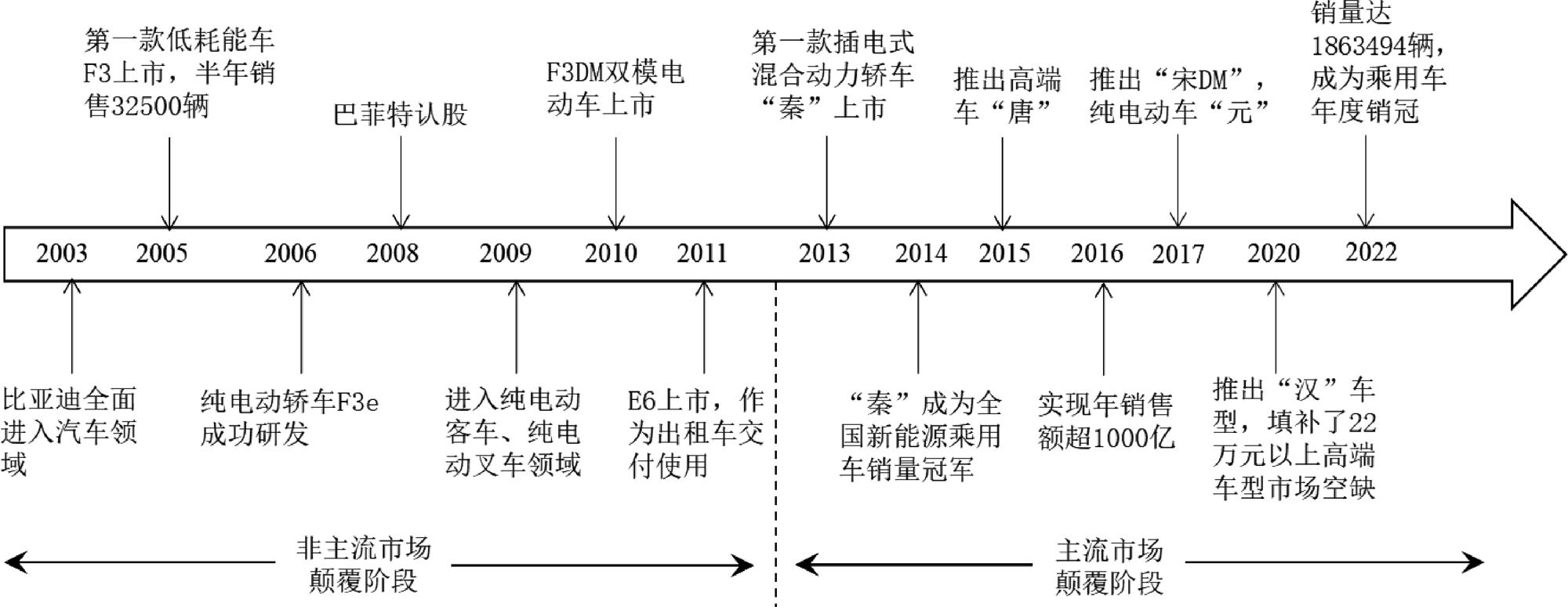
图1(a) 比亚迪汽车发展历程及关键性事件
Figure 1(a) Development timeline and key events of BYD
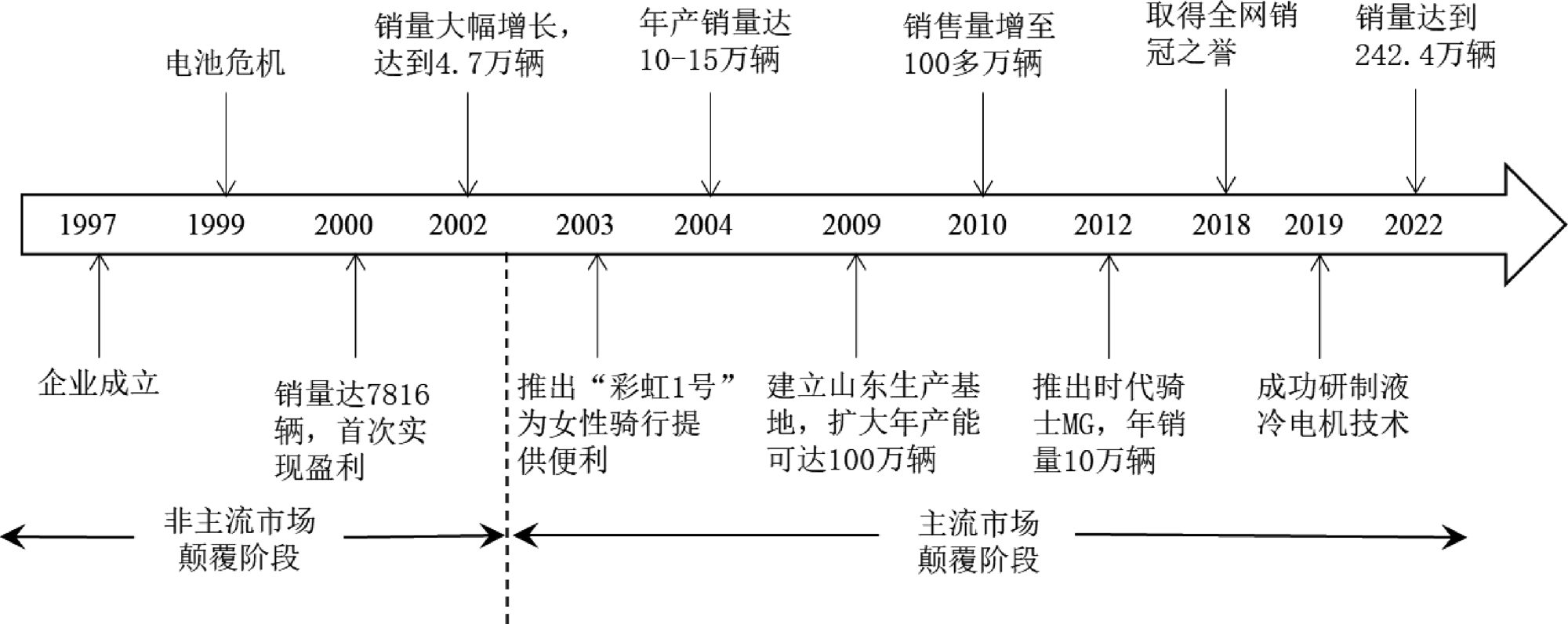
图1(b) 绿源电动车发展历程及关键性事件
Figure 1(b) Development timeline and key events of Luyuan
| 案例企业 | 核心构念 | 典型证据举例 |
|---|---|---|
| 比亚迪 | 创新生态系统合作关系 | 2008年到2012年期间,中国新能源汽车产业基于这个平台生态系统,企业之间建立合作……实现了快速增长 |
| 创新生态系统竞争关系 | 合资车企大量涌入,价格也逐渐下探,进一步压缩了自主品牌的发展空间,其实是很困难的…… | |
| 绿源 | 创新生态系统合作关系 | 上游供应商的电池出现质量问题……卖出去的绿源电动车电池遭到了退货,合作的经销商也率先反水 |
| 创新生态系统竞争关系 | 上海的千鹤、苏州的小羚羊、南京的大陆鸽这些国有控股企业都在长三角成立 | |
| 比亚迪 | 绿色知识获取 | 通过大规模的兼并收购,比亚迪在短时间内具备了新能源汽车整车和零部件的自主研发、设计及制造能力 |
| 绿色研发投入 | 我们在电池和电动汽车技术领域投入了大量资金,…… | |
| 环境资源协奏 | 比亚迪通过业务外包、采购等与供应链上下游企业保持稳定的交易关系,整合资源拼凑出完整的电动车生产线…… | |
| 绿源 | 绿色知识获取 | 对绿色出行相关的政策要清楚了解……当时创始人就注意到一些大城市开始禁止汽油机车…… |
| 绿色研发投入 | 绿源前期一直选择的是做电动自行车的产品设计和研发,鼓励各种各样的新技术进入到这个新的领域 | |
| 环境资源协奏 | 当时浙江有长兴天能、宁波协成这些企业,可以买到蓄电池、电机……绿源对这些资源进行了有效整合和利用 |
表2 非主流市场颠覆阶段核心构念的证据列表示例
Table 2 Evidence list of core constructs in the disruptive phase of non-mainstream markets
| 案例企业 | 核心构念 | 典型证据举例 |
|---|---|---|
| 比亚迪 | 创新生态系统合作关系 | 2008年到2012年期间,中国新能源汽车产业基于这个平台生态系统,企业之间建立合作……实现了快速增长 |
| 创新生态系统竞争关系 | 合资车企大量涌入,价格也逐渐下探,进一步压缩了自主品牌的发展空间,其实是很困难的…… | |
| 绿源 | 创新生态系统合作关系 | 上游供应商的电池出现质量问题……卖出去的绿源电动车电池遭到了退货,合作的经销商也率先反水 |
| 创新生态系统竞争关系 | 上海的千鹤、苏州的小羚羊、南京的大陆鸽这些国有控股企业都在长三角成立 | |
| 比亚迪 | 绿色知识获取 | 通过大规模的兼并收购,比亚迪在短时间内具备了新能源汽车整车和零部件的自主研发、设计及制造能力 |
| 绿色研发投入 | 我们在电池和电动汽车技术领域投入了大量资金,…… | |
| 环境资源协奏 | 比亚迪通过业务外包、采购等与供应链上下游企业保持稳定的交易关系,整合资源拼凑出完整的电动车生产线…… | |
| 绿源 | 绿色知识获取 | 对绿色出行相关的政策要清楚了解……当时创始人就注意到一些大城市开始禁止汽油机车…… |
| 绿色研发投入 | 绿源前期一直选择的是做电动自行车的产品设计和研发,鼓励各种各样的新技术进入到这个新的领域 | |
| 环境资源协奏 | 当时浙江有长兴天能、宁波协成这些企业,可以买到蓄电池、电机……绿源对这些资源进行了有效整合和利用 |
| 案例企业 | 核心构念 | 典型证据举例 |
|---|---|---|
| 比亚迪 | 创新生态系统合作关系 | 电动车一起来以后,整个生态就起来了,产业链各种零组件,像正极材料、负极材料、隔膜纸、定检仪也都全部拉起来了 |
| 创新生态系统竞争关系 | 那些新势力,像蔚小理……互联网转型的车企可能会对比亚迪有冲击 | |
| 绿源 | 创新生态系统合作关系 | 在产学研方面,绿源与浙江大学、浙江工业大学、中国科技大学、合肥工业大学等院校建立了密切合作关系…… |
| 创新生态系统竞争关系 | ……越来越多的企业将目光锁定电动自行车这个新兴行业,市场竞争加剧,呈现多品牌竞争的局面 | |
| 比亚迪 | 绿色知识获取 | 比亚迪也学习别的企业做电池、电机或其他新能源领域的先进技术与丰富经验,这对我们研发与生产新能源汽车很有帮助 |
| 绿色研发投入 | 2022年对新能源方面的研发投入非常大,招了很多研发人员。很多部门原来只有100人,现在已经有800人…… | |
| 环境资源协奏 | ……积极协调生产各环节资源提升产量,以满足(新能源汽车)订单需求 | |
| 大数据分析能力 | 每辆车我都能在后台查到你的转速、里程、发动机运行、怎么运转的,后台把数据收集起来去做分析,然后做创新优化策略,比如车怎么跑起来更省油…… | |
| 绿源 | 绿色知识获取 | 通过对一些市场信息的了解和对技术知识的学习,我们取消了简易款电动车型的脚踏、链条和飞轮,在前部做成了一个宽敞的脚踏板 |
| 绿色研发投入 | 绿源投入200多万元引进先进设备进行电池等技术研发…… | |
| 环境资源协奏 | 我们核心竞争力不是简单将人力、物力和财力叠加在一起,而是将这些资源通过创新整合、组织协调和应变管理等方法进一步集成和加工…… | |
| 大数据分析能力 | 对商品制造、用户经营、服务体验这些数据进行收集、整理、分析,提前预判客户需求 |
表3 主流市场颠覆阶段核心构念的证据列表示例
Table 3 Evidence list of core constructs in the disruptive phase of mainstream markets
| 案例企业 | 核心构念 | 典型证据举例 |
|---|---|---|
| 比亚迪 | 创新生态系统合作关系 | 电动车一起来以后,整个生态就起来了,产业链各种零组件,像正极材料、负极材料、隔膜纸、定检仪也都全部拉起来了 |
| 创新生态系统竞争关系 | 那些新势力,像蔚小理……互联网转型的车企可能会对比亚迪有冲击 | |
| 绿源 | 创新生态系统合作关系 | 在产学研方面,绿源与浙江大学、浙江工业大学、中国科技大学、合肥工业大学等院校建立了密切合作关系…… |
| 创新生态系统竞争关系 | ……越来越多的企业将目光锁定电动自行车这个新兴行业,市场竞争加剧,呈现多品牌竞争的局面 | |
| 比亚迪 | 绿色知识获取 | 比亚迪也学习别的企业做电池、电机或其他新能源领域的先进技术与丰富经验,这对我们研发与生产新能源汽车很有帮助 |
| 绿色研发投入 | 2022年对新能源方面的研发投入非常大,招了很多研发人员。很多部门原来只有100人,现在已经有800人…… | |
| 环境资源协奏 | ……积极协调生产各环节资源提升产量,以满足(新能源汽车)订单需求 | |
| 大数据分析能力 | 每辆车我都能在后台查到你的转速、里程、发动机运行、怎么运转的,后台把数据收集起来去做分析,然后做创新优化策略,比如车怎么跑起来更省油…… | |
| 绿源 | 绿色知识获取 | 通过对一些市场信息的了解和对技术知识的学习,我们取消了简易款电动车型的脚踏、链条和飞轮,在前部做成了一个宽敞的脚踏板 |
| 绿色研发投入 | 绿源投入200多万元引进先进设备进行电池等技术研发…… | |
| 环境资源协奏 | 我们核心竞争力不是简单将人力、物力和财力叠加在一起,而是将这些资源通过创新整合、组织协调和应变管理等方法进一步集成和加工…… | |
| 大数据分析能力 | 对商品制造、用户经营、服务体验这些数据进行收集、整理、分析,提前预判客户需求 |
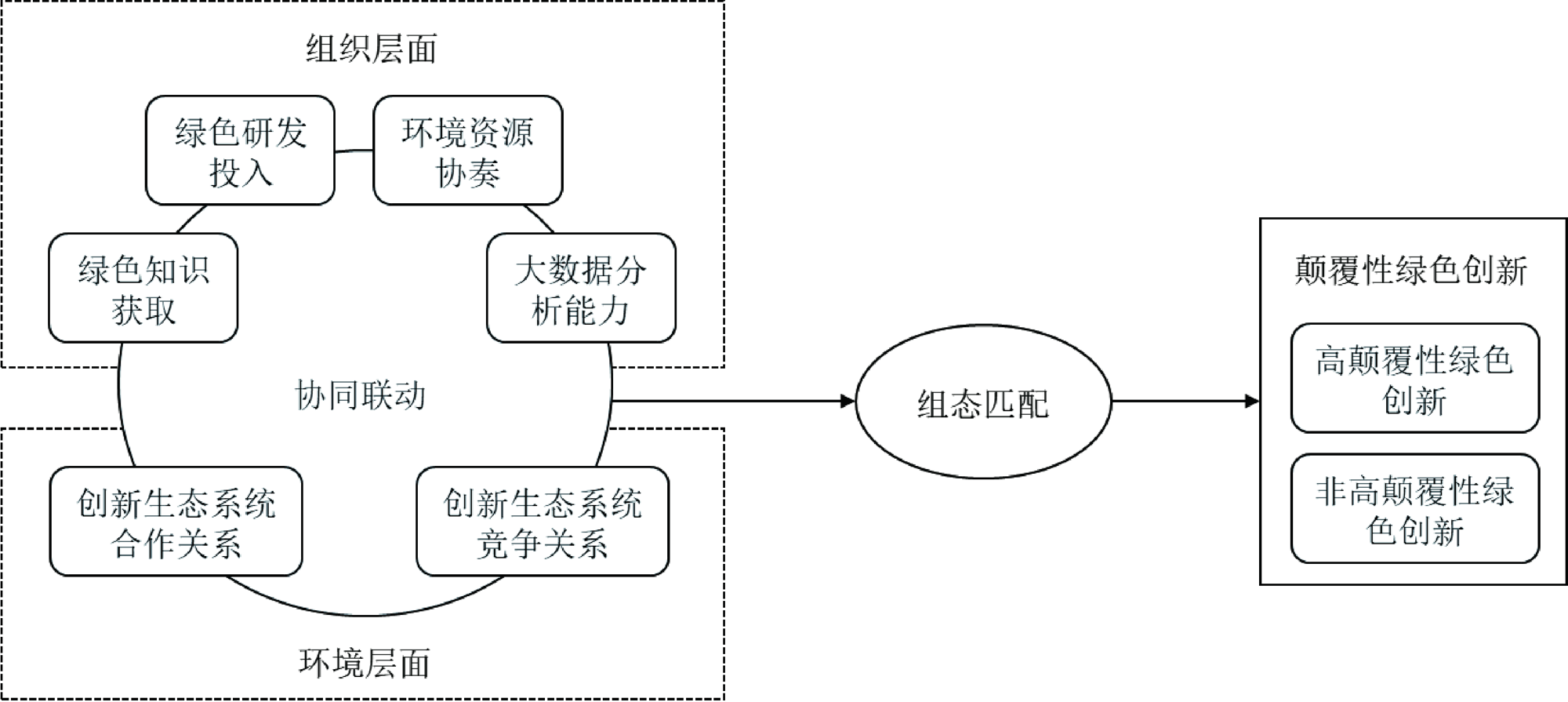
图2 组态分析模型
Figure 2 Configurational analysis model
| 研究变量 | 锚点 | |||
|---|---|---|---|---|
| 完全隶属 | 交叉点 | 完全不隶属 | ||
| 条件变量 | COO | 4.7500 | 4.1250 | 3.0000 |
| COM | 4.7500 | 4.2500 | 2.9125 | |
| GKA | 4.7250 | 4.1667 | 3.0000 | |
| GRDI | 4.6667 | 4.0000 | 2.3333 | |
| ERO | 5.0000 | 4.3333 | 2.6667 | |
| BDAC | 4.6250 | 4.2500 | 3.1250 | |
| 结果变量 | DGI | 4.8000 | 3.8000 | 2.6000 |
表4 条件变量和结果变量的校准锚点
Table 4 Calibration anchors for condition and outcome variables
| 研究变量 | 锚点 | |||
|---|---|---|---|---|
| 完全隶属 | 交叉点 | 完全不隶属 | ||
| 条件变量 | COO | 4.7500 | 4.1250 | 3.0000 |
| COM | 4.7500 | 4.2500 | 2.9125 | |
| GKA | 4.7250 | 4.1667 | 3.0000 | |
| GRDI | 4.6667 | 4.0000 | 2.3333 | |
| ERO | 5.0000 | 4.3333 | 2.6667 | |
| BDAC | 4.6250 | 4.2500 | 3.1250 | |
| 结果变量 | DGI | 4.8000 | 3.8000 | 2.6000 |
| 前因条件 | 高颠覆性绿色创新 | |
|---|---|---|
| 一致性 | 覆盖度 | |
| COO | 0.7976 | 0.7407 |
| ~COO | 0.5281 | 0.5589 |
| COM | 0.7229 | 0.7285 |
| ~COM | 0.5958 | 0.5786 |
| GKA | 0.7888 | 0.7635 |
| ~GKA | 0.5327 | 0.5388 |
| GRDI | 0.7902 | 0.7333 |
| ~GRDI | 0.5248 | 0.5558 |
| ERO | 0.7422 | 0.8159 |
| ~ERO | 0.6505 | 0.5849 |
| BDAC | 0.7735 | 0.7518 |
| ~BDAC | 0.5405 | 0.5444 |
表5 高颠覆性绿色创新的必要条件分析
Table 5 Analysis of necessary conditions for high disruptive green innovation
| 前因条件 | 高颠覆性绿色创新 | |
|---|---|---|
| 一致性 | 覆盖度 | |
| COO | 0.7976 | 0.7407 |
| ~COO | 0.5281 | 0.5589 |
| COM | 0.7229 | 0.7285 |
| ~COM | 0.5958 | 0.5786 |
| GKA | 0.7888 | 0.7635 |
| ~GKA | 0.5327 | 0.5388 |
| GRDI | 0.7902 | 0.7333 |
| ~GRDI | 0.5248 | 0.5558 |
| ERO | 0.7422 | 0.8159 |
| ~ERO | 0.6505 | 0.5849 |
| BDAC | 0.7735 | 0.7518 |
| ~BDAC | 0.5405 | 0.5444 |
| 前因条件 | 非高颠覆性绿色创新 | |
|---|---|---|
| 一致性 | 覆盖度 | |
| COO | 0.5921 | 0.5618 |
| ~COO | 0.7267 | 0.7858 |
| COM | 0.5754 | 0.5926 |
| ~COM | 0.7364 | 0.7308 |
| GKA | 0.5538 | 0.5477 |
| ~GKA | 0.7609 | 0.7864 |
| GRDI | 0.5895 | 0.5590 |
| ~GRDI | 0.7188 | 0.7778 |
| ERO | 0.5482 | 0.6157 |
| ~ERO | 0.8361 | 0.7682 |
| BDAC | 0.5573 | 0.5534 |
| ~BDAC | 0.7500 | 0.7719 |
表6 非高颠覆性绿色创新的必要条件分析
Table 6 Analysis of necessary conditions for non-high disruptive green innovation
| 前因条件 | 非高颠覆性绿色创新 | |
|---|---|---|
| 一致性 | 覆盖度 | |
| COO | 0.5921 | 0.5618 |
| ~COO | 0.7267 | 0.7858 |
| COM | 0.5754 | 0.5926 |
| ~COM | 0.7364 | 0.7308 |
| GKA | 0.5538 | 0.5477 |
| ~GKA | 0.7609 | 0.7864 |
| GRDI | 0.5895 | 0.5590 |
| ~GRDI | 0.7188 | 0.7778 |
| ERO | 0.5482 | 0.6157 |
| ~ERO | 0.8361 | 0.7682 |
| BDAC | 0.5573 | 0.5534 |
| ~BDAC | 0.7500 | 0.7719 |
| 前因条件 | 高颠覆性绿色创新 | |||||
|---|---|---|---|---|---|---|
| D1a | D1b | D2a | D2b | D3 | D4 | |
| COO |  |  |  |  |  | |
| COM |  |  |  |  |  | |
| GKA |  |  |  |  |  | |
| GRDI |  |  |  |  | ||
| ERO |  |  |  |  | ||
| BDAC |  |  |  |  |  | |
| 一致性 | 0.8713 | 0.9016 | 0.8811 | 0.9182 | 0.9190 | 0.9466 |
| 原始覆盖度 | 0.5511 | 0.5724 | 0.5404 | 0.5078 | 0.5097 | 0.2763 |
| 唯一覆盖度 | 0.0100 | 0.0298 | 0.0356 | 0.0120 | 0.0231 | 0.0160 |
| 总体一致性 | 0.8569 | |||||
| 总体覆盖度 | 0.6966 | |||||
表7 产生高颠覆性绿色创新的组态
Table 7 Configurations for generating high disruptive green innovation
| 前因条件 | 高颠覆性绿色创新 | |||||
|---|---|---|---|---|---|---|
| D1a | D1b | D2a | D2b | D3 | D4 | |
| COO | | | | | | |
| COM | | | | | | |
| GKA | | | | | | |
| GRDI | | | | | ||
| ERO | | | | | ||
| BDAC | | | | | | |
| 一致性 | 0.8713 | 0.9016 | 0.8811 | 0.9182 | 0.9190 | 0.9466 |
| 原始覆盖度 | 0.5511 | 0.5724 | 0.5404 | 0.5078 | 0.5097 | 0.2763 |
| 唯一覆盖度 | 0.0100 | 0.0298 | 0.0356 | 0.0120 | 0.0231 | 0.0160 |
| 总体一致性 | 0.8569 | |||||
| 总体覆盖度 | 0.6966 | |||||
| 前因条件 | 非高颠覆性绿色创新 | |||
|---|---|---|---|---|
| N1a | N1b | N2a | N2b | |
| COO |  |  |  | |
| COM |  |  |  | |
| GKA |  |  |  | |
| GRDI |  |  |  | |
| ERO |  |  |  | |
| BDAC |  |  |  |  |
| 一致性 | 0.9002 | 0.9180 | 0.9183 | 0.9429 |
| 原始覆盖度 | 0.5535 | 0.4780 | 0.4857 | 0.2847 |
| 唯一覆盖度 | 0.0673 | 0.0231 | 0.0308 | 0.0054 |
| 总体一致性 | 0.8867 | |||
| 总体覆盖度 | 0.6129 | |||
表8 产生非高颠覆性绿色创新的组态
Table 8 Configurations for generating non-high disruptive green innovation
| 前因条件 | 非高颠覆性绿色创新 | |||
|---|---|---|---|---|
| N1a | N1b | N2a | N2b | |
| COO | | | | |
| COM | | | | |
| GKA | | | | |
| GRDI | | | | |
| ERO | | | | |
| BDAC | | | | |
| 一致性 | 0.9002 | 0.9180 | 0.9183 | 0.9429 |
| 原始覆盖度 | 0.5535 | 0.4780 | 0.4857 | 0.2847 |
| 唯一覆盖度 | 0.0673 | 0.0231 | 0.0308 | 0.0054 |
| 总体一致性 | 0.8867 | |||
| 总体覆盖度 | 0.6129 | |||
| [1] | Xin X, Miao X, Cui R. Enhancing sustainable development: Innovation ecosystem coopetition, environmental resource orchestration, and disruptive green innovation[J]. Business Strategy & the Environment, 2023, 32(4):1388-1402. |
| [2] | 徐建中, 李奉书, 晏福, 等. 齐美尔联接对企业颠覆性绿色技术创新的影响——基于知识视角的研究[J]. 管理评论, 2020, 32(6):93-103. |
| Xu J Z, Li F S, Yan F, et al. The impact of Zimmelian connections on disruptive green technological innovation in enterprises: A knowledge-based perspective[J]. Management Review, 2020, 32(6): 93-103. | |
| [3] | Shang T, Miao X, Lu D, et al. The evolutionary process of disruptive green innovation in China: Evidence from the electric bicycle sector[J]. Technology Analysis & Strategic Management, 2020, 32(8):910-922. |
| [4] |
Fiss P C. Building better causal theories: A fuzzy set approach to typologies in organization research[J]. Academy of Management Journal, 2011, 54(2):393-420.
DOI URL |
| [5] |
Zhang F, Zhu L. Social media strategic capability, organizational unlearning, and disruptive innovation of SMEs: The moderating roles of TMT heterogeneity and environmental dynamism[J]. Journal of Business Research, 2021, 133:183-193.
DOI URL |
| [6] | 邵美蓉, 安立仁, 董津津. 企业破坏性创新理论述评与研究框架构建[J]. 研究与发展管理, 2021, 33(2):15. |
| Shao M R, An L R, Dong J J. Review of disruptive innovation theory and the construction of a research framework[J]. Research and Development Management, 2021, 33(2): 151-165. | |
| [7] |
Gilbert B A. Creative destruction: Identifying its geographic origins[J]. Research Policy, 2012, 41(4):734-742.
DOI URL |
| [8] | Rieple K. The Role of Business Ecosystems in the Building of Disruptive Innovations[C]. Academy of Management Annual Meeting Proceedings, 2017(1):15200. |
| [9] |
Hojnik J, Ruzzier M. The driving forces of process eco-innovation and its impact on performance: Insights from Slovenia[J]. Journal of Cleaner Production, 2016, 133(10):812-825.
DOI URL |
| [10] |
Cui Y L H. Interorganizational learning, green knowledge integration capability and green innovation[J]. European Journal of Innovation Management, 2021, 24(4):1292-1314.
DOI URL |
| [11] |
Cao H, Chen Z. The driving effect of internal and external environment on green innovation strategy: The moderating role of top management's environmental awareness[J]. Nankai Business Review, International, 2019, 10(3):342-361.
DOI URL |
| [12] | 杜运周, 贾良定. 组态视角与定性比较分析(QCA):管理学研究的一条新道路[J]. 管理世界, 2017(6): 13. |
| Du Y Z, Jia L D. Configurational perspective and qualitative comparative analysis (QCA): A new approach in management research[J]. Management World, 2017(6): 157-167. | |
| [13] | 张明, 杜运周. 组织与管理研究中QCA方法的应用:定位,策略和方向[J]. 管理学报, 2019, 16(9):1312-1323. |
| Zhang M, Du Y Z. Application of the QCA method in organizational and management research: Positioning, strategies, and directions[J]. Journal of Management, 2019, 16(9): 1312-1323. | |
| [14] | 杨震宁, 赵红. 中国企业的开放式创新:制度环境、“竞合”关系与创新绩效[J]. 管理世界, 2020, 36 (2): 139-160,224. |
| Yang Z N, Zhao H. Open innovation in Chinese enterprises: Institutional environment, "co-opetition" relationships, and innovation performance[J]. Management World, 2020, 36(2): 139-160,224. | |
| [15] |
Shu C, Jin J L, Zhou K Z. A contingent view of partner coopetition in international joint ventures[J]. Journal of International Marketing, 2017, 25(3):42-60.
DOI URL |
| [16] | 李晶钰, 沈灏. 不同竞合情景下企业知识获取和绩效关系的研究[J]. 科研管理, 2009(5):9. |
| Li J Y, Shen H. A study on the relationship between enterprise knowledge acquisition and performance in different co-opetition scenarios[J]. Science Research Management, 2009, 30(5):139-147. | |
| [17] |
Cui R, Wang J. Shaping sustainable development: External environmental pressure, exploratory green learning, and radical green innovation[J]. Corporate Social Responsibility and Environmental Management, 2022, 29(3):481-495.
DOI URL |
| [18] |
Wang J, Xue Y, Yang J. Boundary-spanning search and firms' green innovation: The moderating role of resource orchestration capability[J]. Business Strategy and the Environment, 2020, 29(2):361-374.
DOI URL |
| [19] |
Zahoor N, Gerged A M. Relational capital, environmental knowledge integration, and environmental performance of small and medium enterprises in emerging markets[J]. Business Strategy and the Environment, 2021, 30(8):3789-3803.
DOI URL |
| [20] |
Akhtar P, Khan Z, Tarba S, et al. The Internet of Things, dynamic data and information processing capabilities, and operational agility[J]. Technological Forecasting and Social Change, 2018, 136:307-316.
DOI URL |
| [21] |
Govindarajan V, Kopalle P K. Disruptiveness of innovations: Measurement and an assessment of reliability and validity[J]. Strategic Management Journal, 2006(2): 27(2):189-199.
DOI URL |
| [22] |
Xie X, Wang H. How can open innovation ecosystem modes push product innovation forward? An fsQCA analysis[J]. Journal of Business Research, 2020, 108:29-41.
DOI URL |
| [23] | 颉茂华, 赵圆圆, 刘远洋. 网络联结, 资源获取与组织学习互动影响战略绩效路径研究——基于长城汽车的纵向案例研究[J]. 科研管理, 2021, 42(5):57-69. |
| Xie M H, Zhao Y Y, Liu Y Y. The interactive impact of network connections, resource acquisition, and organizational learning on strategic performance: A longitudinal case study of Great Wall Motors[J]. Science Research Management, 2021, 42(5): 57-69. | |
| [24] |
Bengtsson M, Kock S. "Coopetition" in Business Networks—to Cooperate and Compete Simultaneously[J]. Industrial Marketing Management, 2000, 29(5):411-426.
DOI URL |
| [25] |
Lin C, Kunnathur A. Strategic orientations, developmental culture, and big data capability[J]. Journal of Business Research, 2019, 105:49-60.
DOI |
| [1] | 张玉利 田震 陈寒松. 数字经济时代大型企业公司创业的组态路径研究[J]. 科学学研究, 2025, 43(6): 1323-1335. |
| [2] | 程建青 李正彪 刘秋辰. 计划行为理论下机会型创业的复杂前因研究[J]. 科学学研究, 2024, 42(9): 1957-1966. |
| [3] | 徐晨倩 朱雪忠. 美国337调查、动态能力与企业专利国际化[J]. 科学学研究, 2023, 41(8): 1474-1483. |
| [4] | 杨力 刘敦虎 魏奇锋. 共生理论下区域创新生态系统能级提升研究[J]. 科学学研究, 2023, 41(10): 1897-1909. |
| [5] | 朱建民 崔心怡. 国际技术并购因素组态与双元创新绩效关系研究[J]. 科学学研究, 2022, 40(8): 1527-1536. |
| [6] | 王丽平 常翠青. 组态视角下高校专利的转化路径选择[J]. 科学学研究, 2022, 40(2): 309-318. |
| 阅读次数 | ||||||
|
全文 |
|
|||||
|
摘要 |
|
|||||
