
- 中国科学学与科技政策研究会
- 中国科学院科技战略咨询研究院
- 清华大学科学技术与社会研究中心
ISSN 1003-2053 CN 11-1805/G3
科学学研究 ›› 2026, Vol. 44 ›› Issue (9): 1865-1879.
徐彦申( ), 范旭
收稿日期:2025-06-20
修回日期:2025-11-13
出版日期:2026-09-15
发布日期:2026-09-15
作者简介:徐彦申(1993-),女,博士研究生,E-mail:202110187804@mail.scut.edu.cn。基金资助:
XU Yan-shen(), FAN Xu
Received:2025-06-20
Revised:2025-11-13
Online:2026-09-15
Published:2026-09-15
摘要:
在新能源汽车产业的“内卷式”竞争背景下,企业如何突破内卷困局、构建持续性的竞争优势成为亟待探讨的重要议题。本研究采用双案例对比研究法,以“小鹏”和“威马”为研究对象,构建“内卷环境—柔性建构—优势涌现”的分析框架,探析企业如何在内卷情境中通过柔性机制实现竞争优势的连续性涌现。研究发现:(1)新能源汽车产业的内卷环境分别呈现出“不确定性”“结构化”和“极化”的阶段特征;(2)在内卷压力下,柔性机制经历了“基础柔性—局部柔性—全域柔性”的演化过程;(3)企业竞争优势在柔性机制的推动下,呈现出“敏捷型试错优势—路径型协作优势—系统型协同优势”的连续性涌现路径。本研究拓展了柔性理论在高频动态环境下的适用边界,并进一步建构了本土内卷语境下企业突围的过程模型,为企业应对产业内卷提供了理论依据和实践参考。
中图分类号:
徐彦申, 范旭. 新能源汽车产业“内卷”的破局之道——基于柔性演化与优势涌现的双重视角[J]. 科学学研究, 2026, 44(9): 1865-1879.
XU Yan-shen, FAN Xu. Breaking the "involution" in the new energy vehicle industry——A dual perspective of flexible evolution and advantage emergence[J]. Studies in Science of Science, 2026, 44(9): 1865-1879.
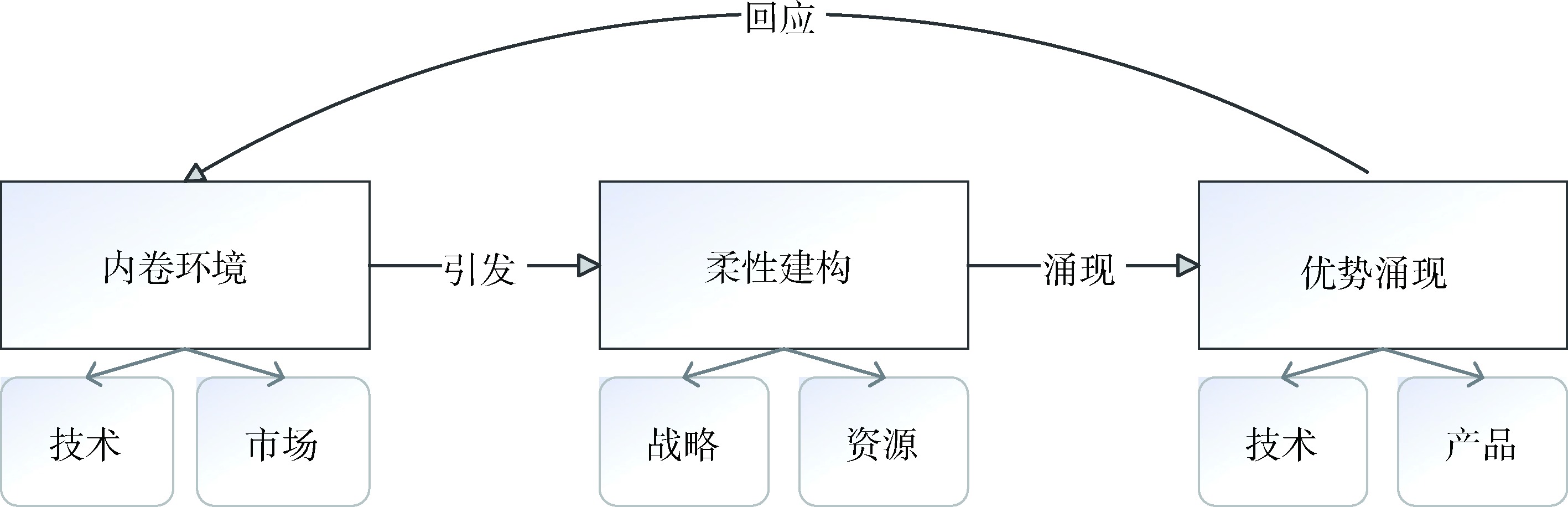
图1 研究框架
Figure 1 Research framework
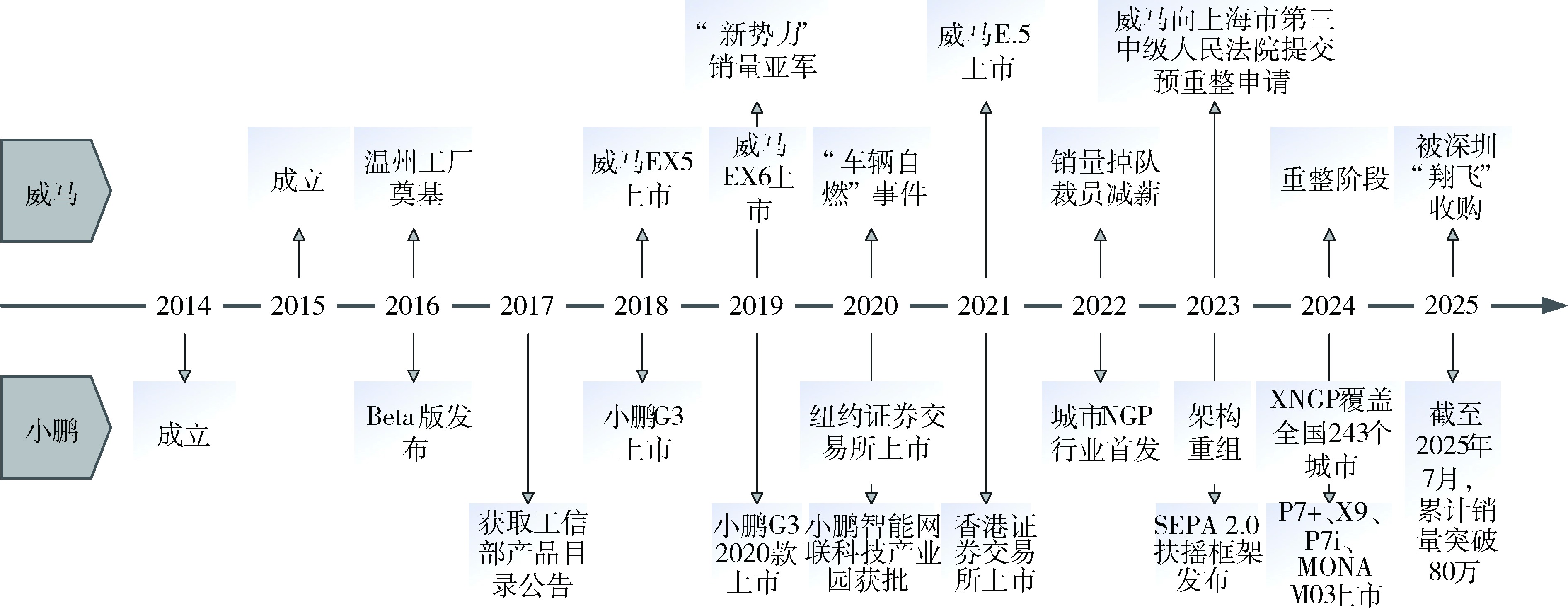
图2 小鹏和威马的关键事件时间轴
Figure 2 Key events timeline of XPeng Motors and WM Motors
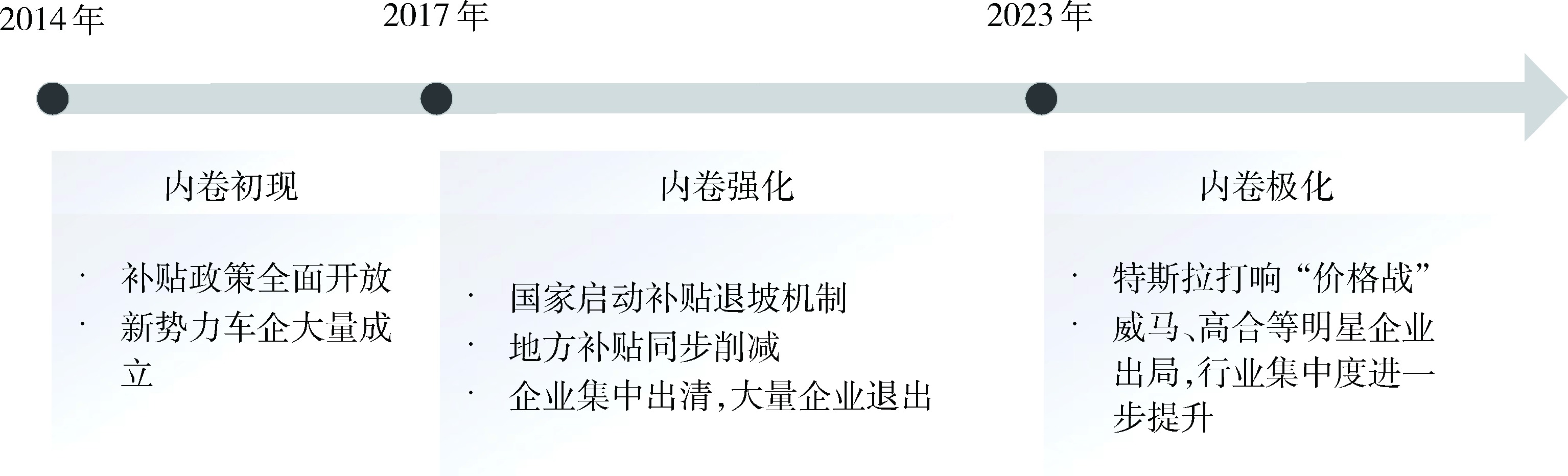
图3 产业内卷的阶段划分
Figure 3 Categorization of industry involution stages
| 数据类型 | 名称 | 人员 | 备注 | |
|---|---|---|---|---|
| 一手资料 | 半结构化访谈 | 广州小鹏汽车科技有限公司 | 公共事务资深 经理 研发人员 | 共计3.6万字 |
| 安道拓(重庆)汽车部件有限公司肇庆分公司 | 技术主管 行政主管 副总经理 | 小鹏智能座椅主要供应商 共计1.6万字 | ||
| 广东嘉拓自动化技术 有限公司 | 技术主管 副总经理 人力资源部部长 | 威马自动化设备供应商 共计3万字 | ||
| 小鹏、威马旗舰车型消费者 | 6人 | 共计0.15万字 | ||
| Z市(小鹏分厂所在地)市委、市工业和信息化局和发改局 | 7人 | 共计2.3万字 | ||
| 参与式观察 | 参观小鹏、安道拓的展厅及工厂 | 2次,共9人 | 共计0.45万字 | |
| 二手资料 | 内部资料、微信公众号、官方微博、新闻报道及知网论文等 | — | 小鹏12份 | |
| 威马30份 | ||||
表1 数据来源
Table 1 Data sources
| 数据类型 | 名称 | 人员 | 备注 | |
|---|---|---|---|---|
| 一手资料 | 半结构化访谈 | 广州小鹏汽车科技有限公司 | 公共事务资深 经理 研发人员 | 共计3.6万字 |
| 安道拓(重庆)汽车部件有限公司肇庆分公司 | 技术主管 行政主管 副总经理 | 小鹏智能座椅主要供应商 共计1.6万字 | ||
| 广东嘉拓自动化技术 有限公司 | 技术主管 副总经理 人力资源部部长 | 威马自动化设备供应商 共计3万字 | ||
| 小鹏、威马旗舰车型消费者 | 6人 | 共计0.15万字 | ||
| Z市(小鹏分厂所在地)市委、市工业和信息化局和发改局 | 7人 | 共计2.3万字 | ||
| 参与式观察 | 参观小鹏、安道拓的展厅及工厂 | 2次,共9人 | 共计0.45万字 | |
| 二手资料 | 内部资料、微信公众号、官方微博、新闻报道及知网论文等 | — | 小鹏12份 | |
| 威马30份 | ||||
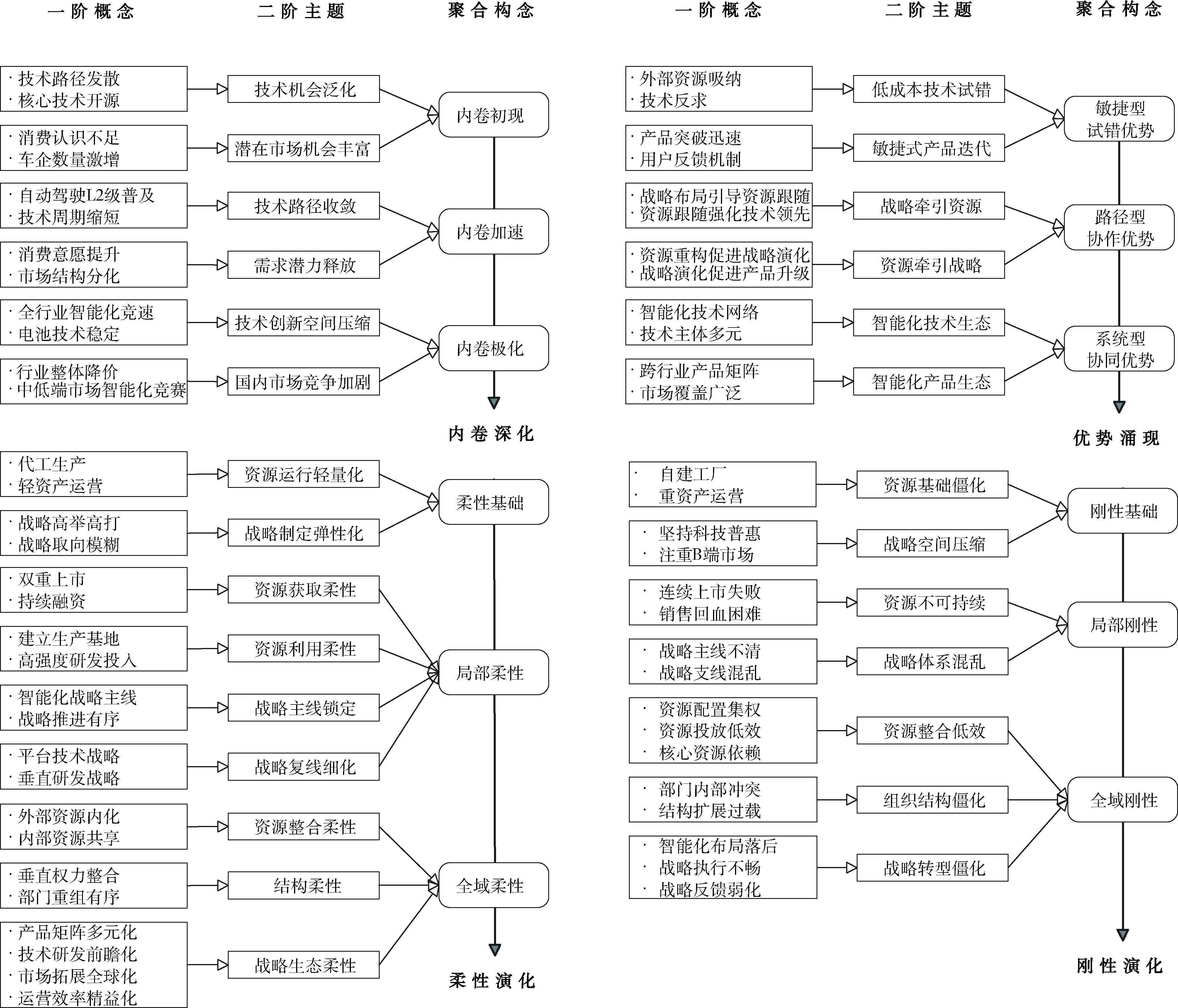
图4 案例编码数据结构
Figure 4 Case coding data structure
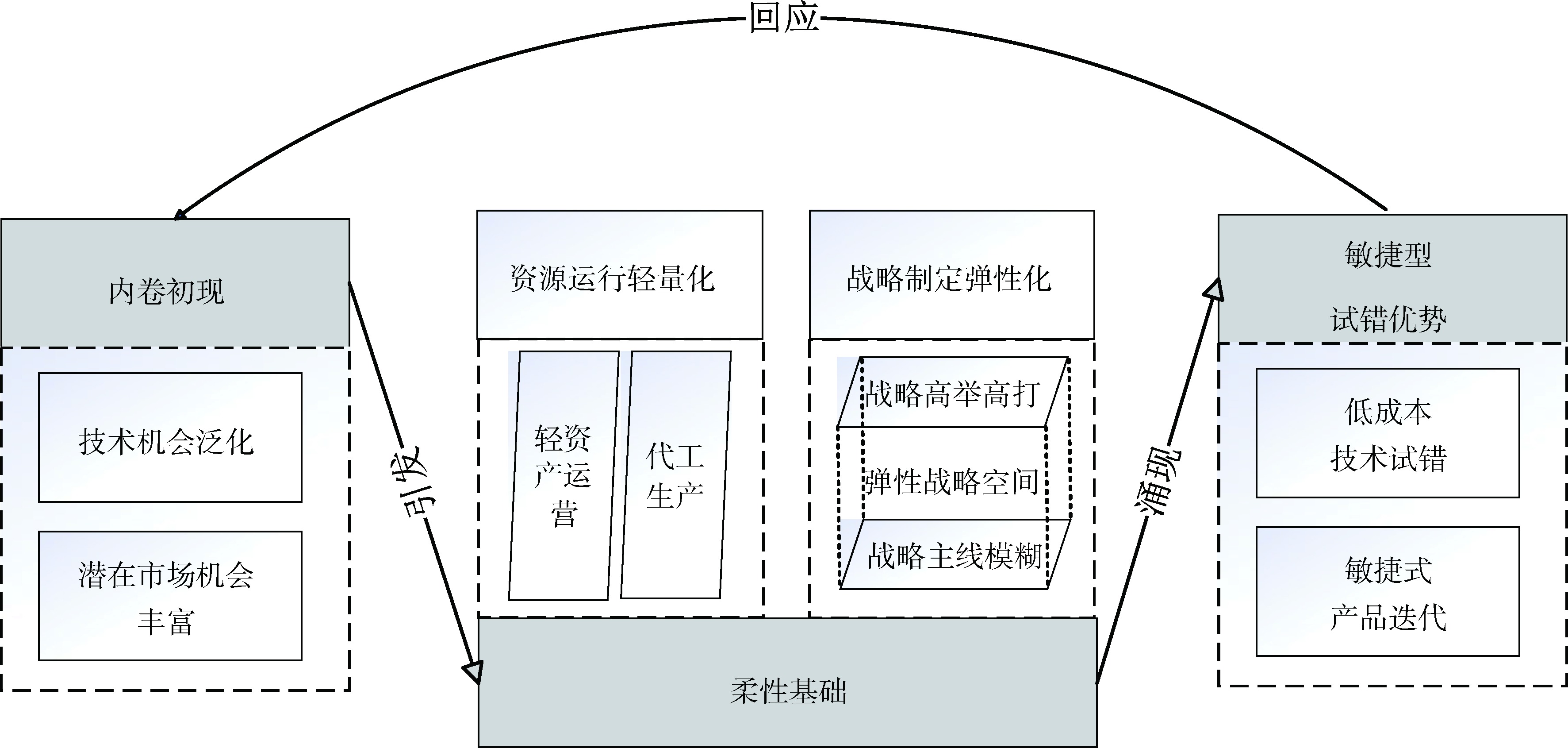
图5 内卷初现阶段的基础柔性与敏捷型试错优势涌现
Figure 5 Initial stage of involution with emerging flexibility and agile trial-and-error advantages
| 聚合构念 | 二阶主题 | 一阶概念 | 典型证据 |
|---|---|---|---|
| 内卷初现 | 技术机会泛化 | 技术路径不收敛 | 插电式混合动力汽车与纯电动、燃料电池技术一并被纳入新能源车汽车范畴。 |
| 核心技术开源 | 2014年6月12日,马斯克在特斯拉官网上宣布,开源特斯拉所有的专利技术,特别是涉及纯电车核心的三电系统。 | ||
| 潜在市场机会丰富 | 消费认知不足 | 2017年,新能源汽车的市场渗透率仅为2.65%。 | |
| 车企数量激增 | 2014—2017年,新增新能源车企累计68家,新增车型累计达到283个。 | ||
| 柔性基础 | 资源运行轻量化 | 代工生产 | 此前小鹏是通过海马汽车代工生产,双方的合作始于2017年9月,代工车型为小鹏G3和P7。 |
| 轻资产运营 | 新势力们能够快速崛起,得益于把造车互联网化,能外包就外包,能买就买。 | ||
| 战略制定弹性化 | 战略高举高打 | 突出互联网基因……将互联网技术与汽车制造深度融合……以颠覆性口号进入市场。 | |
| 战略取向模糊 | 没有一家汽车公司敢断定走哪条路必能通往成功。 | ||
| 刚性基础 (威马) | 资源基础僵化 | 自建工厂 | 自2016年8月起,威马汽车在总部上海以外的浙江温州和湖北黄冈建设了两座生产基地,总计产能达到25万辆。 |
| 重资产运营 | 我们的厂是非常先进的,每个大概花了60亿……站在现在反思,我们对两个工厂的投入有点太多了,前期几乎有一半的资金都耗到整车厂去了。 | ||
| 战略空间压缩 | 坚持科技普惠 | 威马要秉持“科技普惠”的初心,做“用得爽、用得起”的产品 | |
| 注重B端市场 | 前期的市场策略就是主打B端市场,尤其是网约车市场,大客户的批量采购是造车势力快速量产的捷径。 | ||
| 试错型 敏捷优势 | 低成本技术试错 | 外部资源吸纳 | 基于特斯拉电池技术和安卓系统…… |
| 技术反求 | 早期通过改装雷克萨斯NX300h开展三电系统与中控研发,绕开高成本整车开发路径。 | ||
| 敏捷式产品迭代 | 产品突破快速 | 2016年就发布了新车的Beta版本。 | |
| 用户反馈机制 | 邀请互联网圈、科技圈,还有科技人士试乘试驾,得到了很多非常好的反馈意见。在反馈开发过程中,我们的车一直在做新一步的更新升级和下一步开发工作。 |
表2 企业基础柔性与试错型敏捷优势涌现典型证据援引
Table 2 Evidence of foundational flexibility and agile trial-and-error advantages in firms
| 聚合构念 | 二阶主题 | 一阶概念 | 典型证据 |
|---|---|---|---|
| 内卷初现 | 技术机会泛化 | 技术路径不收敛 | 插电式混合动力汽车与纯电动、燃料电池技术一并被纳入新能源车汽车范畴。 |
| 核心技术开源 | 2014年6月12日,马斯克在特斯拉官网上宣布,开源特斯拉所有的专利技术,特别是涉及纯电车核心的三电系统。 | ||
| 潜在市场机会丰富 | 消费认知不足 | 2017年,新能源汽车的市场渗透率仅为2.65%。 | |
| 车企数量激增 | 2014—2017年,新增新能源车企累计68家,新增车型累计达到283个。 | ||
| 柔性基础 | 资源运行轻量化 | 代工生产 | 此前小鹏是通过海马汽车代工生产,双方的合作始于2017年9月,代工车型为小鹏G3和P7。 |
| 轻资产运营 | 新势力们能够快速崛起,得益于把造车互联网化,能外包就外包,能买就买。 | ||
| 战略制定弹性化 | 战略高举高打 | 突出互联网基因……将互联网技术与汽车制造深度融合……以颠覆性口号进入市场。 | |
| 战略取向模糊 | 没有一家汽车公司敢断定走哪条路必能通往成功。 | ||
| 刚性基础 (威马) | 资源基础僵化 | 自建工厂 | 自2016年8月起,威马汽车在总部上海以外的浙江温州和湖北黄冈建设了两座生产基地,总计产能达到25万辆。 |
| 重资产运营 | 我们的厂是非常先进的,每个大概花了60亿……站在现在反思,我们对两个工厂的投入有点太多了,前期几乎有一半的资金都耗到整车厂去了。 | ||
| 战略空间压缩 | 坚持科技普惠 | 威马要秉持“科技普惠”的初心,做“用得爽、用得起”的产品 | |
| 注重B端市场 | 前期的市场策略就是主打B端市场,尤其是网约车市场,大客户的批量采购是造车势力快速量产的捷径。 | ||
| 试错型 敏捷优势 | 低成本技术试错 | 外部资源吸纳 | 基于特斯拉电池技术和安卓系统…… |
| 技术反求 | 早期通过改装雷克萨斯NX300h开展三电系统与中控研发,绕开高成本整车开发路径。 | ||
| 敏捷式产品迭代 | 产品突破快速 | 2016年就发布了新车的Beta版本。 | |
| 用户反馈机制 | 邀请互联网圈、科技圈,还有科技人士试乘试驾,得到了很多非常好的反馈意见。在反馈开发过程中,我们的车一直在做新一步的更新升级和下一步开发工作。 |
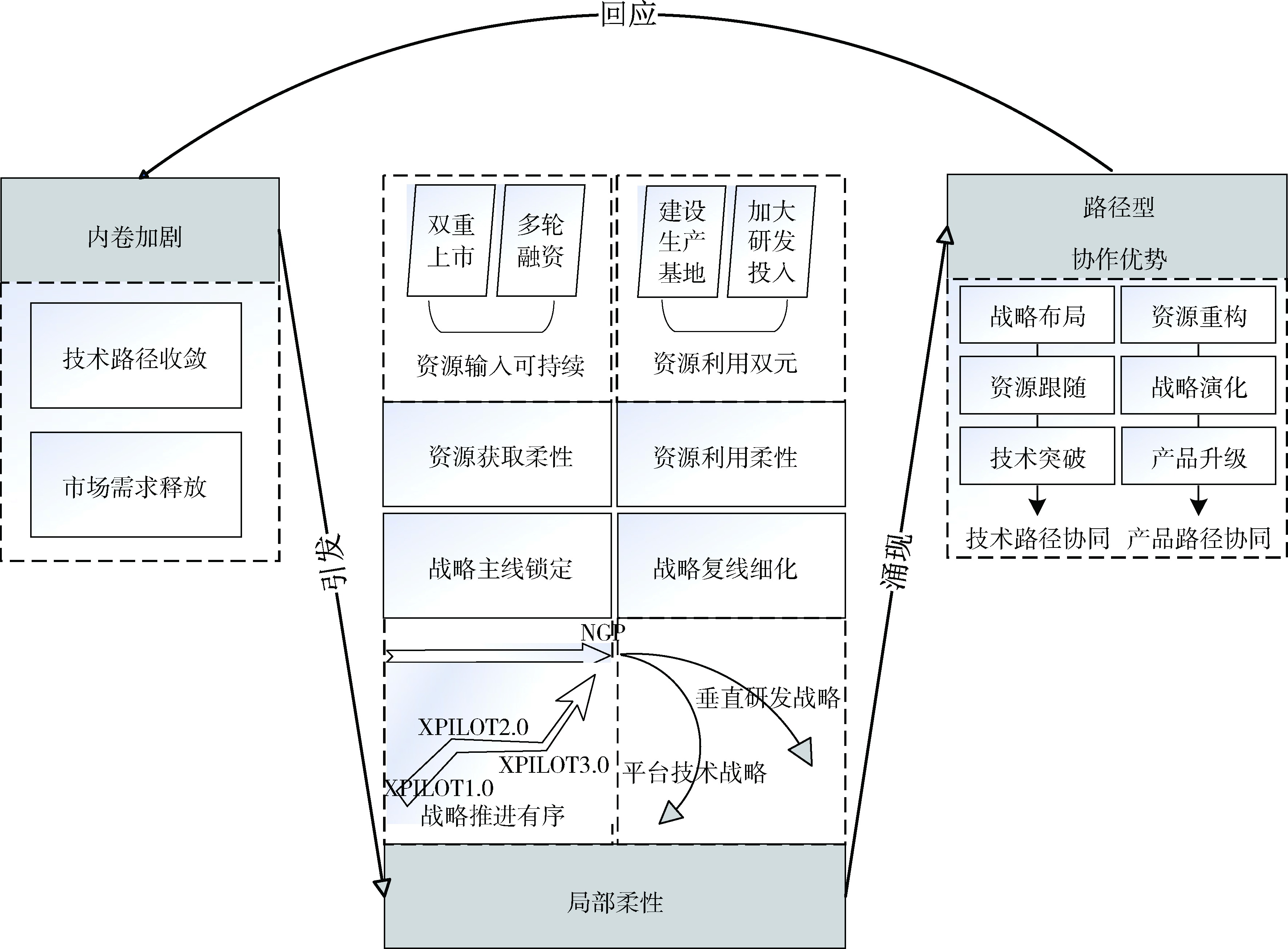
图6 内卷加速阶段的局部柔性与路径型协作优势涌现
Figure 6 Acceleration stage of involution with emerging partial flexibility and path-based collaboration advantages
| 聚合构念 | 二阶主题 | 一阶概念 | 典型证据 |
|---|---|---|---|
| 内卷加剧 | 技术路径收敛 | 自动驾驶L2级普及 | 2022年,具备组合辅助驾驶功能的L2级乘用车新车渗透率达到了34.5%。 |
| 技术周期缩短 | 每款曾经具备一定技术领先性的产品,都过快地淹没在竞品的海洋中。 | ||
| 市场需求释放 | 消费意愿提升 | 2022年中国新能源乘用车市场规模接近600万辆,对乘用车市场的渗透率达到27.6%。 | |
| 市场结构分化 | 新能源汽车的市场结构表现为低、高端车为主的“哑铃型”。 | ||
| 局部柔性 | 资源获取柔性 | 双重上市 | 2020年,小鹏在纽约证券交易所挂牌上市。 2021年,小鹏在香港交易所挂牌上市。 |
| 持续融资 | 截至上市之前,已经历了11轮融资。 | ||
| 资源利用柔性 | 建立生产基地 | 2019年小鹏肇庆工厂全面投产试用。 | |
| 高强度研发投入 | 截至2020年6月30日,小鹏汽车3676名员工43%为研发人员。 自2018年至2022年第二季度末,小鹏已累计研发投入超110亿元。 | ||
| 战略主线锁定 | 智能化主线 | 就在这时……何小鹏认为小鹏汽车的核心竞争力是智能化,拥有自主研发的全栈式自动驾驶技术和操作系统。 | |
| 战略推进有序 | 当时最初的这种,它叫XPILOT,应该叫1.0,当时应该刚出来。然后后面慢慢进化到2.0、2.5、3.0。 | ||
| 战略复线细化 | 平台技术战略 | 小鹏汽车每一个平台都能够生产不同的车型,每一个平台都能够满足不同客户的需求。 | |
| 垂直研发战略 | 围绕在一款产品同一时间研发的垂直矩阵。 | ||
| 局部刚性 | 资源不可持续 | 连续上市失败 | 威马汽车曾经是上交所科创板的明星扶持企业……SH把目光直接对准了美股……他立马改弦更张,把目标对准了港股……2022年计划在港股上市,然而因销量及营收等未达到港股的上市要求,威马汽车上市中止。 |
| 销量回血困难 | 威马2022年1—11月累计销量为2.93万辆,月均销量仅2700台左右。 | ||
| 战略体系混乱 | 战略主线不清 | 一上来就希望造的车所有人都喜欢,希望成为大众、丰田,但仔细看,这些品牌的车都比较大众化,相对比较平庸。 | |
| 战略支线混乱 | 创业之初,威马……采用的直销模式……2019年6月,威马回归传统车企采用的经销模式。2020年,威马更是开启了自产自销模式,鼓励高管开店做经销商…… | ||
| 路径型 协作优势 | 技术上:战略布局 引领资源配置 | 战略布局引导 资源跟随 | 作为一家专注于未来出行的科技公司,2018—2021年研发投入在新势力车企中持续稳定前三甲。 |
| 资源跟随强化 技术领先 | 技术储备就是在智能化这一块,我们认为比国内的这些厂商可能会领先12—15个月的这种水平。 | ||
| 产品上:资源重构 促进战略演化 | 资源重构促进 战略演化 | 现在碰到大量的成本挑战……因此,需要以全场景、低成本自动驾驶为标配形成抓手。 | |
| 战略演化促进 产品升级 | 小鹏汽车的城市NGP功能于2022年9月在广州开放,并搭载P5产品。 |
表3 企业局部柔性与路径型协作优势涌现典型证据援引
Table 3 Evidence of partial flexibility and path-based collaboration advantages in firms
| 聚合构念 | 二阶主题 | 一阶概念 | 典型证据 |
|---|---|---|---|
| 内卷加剧 | 技术路径收敛 | 自动驾驶L2级普及 | 2022年,具备组合辅助驾驶功能的L2级乘用车新车渗透率达到了34.5%。 |
| 技术周期缩短 | 每款曾经具备一定技术领先性的产品,都过快地淹没在竞品的海洋中。 | ||
| 市场需求释放 | 消费意愿提升 | 2022年中国新能源乘用车市场规模接近600万辆,对乘用车市场的渗透率达到27.6%。 | |
| 市场结构分化 | 新能源汽车的市场结构表现为低、高端车为主的“哑铃型”。 | ||
| 局部柔性 | 资源获取柔性 | 双重上市 | 2020年,小鹏在纽约证券交易所挂牌上市。 2021年,小鹏在香港交易所挂牌上市。 |
| 持续融资 | 截至上市之前,已经历了11轮融资。 | ||
| 资源利用柔性 | 建立生产基地 | 2019年小鹏肇庆工厂全面投产试用。 | |
| 高强度研发投入 | 截至2020年6月30日,小鹏汽车3676名员工43%为研发人员。 自2018年至2022年第二季度末,小鹏已累计研发投入超110亿元。 | ||
| 战略主线锁定 | 智能化主线 | 就在这时……何小鹏认为小鹏汽车的核心竞争力是智能化,拥有自主研发的全栈式自动驾驶技术和操作系统。 | |
| 战略推进有序 | 当时最初的这种,它叫XPILOT,应该叫1.0,当时应该刚出来。然后后面慢慢进化到2.0、2.5、3.0。 | ||
| 战略复线细化 | 平台技术战略 | 小鹏汽车每一个平台都能够生产不同的车型,每一个平台都能够满足不同客户的需求。 | |
| 垂直研发战略 | 围绕在一款产品同一时间研发的垂直矩阵。 | ||
| 局部刚性 | 资源不可持续 | 连续上市失败 | 威马汽车曾经是上交所科创板的明星扶持企业……SH把目光直接对准了美股……他立马改弦更张,把目标对准了港股……2022年计划在港股上市,然而因销量及营收等未达到港股的上市要求,威马汽车上市中止。 |
| 销量回血困难 | 威马2022年1—11月累计销量为2.93万辆,月均销量仅2700台左右。 | ||
| 战略体系混乱 | 战略主线不清 | 一上来就希望造的车所有人都喜欢,希望成为大众、丰田,但仔细看,这些品牌的车都比较大众化,相对比较平庸。 | |
| 战略支线混乱 | 创业之初,威马……采用的直销模式……2019年6月,威马回归传统车企采用的经销模式。2020年,威马更是开启了自产自销模式,鼓励高管开店做经销商…… | ||
| 路径型 协作优势 | 技术上:战略布局 引领资源配置 | 战略布局引导 资源跟随 | 作为一家专注于未来出行的科技公司,2018—2021年研发投入在新势力车企中持续稳定前三甲。 |
| 资源跟随强化 技术领先 | 技术储备就是在智能化这一块,我们认为比国内的这些厂商可能会领先12—15个月的这种水平。 | ||
| 产品上:资源重构 促进战略演化 | 资源重构促进 战略演化 | 现在碰到大量的成本挑战……因此,需要以全场景、低成本自动驾驶为标配形成抓手。 | |
| 战略演化促进 产品升级 | 小鹏汽车的城市NGP功能于2022年9月在广州开放,并搭载P5产品。 |
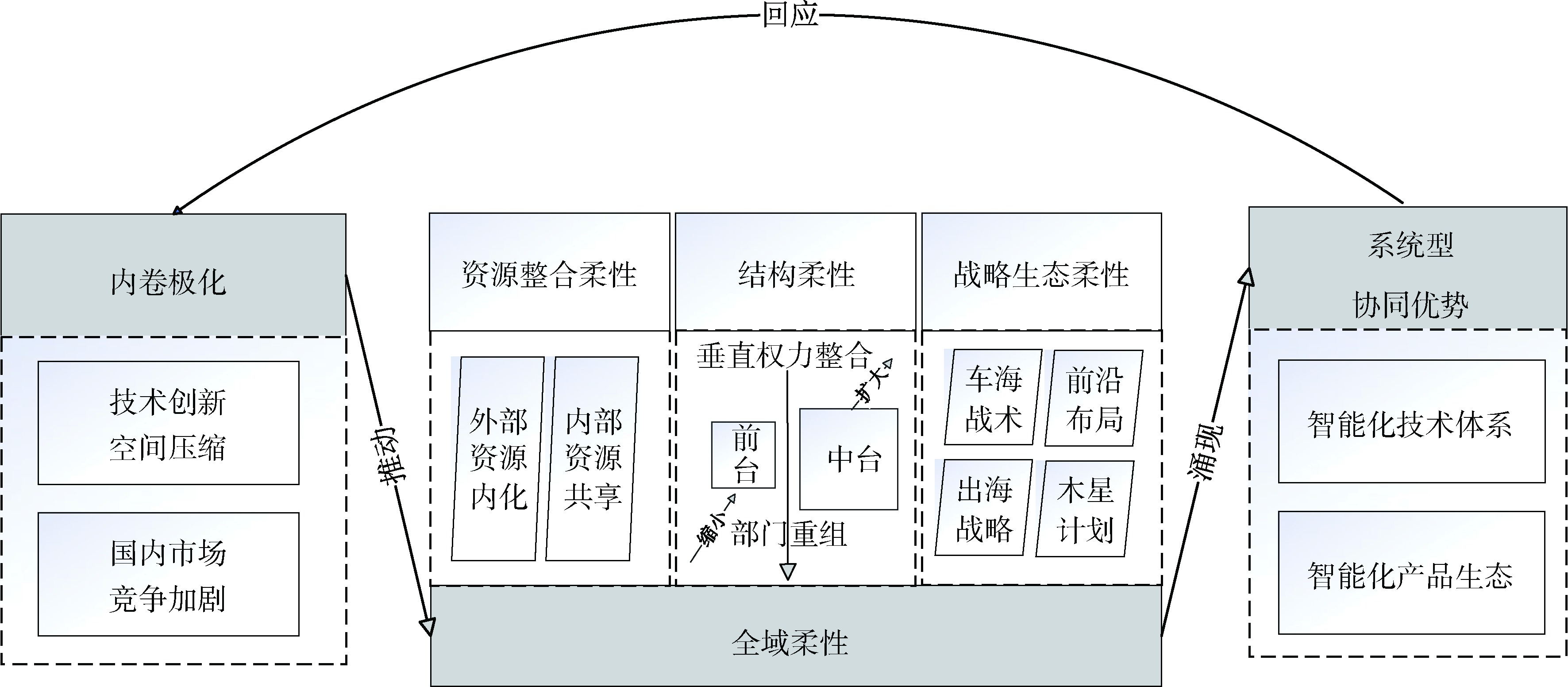
图7 内卷极化阶段的全域柔性与系统型协同优势涌现
Figure 7 Polarization stage of involution with emerging global flexibility and systematic synergy advantages
| 聚合构念 | 二阶主题 | 一阶概念 | 典型证据 |
|---|---|---|---|
| 内卷极化 | 技术创新 空间压缩 | 全行业智能化竞速 | 汽车产品、汽车企业和汽车产业都正在被AI重新定义,AI驱动将成为未来汽车企业的底层竞争力。 |
| 电池技术稳定 | 传统三元锂电池的能量密度已经接近极限……想要提高电池的能量密度或续航里程,难度非常大。全固态电池技术尚未成熟…… | ||
| 国内市场 竞争加剧 | 行业整体降价 | 新能源汽车市场走向“全面价格战”,纯电动车型平均降价3.9万元,降幅17%。北汽极狐阿尔法S5、一汽—大众ID.系列等车型降幅甚至超过20%。 | |
| 中低端市场智能化竞赛 | 长安汽车宣布2025年要在10万元级别的车型上搭载激光雷达;零跑汽车宣布“智驾全民化”;吉利称,将“成为智能汽车AI科技的普及者”。 | ||
| 全域柔性 | 资源 整合柔性 | 外部资源内化 | 我们和小鹏首次创新了这种“厂中厂”模式。 |
| 内部资源共享 | 和大众汽车集团合作共享G9平台,提前解决了G9平台的平摊成本,换来约7亿美元增资。 | ||
| 垂直权力整合 | 五大委员会、三大产品矩阵。 | ||
| 结构柔性 | |||
| 部门重组有序 | 将小鹏汽贸和销售两个部门合二为一,大量中台放在前台,把原来大中台变成一块小的前台…… 小鹏将技术开发部门拆成了三个部门,分别是AI端到端、AI应用、AI能效。 | ||
| 产品矩阵多元化 | 小鹏推行“车海战术”,在2025年密集发布多款新车,包括P7i、G6的改款车型及与滴滴合作的MONA M03。 | ||
| 战略 生态柔性 | |||
| 技术研发前瞻化 | 把端到端运用到自动驾驶领域…… 创建云端模型工厂…… 超前布局“物理AI”。 | ||
| 市场拓展全球化 | 小鹏汽车公布了其“出海2.0”规划……到2025年底,该公司目标为进入全球超过60个国家和地区市场。 | ||
| 运营效率精益化 | 小鹏依靠“木星计划”将全国24个销售区缩减为12个,并且逐步淘汰效率低下的直营门店,扩大代理经销商的门店规模。 | ||
| 全域刚性 | 资源整合 低效 | 资源配置集权 | 所有关键预算、节奏、节点都由SH主导,中层领导的执行权力非常小,推动项目非常依赖高层…… |
| 资源投放低效 | 威马走的是传统的经销模式……增加了中间的损耗成本,比如门店补贴,渠道返利等等。 | ||
| 核心技术依赖 | 因为百度强势的竞业条款限制了其自动驾驶技术的研发…… | ||
| 组织结构 僵化 | 部门内部冲突 | 如果想让产品上市时有竞争力,必须要改变……然而,H所领导的成都研究院答复做不了。 | |
| 结构扩张过载 | 威马在以传统经销模式实现迅速扩张,……突破了621家合作伙伴门店,同比增长250%,但仅一年后,就关了四分之一。 | ||
| 战略转型 僵化 | |||
| 智能化布局落后 | 我认为真正的自动驾驶还早着呢。初创企业如果把自动驾驶作为真正的切入点,我认为是不现实的。 | ||
| 战略执行不畅 | 2021年10月,搭载3颗激光雷达的威马M7正式首发,预计2022年内交付。但时至今日威马M7都未能兑现诺言。 | ||
| 战略反馈弱化 | 连续几起“自燃”事件后,威马坚称自家汽车没有问题,随后抛出“碰撞导致自燃”的推辞。 | ||
| 系统型 协同优势 | 智能化技术 生态建构 | 智能化技术网络 | “AI+”智能汽车生态 |
| 智能化座椅—天玑系统 | |||
| XNGP城市自动驾驶生态 | |||
| 技术主体多元 | 与华为、高德、大众、滴滴等展开合作。 | ||
| 智能化产品 生态建构 | 跨行业产品矩阵 | 产品矩阵涵盖机器人、飞行汽车、电动汽车。 | |
| 市场覆盖广泛 | 产品矩阵覆盖中低档(MONA M03)、中档(P7)和高档车型(G9、X9)。 国际市场也表现亮眼,小鹏G6是欧洲中高端纯电中型SUV市场销量最高的中国车型,G9则是欧洲中高端纯电中大型SUV市场销量最高的中国车型。 |
表4 全域柔性与系统型协同优势涌现典型证据援引
Table 4 Evidence of global flexibility and systematic synergy advantages in firms
| 聚合构念 | 二阶主题 | 一阶概念 | 典型证据 |
|---|---|---|---|
| 内卷极化 | 技术创新 空间压缩 | 全行业智能化竞速 | 汽车产品、汽车企业和汽车产业都正在被AI重新定义,AI驱动将成为未来汽车企业的底层竞争力。 |
| 电池技术稳定 | 传统三元锂电池的能量密度已经接近极限……想要提高电池的能量密度或续航里程,难度非常大。全固态电池技术尚未成熟…… | ||
| 国内市场 竞争加剧 | 行业整体降价 | 新能源汽车市场走向“全面价格战”,纯电动车型平均降价3.9万元,降幅17%。北汽极狐阿尔法S5、一汽—大众ID.系列等车型降幅甚至超过20%。 | |
| 中低端市场智能化竞赛 | 长安汽车宣布2025年要在10万元级别的车型上搭载激光雷达;零跑汽车宣布“智驾全民化”;吉利称,将“成为智能汽车AI科技的普及者”。 | ||
| 全域柔性 | 资源 整合柔性 | 外部资源内化 | 我们和小鹏首次创新了这种“厂中厂”模式。 |
| 内部资源共享 | 和大众汽车集团合作共享G9平台,提前解决了G9平台的平摊成本,换来约7亿美元增资。 | ||
| 垂直权力整合 | 五大委员会、三大产品矩阵。 | ||
| 结构柔性 | |||
| 部门重组有序 | 将小鹏汽贸和销售两个部门合二为一,大量中台放在前台,把原来大中台变成一块小的前台…… 小鹏将技术开发部门拆成了三个部门,分别是AI端到端、AI应用、AI能效。 | ||
| 产品矩阵多元化 | 小鹏推行“车海战术”,在2025年密集发布多款新车,包括P7i、G6的改款车型及与滴滴合作的MONA M03。 | ||
| 战略 生态柔性 | |||
| 技术研发前瞻化 | 把端到端运用到自动驾驶领域…… 创建云端模型工厂…… 超前布局“物理AI”。 | ||
| 市场拓展全球化 | 小鹏汽车公布了其“出海2.0”规划……到2025年底,该公司目标为进入全球超过60个国家和地区市场。 | ||
| 运营效率精益化 | 小鹏依靠“木星计划”将全国24个销售区缩减为12个,并且逐步淘汰效率低下的直营门店,扩大代理经销商的门店规模。 | ||
| 全域刚性 | 资源整合 低效 | 资源配置集权 | 所有关键预算、节奏、节点都由SH主导,中层领导的执行权力非常小,推动项目非常依赖高层…… |
| 资源投放低效 | 威马走的是传统的经销模式……增加了中间的损耗成本,比如门店补贴,渠道返利等等。 | ||
| 核心技术依赖 | 因为百度强势的竞业条款限制了其自动驾驶技术的研发…… | ||
| 组织结构 僵化 | 部门内部冲突 | 如果想让产品上市时有竞争力,必须要改变……然而,H所领导的成都研究院答复做不了。 | |
| 结构扩张过载 | 威马在以传统经销模式实现迅速扩张,……突破了621家合作伙伴门店,同比增长250%,但仅一年后,就关了四分之一。 | ||
| 战略转型 僵化 | |||
| 智能化布局落后 | 我认为真正的自动驾驶还早着呢。初创企业如果把自动驾驶作为真正的切入点,我认为是不现实的。 | ||
| 战略执行不畅 | 2021年10月,搭载3颗激光雷达的威马M7正式首发,预计2022年内交付。但时至今日威马M7都未能兑现诺言。 | ||
| 战略反馈弱化 | 连续几起“自燃”事件后,威马坚称自家汽车没有问题,随后抛出“碰撞导致自燃”的推辞。 | ||
| 系统型 协同优势 | 智能化技术 生态建构 | 智能化技术网络 | “AI+”智能汽车生态 |
| 智能化座椅—天玑系统 | |||
| XNGP城市自动驾驶生态 | |||
| 技术主体多元 | 与华为、高德、大众、滴滴等展开合作。 | ||
| 智能化产品 生态建构 | 跨行业产品矩阵 | 产品矩阵涵盖机器人、飞行汽车、电动汽车。 | |
| 市场覆盖广泛 | 产品矩阵覆盖中低档(MONA M03)、中档(P7)和高档车型(G9、X9)。 国际市场也表现亮眼,小鹏G6是欧洲中高端纯电中型SUV市场销量最高的中国车型,G9则是欧洲中高端纯电中大型SUV市场销量最高的中国车型。 |
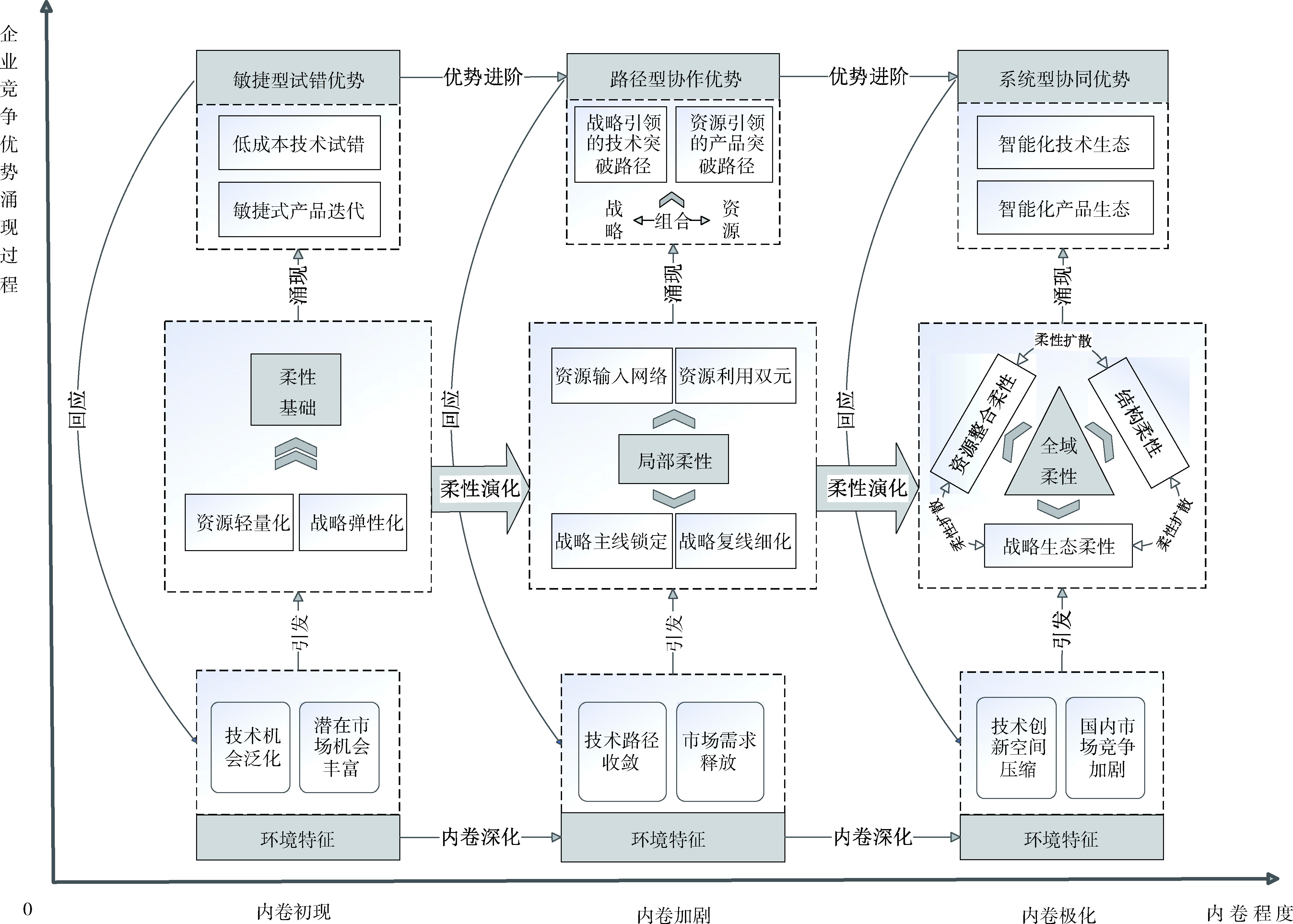
图8 内卷情境下新能源车企柔性演化机制推动竞争优势连续性涌现的过程模型
Figure 8 Process model of how flexible evolution mechanisms of new energy vehicle firms under involution drive the continuous emergence of competitive advantages
| [1] | 周炜杰. 破解民营经济的“内卷困境”:马克思主义政治经济学视域下的分析[J/OL]. 当代经济管理, 1-16[2025-11-12]. https://link.cnki.net/urlid/13.1356.F.20251103.1330.004. |
| Zhou W J. Breaking through the "involution dilemma" of the private economy: An analysis from the perspective of Marxist political economy[J/OL]. Contemporary Economic Management, 1-16 [2025-11-12]. | |
| [2] | 蔡之兵. 竞争过度还是竞争不足:“反内卷”的认知误区、操作难点和政策建议[J]. 河北学刊, 2025, 45(6): 12-20. |
| Cai Z B. Excessive competition or insufficient competition: Cognitive misunderstandings, operational difficulties and policy recommendations for "anti-involution"[J]. Hebei Academic Journal, 2025, 45(6):12-20. | |
| [3] | 王海燕, 张占斌. “内卷式”竞争:表现、成因及治理[J]. 改革, 2025(3):11-21. |
| Wang H Y, Zhang Z B. "Involution" competition: Performance, causes and governance[J]. Reform, 2025(3): 11-21. | |
| [4] | 高柏. 走出幼稚期的新能源汽车:产业政策亟待升级换代[J]. 文化纵横, 2025(5): 76-85,159. |
| Gao B. New energy vehicles after infancy: Industrial policy in urgent need of upgrading[J]. Beijing Cultural Review, 2025(5): 76-85,159. | |
| [5] | 李晓华. 中国“新三样”产业发展面临的挑战与机遇——“内卷式”竞争如何“破圈突围”[J]. 人民论坛, 2025(1): 62-66. |
| Li X H. Challenges and opportunities in the development of China's "new three" industries: How to break out of "involution-style" competition[J]. People's Tribune, 2025(1): 62-66. | |
| [6] | 范旭, 徐彦申. 柔性涌现与刚性锁定:新能源汽车企业生存分化的机制解析[J/OL]. 当代经济管理, 1-16[2026-11-15]. https://link.cnki.net/urlid/13.1356.F.20250909.1538.002. |
| Fan X, Xu Y S. Flexible emergence and rigid lock-in: Mechanisms underlying survival divergence among new energy vehicle firms[J/OL]. Contemporary Economic Management, 1-16[2026-11-15]. | |
| [7] | 杨震宁, 侯一凡, 李德辉, 等. 中国企业“双循环”中开放式创新网络的平衡效应——基于数字赋能与组织柔性的考察[J]. 管理世界, 2021, 37 (11): 184-205,12. |
| Yang Z N, Hou Y F, Li D H, et al. The balancing effect of open innovation networks in the "dual circulation" of Chinese enterprises: An investigation based on digital empowerment and organizational flexibility[J]. Journal of Management World, 2021, 37 (11): 184-205,12. | |
| [8] | 周玉泉, 李垣. 合作学习、组织柔性与创新方式选择的关系研究[J]. 科研管理, 2006(2): 9-14. |
| Zhou Y Q, Li Y. The effects of cooperative learning on organizational flexibility and innovation[J]. Science Research Management, 2006(2): 9-14. | |
| [9] | 孙宝文, 涂艳, 王天梅, 等. 企业战略柔性关键影响因素实证研究[J]. 中国软科学, 2010(12): 132-144. |
| Sun B W, Tu Y, Wang T M, et al. Research on critical influencing factors of enterprises' strategic flexibility[J]. China Soft Science, 2010(12): 132-144. | |
| [10] | 郭斌, 孙爱英. 企业资源与组合创新的关系研究[J]. 科学学与科学技术管理, 2009, 30 (3): 69-72. |
| Guo B, Sun A Y. Study on the relationship between the corporation resource and portfolio innovation[J]. Science of Science and Management of S.& T., 2009, 30 (3): 69-72. | |
| [11] | Volberda H W. Toward the flexible form: How to remain vital in hypercompetitive environments[J] Organization Science, 1996(7): 359-374. |
| [12] |
Zhang M, Tansuhaj P S. Organizational culture, information technology capability, and performance: The Case of Born Global Firms[J]. Multinational Business Review, 2007, 15(3): 43-78.
DOI URL |
| [13] | 蒋峦, 李忠顺, 谢卫红, 等. 组织柔性与环境动态性下时间节奏对创新绩效的影响[J]. 管理学报, 2015, 12 (9): 1337-1342,1360. |
| Qin L, Li Z S, Xie W H, et al. The impact of time pacing on innovation performance under organizational flexibility and environmental dynamism[J]. Chinese Journal of Management, 2015, 12 (9): 1337-1342,1360. | |
| [14] | 熊胜绪, 李婷. 组织柔性对企业创新绩效的影响[J]. 中南财经政法大学学报, 2019(2): 138-146. |
| Xiong S X, Li T. The impact of organizational flexibility on firm innovation performance[J]. Journal of Zhongnan University of Economics and Law, 2019(2): 138-146. | |
| [15] | 刘博, 刘超, 刘新梅. 组织创造力与创新绩效:长期导向与战略柔性的联合调节作用[J]. 当代经济科学, 2024, 46 (1): 131-140. |
| Liu B, Liu C, Liu X M. Organizational creativity and innovation performance: The moderating role of long-term orientation and strategic flexibility[J]. Modern Economic Science, 2024, 46 (1): 131-140. | |
| [16] |
Smith W K, Besharov M L. Bowing before dual gods: How structured flexibility sustains organizational hybridity[J]. Administrative Science Quarterly, 2019, 64(1): 1-44.
DOI URL |
| [17] | 李婉红, 王帆. 数字创新、战略柔性与企业智能化转型——考虑环境复杂性的调节效应[J]. 科学学研究, 2023, 41(3): 521-533. |
| Li W H, Wang F. Digital innovation, strategic flexibility and enterprise intelligent transformation: Based on the moderating effect of environmental complexity[J]. Studies in Science of Science, 2023, 41(3): 521-533. | |
| [18] |
Helfat C E, Raubitschek R S. Dynamic and integrative capabilities for profiting from innovation in digital platform-based ecosystems[J]. Research Policy, 2018, 47(8): 1391-1399.
DOI URL |
| [19] | 向希尧, 朱孟琪, 杨怡乐. 价值网络视角下跨界整合对企业创新绩效的影响——组织柔性的中介效应[J]. 科技进步与对策, 2024, 41 (16): 128-138. |
| Xiang X Y, Zhu M Q, Yang Y L. The impact of cross-boundary integration on innovation performance from the perspective of value networks: The mediating effect of organizational flexibility[J]. Science & Technology Progress and Policy, 2024, 41(16): 128-138. | |
| [20] |
Tiwari G, Pariwesh N, Kumar R R. Investigating linkages between industry 4.0 technologies and sustainability: A sequential mediation analysis[J]. Business Strategy and the Environment, 2025, 34(6): 7284-7299.
DOI URL |
| [21] |
Anderson P. Perspective: Complexity theory and organization science[J]. Organization Science, 1999, 10(3): 216-232.
DOI URL |
| [22] |
Chia R, Holt R. Strategy as practical coping: A Heideggerian perspective[J]. Organization Studies, 2006, 27(5): 635-655.
DOI URL |
| [23] |
Teece D J, David J, Gary P, Shuen A. Dynamic capabilities and strategic management[J]. Strategic Management Journal, 1997, 18(7): 509-533.
DOI URL |
| [24] |
Eisenhardt K M. Better stories and better constructs: The case for rigor and comparative logic[J]. Academy of Management Review, 1991, 16(3): 620-627.
DOI URL |
| [25] |
Bessant J, Lamming R, Noke H, et al. Managing innovation beyond the steady state[J]. Technovation, 2005, 25(12): 1366-1376.
DOI URL |
| [26] | 刘海潮. 不同战略变化路径下冗余资源的角色差异性——基于竞争视角的研究[J]. 科学学与科学技术管理, 2011, 32(1): 110-115. |
| Liu H C. A study on the role difference of slack during the process of strategic change based on competitive detentions[J]. Science of Science and Management of S.& T., 2011, 32(1): 110-115. | |
| [27] | 牛璐, 陈志军, 刘振, 等. 打破技术封锁:逆机会与资源稀缺双困局下的大企业创业——基于资源拼凑与编排的纾解[J]. 南开管理评论, 2025, 28(2): 67-79. |
| Niu L, Chen Z J, Liu Z, et al. Breaking the technological blockade: Entrepreneur ship of large enterprises under the double dilemma of counter opportunity and resource scarcity: reduction based on resource bricolage and orchestration[J]. Nankai Business Review, 2025, 28(2): 67-79. |
| [1] | 张昊男, 王皓月, 邢蕊, 朱方伟, 高艳虹. 原始创新中科学研究与技术研发迭代机制研究[J]. 科学学研究, 2026, 44(6): 1217-1228. |
| [2] | 耿红军, 王昶, 姚海琳. 新兴技术产业的创新政策实施策略组合研究[J]. 科学学研究, 2026, 44(2): 245-254. |
| [3] | 郑爱琳 蓝海林. 后发企业复杂技术追赶战略———多重制度逻辑视角的双案例纵向对比分析[J]. 科学学研究, 2025, 43(2): 371-381. |
| [4] | 赵天一 王宏起 李玥 邓倩玉. 新兴产业创新生态系统综合优势形成机理———以新能源汽车产业为例[J]. 科学学研究, 2023, 41(12): 2267-2278. |
| [5] | 刘金亚 马雨萌 李鑫鑫. “双积分”政策对新能源车企技术创新的影响研究[J]. 科学学研究, 2023, 41(10): 1887-1896. |
| [6] | 王媛 曾德明 陈静 于英杰. 技术融合、技术动荡性与新产品开发绩效研究 [J]. 科学学研究, 2020, 38(3): 488-495. |
| [7] | 黄子洋 余翔 尹聪慧. 颠覆性技术的政策保护空间研究——基于战略生态位管理视角[J]. 科学学研究, 2019, 37(4): 607-616. |
| [8] | 张路蓬 薛澜 周源 张笑. 战略性新兴产业创新网络的演化机理分析 ——基于中国2000-2015年新能源汽车产业的实证[J]. 科学学研究, 2018, 36(6): 1027-1035. |
| [9] | 余谦 刘嘉玲. 技术邻近动态下创新超网络的演化机理研究[J]. 科学学研究, 2018, 36(5): 946-954. |
| [10] | 张政,赵飞. 中美新能源骑车发展战略比较研究——基于目标导向差异的研究视角[J]. 科学学研究, 2014, 32(4): 531-535. |
| 阅读次数 | ||||||
|
全文 |
|
|||||
|
摘要 |
|
|||||
