
- 中国科学学与科技政策研究会
- 中国科学院科技战略咨询研究院
- 清华大学科学技术与社会研究中心
ISSN 1003-2053 CN 11-1805/G3
科学学研究 ›› 2024, Vol. 42 ›› Issue (1): 67-75.
张利飞( ), 张嘉文
收稿日期:2022-10-31
修回日期:2023-01-02
出版日期:2024-01-15
发布日期:2024-01-15
作者简介:张利飞(1979-),女,副教授,博士,E-mail:lifei@hnu.edu.cn。基金资助:
ZHANG Li-fei(), ZHANG Jia-wen
Received:2022-10-31
Revised:2023-01-02
Online:2024-01-15
Published:2024-01-15
摘要:
随着全球通信企业技术标准竞争的加剧,原来频发于后发企业的技术引进活动,近年来也在技术领先型企业中发生。本文将着力于解释那些技术领先型企业通过技术引进,整合内外部技术,推动技术标准国际化的基本过程。以2000-2019年全球技术领先型通信企业为研究样本,探究技术引进对企业技术标准国际化的影响及其实现机制。研究结果表明,技术引进显著促进企业技术标准国际化,但是技术引进在当期模型中影响力更大,由于通信领域技术和产品更新迭代非常快,通信企业的技术引进大多以产品创新为目标,需要企业在短时间消化吸收技术以推动产品竞争,实现用户规模优势,进一步为技术标准国际竞争抢占先机。进一步机制检验发现,研发投入是技术“引进来”阶段助力企业实现自主创新的重要因素,产品国际化贸易和专利国际化是推动企业将自主创新成果转化为国际标准的重要渠道。异质性分析结果显示,发达国家企业、高龄企业能在更短的时间内实现技术引进、消化吸收和再创新,并迅速转化为国际技术标准能力。发展中国家企业和低龄企业则需要更长的技术吸收周期来形成自身技术标准能力。
中图分类号:
张利飞, 张嘉文. 从技术“引进来”到标准“走出去”——基于全球通信企业的实证研究[J]. 科学学研究, 2024, 42(1): 67-75.
ZHANG Li-fei, ZHANG Jia-wen. From "bringing in" of technology to "going out" of standards: An empirical study based on global communication enterprises[J]. Studies in Science of Science, 2024, 42(1): 67-75.
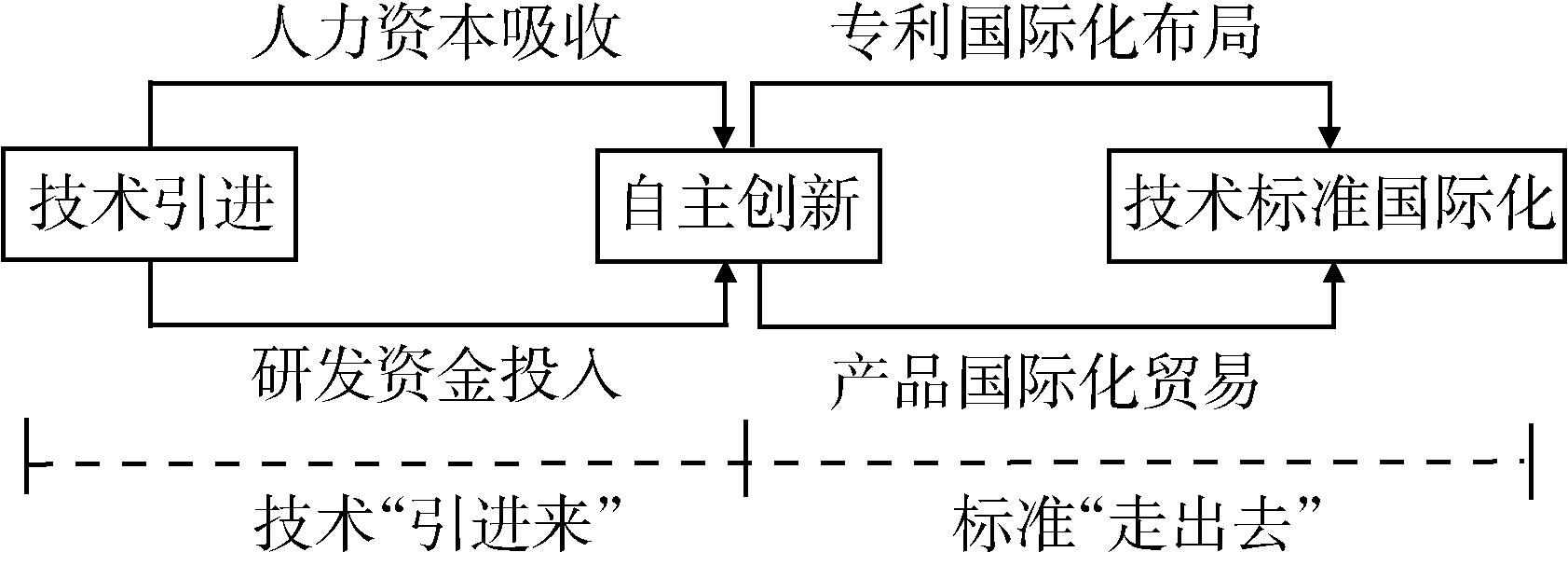
图1 从技术“引进来”到标准“走出去”的实现机制
Figure 1 Implementation mechanism from technology "introduction" to standard "going global"
| 类型 | 名称 | 测度方式 | 代码 | 智慧芽数据库检索字段 |
|---|---|---|---|---|
| 因变量 | 技术标准国际化 | 标准必要专利数 | SEP | SEP:1 AND ALL_AN:(公司名) |
| 自变量 | 技术引进 | 国内外专利转进数 | TI | TRANSFER_AFTER:(公司名) |
| 机制变量 | 自主创新能力 | 自主研发专利数 | IR | AN:(公司名) AND AN_COUNT:1 |
| 产品国际化贸易 | 国外销售金额 | FS | ||
| 专利国际化 | 国际专利数 | PCT | AUTHORITY:(WO) AND ALL_AN:(公司名) | |
| 控制变量 | 企业年龄 | 2019-企业成立年份 | AGE | |
| 研发投入 | 研发费用 | R&D | ||
| 技术许可 | 国内外专利受许可数 | LIC | LICENSEE:(公司名) NOT ANC:(公司名) |
表1 变量定义表
Table 1 Variable definition table
| 类型 | 名称 | 测度方式 | 代码 | 智慧芽数据库检索字段 |
|---|---|---|---|---|
| 因变量 | 技术标准国际化 | 标准必要专利数 | SEP | SEP:1 AND ALL_AN:(公司名) |
| 自变量 | 技术引进 | 国内外专利转进数 | TI | TRANSFER_AFTER:(公司名) |
| 机制变量 | 自主创新能力 | 自主研发专利数 | IR | AN:(公司名) AND AN_COUNT:1 |
| 产品国际化贸易 | 国外销售金额 | FS | ||
| 专利国际化 | 国际专利数 | PCT | AUTHORITY:(WO) AND ALL_AN:(公司名) | |
| 控制变量 | 企业年龄 | 2019-企业成立年份 | AGE | |
| 研发投入 | 研发费用 | R&D | ||
| 技术许可 | 国内外专利受许可数 | LIC | LICENSEE:(公司名) NOT ANC:(公司名) |
| 变量 | SEP | TI | AGE | R&D | LIC |
|---|---|---|---|---|---|
| SEP | 1 | ||||
| TI | 0.266*** | 1 | |||
| AGE | 0.120*** | 0.206*** | 1 | ||
| R&D | 0.209 *** | 0.488*** | 0.245*** | 1 | |
| LIC | 0.122*** | 0.444*** | -0.016 | 0.230*** | 1 |
| 平均值 | 249.007 | 280.236 | 46.949 | 1914437 | 0.825 |
| 标准差 | 622.305 | 687.621 | 41.284 | 3043380 | 2.877 |
表2 变量相关系数表
Table 2 Variable correlation coefficient
| 变量 | SEP | TI | AGE | R&D | LIC |
|---|---|---|---|---|---|
| SEP | 1 | ||||
| TI | 0.266*** | 1 | |||
| AGE | 0.120*** | 0.206*** | 1 | ||
| R&D | 0.209 *** | 0.488*** | 0.245*** | 1 | |
| LIC | 0.122*** | 0.444*** | -0.016 | 0.230*** | 1 |
| 平均值 | 249.007 | 280.236 | 46.949 | 1914437 | 0.825 |
| 标准差 | 622.305 | 687.621 | 41.284 | 3043380 | 2.877 |
| 因变量 | SEPt | SEPt+1 | SEPt+2 |
|---|---|---|---|
| (1) | (2) | (3) | |
| TI | 0.047** (0.0194) | 0.035* (0.0203) | 0.030 (0.0214) |
| AGE | 0.234*** (0.0428) | 0.228*** (0.0430) | 0.218*** (0.0434) |
| R&D | 0.063*** (0.0108) | 0.063*** (0.0112) | 0.065*** (0.0116) |
| LIC | -0.046 (0.0437) | -0.046 (0.0460) | -0.041 (0.0480) |
| CONS | -2.578*** (0.191) | -2.212*** (0.180) | -1.957*** (0.176) |
| 个体/时间固定效应 | YES | YES | YES |
| 观测值 | 1340 | 1273 | 1206 |
| Chi2 | 577.41 | 470.98 | 390.10 |
表3 技术引进对技术标准国际化影响回归结果
Table 3 Regression results of the impact of technology introduction on the internationalization of technical standards
| 因变量 | SEPt | SEPt+1 | SEPt+2 |
|---|---|---|---|
| (1) | (2) | (3) | |
| TI | 0.047** (0.0194) | 0.035* (0.0203) | 0.030 (0.0214) |
| AGE | 0.234*** (0.0428) | 0.228*** (0.0430) | 0.218*** (0.0434) |
| R&D | 0.063*** (0.0108) | 0.063*** (0.0112) | 0.065*** (0.0116) |
| LIC | -0.046 (0.0437) | -0.046 (0.0460) | -0.041 (0.0480) |
| CONS | -2.578*** (0.191) | -2.212*** (0.180) | -1.957*** (0.176) |
| 个体/时间固定效应 | YES | YES | YES |
| 观测值 | 1340 | 1273 | 1206 |
| Chi2 | 577.41 | 470.98 | 390.10 |
| 变量 | IR |
|---|---|
| TI | 0.177*** (0.0143) |
| AGE | 0.494*** (0.0372) |
| R&D | 0.080*** (0.0090) |
| LIC | 0.036 (0.0257) |
| CONS | -2.421*** (0.1440) |
| 个体/时间固定效应 | YES |
| 观测值 | 1302 |
| Chi2 | 1103.39 |
表4 机制检验:技术引进对自主创新的影响结果
Table 4 Mechanism test: The impact of technology introduction on independent innovation
| 变量 | IR |
|---|---|
| TI | 0.177*** (0.0143) |
| AGE | 0.494*** (0.0372) |
| R&D | 0.080*** (0.0090) |
| LIC | 0.036 (0.0257) |
| CONS | -2.421*** (0.1440) |
| 个体/时间固定效应 | YES |
| 观测值 | 1302 |
| Chi2 | 1103.39 |
| 变量 | FS | PCT |
|---|---|---|
| (1) | (2) | |
| IR | 0.179*** (0.0210) | 0.254*** (0.0251) |
| AGE | 0.177*** (0.0437) | 0.202*** (0.0494) |
| R&D | 0.116*** (0.0104) | 0.066*** (0.0124) |
| LIC | 0.063* (0.0357) | 0.018 (0.0404) |
| CONS | -2.839*** (0.1750) | -3.755*** (0.2530) |
| 个体/时间固定效应 | YES | YES |
| 观测值 | 1188 | 1069 |
| Chi2 | 859.12 | 465.25 |
表5 机制检验:自主创新对产品国际化贸易、专利国际化布局的影响
Table 5 Mechanism test: The impact of independentinnovation on product international trade and patent internationalization
| 变量 | FS | PCT |
|---|---|---|
| (1) | (2) | |
| IR | 0.179*** (0.0210) | 0.254*** (0.0251) |
| AGE | 0.177*** (0.0437) | 0.202*** (0.0494) |
| R&D | 0.116*** (0.0104) | 0.066*** (0.0124) |
| LIC | 0.063* (0.0357) | 0.018 (0.0404) |
| CONS | -2.839*** (0.1750) | -3.755*** (0.2530) |
| 个体/时间固定效应 | YES | YES |
| 观测值 | 1188 | 1069 |
| Chi2 | 859.12 | 465.25 |
| 变量 | 发达国家企业 | 发展中国家企业 | 高龄 | 低龄 | ||||
|---|---|---|---|---|---|---|---|---|
| t | t+1 | t | t+1 | t | t+1 | t | t+1 | |
| TI | 0.0570*** (0.0216) | 0.0389* (0.0224) | 0.296*** (0.0517) | 0.289*** (0.0531) | 0.0675** (0.0332) | 0.0286 (0.0342) | 0.0612** (0.0253) | 0.0679** (0.0267) |
| AGE | -0.128*** (0.0460) | -0.115** (0.0453) | 0.431** (0.207) | 0.376* (0.196) | -0.133 (0.218) | -0.157 (0.223) | 0.451*** (0.0768) | 0.426*** (0.0750) |
| R&D | 0.0255** (0.0117) | 0.0254** (0.0119) | 0.179*** (0.0306) | 0.176*** (0.0314) | 0.0134 (0.0254) | 0.0288 (0.0254) | 0.0783*** (0.0124) | 0.0748*** (0.0128) |
| LIC | -0.0162 (0.0485) | -0.0336 (0.0511) | 0.0366 (0.0847) | 0.0489 (0.0898) | -0.0159 (0.0657) | -0.004 (0.0702) | -0.0996* (0.0553) | -0.133** (0.0581) |
| CONS | -0.717*** (0.210) | -0.416** (0.202) | -6.720*** (1.103) | -5.249*** (0.707) | -0.371 (1.069) | 0.0482 (1.087) | -3.169*** (0.264) | -2.807*** (0.248) |
| 个体/时间 固定效应 | YES | YES | YES | YES | YES | YES | YES | YES |
| 观测值 | 1140 | 1083 | 200 | 190 | 532 | 502 | 805 | 769 |
| Chi2 | 364.64 | 272.33 | 488.86 | 464.28 | 142.12 | 104.40 | 426.10 | 363.31 |
表6 基于不同经济发展水平、不同年龄的异质性分析
Table 6 Heterogeneity analysis based on different economic development levels and different ages
| 变量 | 发达国家企业 | 发展中国家企业 | 高龄 | 低龄 | ||||
|---|---|---|---|---|---|---|---|---|
| t | t+1 | t | t+1 | t | t+1 | t | t+1 | |
| TI | 0.0570*** (0.0216) | 0.0389* (0.0224) | 0.296*** (0.0517) | 0.289*** (0.0531) | 0.0675** (0.0332) | 0.0286 (0.0342) | 0.0612** (0.0253) | 0.0679** (0.0267) |
| AGE | -0.128*** (0.0460) | -0.115** (0.0453) | 0.431** (0.207) | 0.376* (0.196) | -0.133 (0.218) | -0.157 (0.223) | 0.451*** (0.0768) | 0.426*** (0.0750) |
| R&D | 0.0255** (0.0117) | 0.0254** (0.0119) | 0.179*** (0.0306) | 0.176*** (0.0314) | 0.0134 (0.0254) | 0.0288 (0.0254) | 0.0783*** (0.0124) | 0.0748*** (0.0128) |
| LIC | -0.0162 (0.0485) | -0.0336 (0.0511) | 0.0366 (0.0847) | 0.0489 (0.0898) | -0.0159 (0.0657) | -0.004 (0.0702) | -0.0996* (0.0553) | -0.133** (0.0581) |
| CONS | -0.717*** (0.210) | -0.416** (0.202) | -6.720*** (1.103) | -5.249*** (0.707) | -0.371 (1.069) | 0.0482 (1.087) | -3.169*** (0.264) | -2.807*** (0.248) |
| 个体/时间 固定效应 | YES | YES | YES | YES | YES | YES | YES | YES |
| 观测值 | 1140 | 1083 | 200 | 190 | 532 | 502 | 805 | 769 |
| Chi2 | 364.64 | 272.33 | 488.86 | 464.28 | 142.12 | 104.40 | 426.10 | 363.31 |
| [1] | 肖利平, 谢丹阳. 跨国技术引进与本土创新增长:互补还是替代——基于异质吸收能力的视角[J]. 中国工业经济, 2016(9):75-92. |
| Xiao L P, Xie D Y. Transnational technology introduction and local innovation growth: Complementarity or substitution: Based on the perspective of heterogeneous absorptive capacity[J]. China Industrial Economy, 2016(9): 75-92. | |
| [2] | 唐未兵, 傅元海, 王展祥. 技术创新、技术引进与经济增长方式转变[J]. 经济研究, 2014, 49(7):31-43. |
| Tang W B, Fu Y H, Wang Z X. Technological innovation, technology introduction and transformation of economic growth mode[J]. Economic Research, 2014, 49 (7): 31-4. | |
| [3] |
Lin Y, Qin Y, Xie Z. Does foreign technology transfer spur domestic innovation? Evidence from the high-speed rail sector in China[J]. Journal of Comparative Economics, 2021, 49(1): 212-229.
DOI URL |
| [4] | 孙忠娟, 张梦妮, 谢伟, 等. 技术购买与资源协奏式创新——基于技术吸收与整合互补性的联合中介视角[J]. 经济与管理研究, 2020, 41(10):86-102. |
| Sun Z J, Zhang M N, Xie W, et al. Technology purchase and resource concerto innovation: A joint intermediary perspective based on technology absorption and integration complementarity[J]. Economic and Management Research, 2020, 41 (10): 86-102. | |
| [5] | 林毅夫, 张鹏飞. 后发优势、技术引进和落后国家的经济增长[J]. 经济学(季刊), 2005, 5(1):53-74. |
| Lin Y F, Zhang P F. Advantage of backwardness, technology introduction and economic growth of backward countries[J] Economics (Quarterly), 2005, 5 (1): 53-74. | |
| [6] |
Fabrizio K R. Absorptive capacity and the search for innovation[J]. Research Policy, 2009, 38(2): 255-267.
DOI URL |
| [7] | 张杰, 陈志远, 吴书凤, 等. 对外技术引进与中国本土企业自主创新[J]. 经济研究, 2020, 55(7):92-105. |
| Zhang J, Chen Z Y, Wu S F, et al. Foreign technology introduction and independent innovation of Chinese local enterprises[J]. Economic Research, 2020, 55 (7): 92-105. | |
| [8] | 张利飞, 符优, 虞红春. 技术引进还是合作研发?——两种研发国际化模式的比较研究[J]. 科学学研究, 2021, 39(3):471-480. |
| Zhang L F, Fu Y, Yu H C. Technology introduction or cooperative research and development: A comparative study of two R&D internationalization models[J]. Studies in Science of Science, 2021, 39 (3): 471-480. | |
| [9] |
Flor M L, Cooper S Y, Oltra M J. External knowledge search, absorptive capacity and radical innovation in high-technology firms[J]. European Management Journal, 2018, 36(2): 183-194.
DOI URL |
| [10] |
Grimpe C, Hussinger K. Formal and informal knowledge and technology transfer from academia to industry: Complementarity effects and innovation performance[J]. Industry and Innovation, 2013, 20(8): 683-700.
DOI URL |
| [11] |
Xia T, Roper S. Unpacking open innovation: Absorptive capacity, exploratory and exploitative openness, and the growth of entrepreneurial biopharmaceutical firms[J]. Journal of Small Business Management, 2016, 54(3): 931-952.
DOI URL |
| [12] |
Martinez M G, Zouaghi F, Sanchez G M. Casting a wide net for innovation: Mediating effect of R&D human and social capital to unlock the value from alliance portfolio diversity[J]. British Journal of Management, 2019, 30(4): 769-790.
DOI |
| [13] |
Zobel A K. Benefiting from open innovation: A multidimensional model of absorptive capacity[J]. Journal of Product Innovation Management, 2017, 34(3):269-288.
DOI URL |
| [14] | 甄丽明, 唐清泉. 技术引进对企业绩效的影响及其中介因素的研究——基于中国上市公司的实证检验[J]. 管理评论, 2010, 22(9):14-23. |
| Zhen L M, Tang Q Q. Research on the impact of technology introduction on enterprise performance and its intermediary factors: An empirical test based on Chinese listed companies[J]. Management Review, 2010, 22 (9): 14-23. | |
| [15] | 汤萱. 技术引进影响自主创新的机理及实证研究——基于中国制造业面板数据的实证检验[J]. 中国软科学, 2016(5):119-132. |
| Tang X. Mechanism and empirical research on the impact of technology introduction on independent innovation: Empirical test based on China's manufacturing panel data[J]. China Soft Science, 2016(5): 119-132. | |
| [16] | 李勃昕, 董雨, 韩先锋. 技术封锁是否会抑制中国创新发展?——基于国外技术引进和国内技术购买的对冲效应解释[J]. 统计研究, 2021, 38(10):23-37. |
| Li B X, Dong Y, Han X F. Will technological blockade inhibit China's innovation and development: Explanation of hedging effect based on foreign technology introduction and domestic technology purchase[J]. Statistical Research, 2021, 38 (10): 23-37. | |
| [17] | Blind K, Mangelsdorf A. Motives to standardize: Empirical evidence from Germany[J]. Technovation, 2016, 48: 13-24. |
| [18] | 孙建, 吴利萍, 齐建国. 技术引进与自主创新:替代或互补[J]. 科学学研究, 2009, 27(1):133-138. |
| Sun J, Wu L P, Qi J G. Technology introduction and independent innovation: Substitution or complementation[J]. Studies in Science of Science, 2009, 27 (1): 133-138. | |
| [19] | Majidpour M. International technology transfer and the dynamics of complementarity: A new approach[J]. Technological Forecasting & Social Change, 2017, 122(9):196-206. |
| [20] |
Hu A G Z, Jefferson G H, Qian J. R&D and technology transfer: Firm-level evidence from Chinese industry[J]. Review of Economics and Statistics, 2005, 87 (4):780-786.
DOI URL |
| [21] | 张永旺, 宋林. 技术引进、自主创新与出口技术含量——兼论技术引进向自主创新的过程转变[J]. 软科学, 2019, 33(5):41-44,50. |
| Zhang Y W, Song L. Technology introduction, independent innovation and export technology content: It is also about the transformation of technology introduction to the process of independent innovation[J]. Soft Science, 2019, 33 (5): 41-44,50. | |
| [22] | 林青宁, 毛世平. 互补还是替代?——技术引进、自主创新与涉农企业科技成果转化效率[J]. 科技管理研究, 2022, 42(3):1-9. |
| Lin Q N, Mao S P. Complementary or replacement: Technology introduction, independent innovation and transformation efficiency of scientific and technological achievements of agricultural enterprises[J]. Research on Science and Technology Management, 2022, 42 (3): 1-9. | |
| [23] | 杨丽君. 技术引进与自主研发对经济增长的影响——基于知识产权保护视角[J]. 科研管理, 2020, 41(6):9-16. |
| Yang L J. The impact of technology introduction and independent R&D on economic growth: Based on the perspective of intellectual property protection[J]. Scientific Research Management, 2020, 41 (6): 9-16. | |
| [24] |
Zhu K, Kraemer K L, Gurbaxani V, et al. Migration to open-standard interorganizational systems: Network effects, switching costs, and path dependency[J]. MIS Quarterly, 2006, 30(30):515-539.
DOI URL |
| [25] |
Bekkers R, West J. The limits to IPR standardization policies as evidenced by strategic patenting in umts[J]. Telecommunications Policy, 2009, 33(1-2):80-97.
DOI URL |
| [26] |
Liu C Z, Kemerer C F, Slaughter S A, et al. Standards competition in the presence of digital conversion technology: An empirical analysis of the flash memory card market[J]. MIS Quarterly, 2012, 36(3): 921-942.
DOI URL |
| [27] | Kaa G V D, Vries H J D. Factors for winning format battles: A comparative case study[J]. Technological Forecasting & Social Change, 2015, 91:222-235. |
| [28] |
Miao C. Licensing a technology standard[J]. International Journal of Industrial Organization, 2016, 47:33-36.
DOI URL |
| [29] |
Kim Y. The ivory tower approach to entrepreneurial linkage: Productivity changes in university technology transfer[J]. The Journal of Technology Transfer, 2013, 38(2): 180-197.
DOI URL |
| [30] | 步丹璐, 兰宗, 田伟婷. 引入外资能引进核心技术吗?——基于华控赛格的案例研究[J]. 财经研究, 2019, 45(9):44-56,113. |
| Bu D L, Lan Z, Tian W T. Can core technologies be introduced when introducing foreign capital: Case study based on HUAKONG SEG[J]. Financial Research, 2019, 45 (9): 44-56,113. |
| [1] | 姜子莹, 封凯栋, 沈群红. 复杂产品系统中工程师主导型企业崛起机制[J]. 科学学研究, 2024, 42(1): 136-145. |
| [2] | 苏敬勤 刘畅. 政治嵌入度与自主创新绩效的悖论关系分析[J]. 科学学研究, 2019, 37(2): 375-384. |
| [3] | 曹聪 李宁 孙玉涛. 中国中长期科技规划与自主创新战略(2006~2012)[J]. 科学学研究, 2018, 36(12): 2122-2124. |
| [4] | 曹霞 宋琪. 产学合作网络中企业关系势能与自主创新绩效 ——基于地理边界拓展的调节作用[J]. 科学学研究, 2016, 34(7): 1065-1075. |
| [5] | 孙喜 路风. 从技术自立到创新——一个关于技术学习的概念框架[J]. 科学学研究, 2015, 33(7): 975-984. |
| [6] | 李伟庆 聂献忠. 产业升级与自主创新:机理分析与实证研究[J]. 科学学研究, 2015, 33(7): 1008-1016. |
| [7] | 李平 李蕾蕾. 基础研究对后发国家技术进步的影响——基于技术创新和技术引进的视角[J]. , 2014, 32(5): 677-686. |
| [8] | 李子联 朱江丽. 收入分配与自主创新:一个消费需求的视角[J]. 科学学研究, 2014, 32(12): 1897-1908. |
| [9] | 宋河发 张思重. 自主创新政府采购政策系统与发展研究[J]. 科学学研究, 2014, 32(11): 1639-1645. |
| [10] | 张治河 黄海霞 谢忠泉等. 战略性新兴产业集群的形成机制研究——以武汉中国光谷为例[J]. 科学学研究, 2014, 32(1): 23-28. |
| [11] | 解佳龙 胡树华. 国家自主创新示范区“四力”甄选体系与应用[J]. , 2013, (9): 1412-1421. |
| [12] | 康志勇. 中国企业自主创新存在本土市场效应吗? [J]. , 2012, 30(7): 1092-1100. |
| [13] | 孟祺. 中国货物出口国内技术含量水平测算及影响因素[J]. , 2012, 30(4): 526-533. |
| [14] | 洪勇;李英敏. 自主创新的政策传导机制研究[J]. , 2012, 30(3): 449-457. |
| [15] | 危怀安;胡艳辉. 自主创新能力演化中的科研团队作用机理——基于SKL科研团队生命周期的视角[J]. , 2012, 30(1): 94-101. |
| 阅读次数 | ||||||
|
全文 |
|
|||||
|
摘要 |
|
|||||
